Weekly Write: “Unbending” by Betsy Littrell

Unbending

Betsy Littrell

Her fingers, long and lean—
a piano player’s.

She finds her hands strumming
dark notes — adagio.

This is who I am.

The notes become wild, ferocious,
without giving her body warning — vivacissimo.

That is who I am.
She smells
blue in the air.

Fingers relax, unbending.


Betsy Littrell is a whimsical soccer mom to four boys, working on her MFA in creative writing at San Diego State University. Her recent or forthcoming publications include Little Patuxent Review, Adanna, San Diego Poetry Annual, The Road Not Taken, Prometheus Dreaming and Literary Mama among others. In addition, she volunteers with Poetic Youth, teaching poetry to underserved elementary students.


“Like”, “Share”, and comment on this poem to nominate it for the Annual Swimming with Elephants Publications 2020 Anthology.

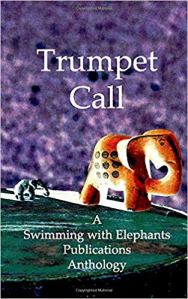
Click here check out the 2019 Anthology:  Trumpet Call; a Swimming with Elephants Anthology available for only $12.95.

Weekly Write: “An Open Letter to 5 AM” by Jessica Parascandola

An Open Letter To 5 AM

An open letter to 5 am
Dear you
You are the hour of early commuters and hungry college students
The hour of sleepy sex and
Am I still…. Drunk?
People rarely roll over and smile into the stars in your eyes
You are more regularly met with raspy groans and a marathon of snooze buttons
Dear you
You are the hour of book worms
And the last 100 pages of a six book series
You hold the lonely people of the world against your chest and offer as much comfort as you
can
Brush tears from cheeks with whispers of a few more minutes of sleep
Dear you
You are nervous
Wrapped around the comfort of the night like a child clinging to a mother’s leg
You are restless
Arms outstretched eyes wide
Fumbling in the dark
Tripping over dreams that rolled out of heads some time around three
You are sweaty palms
Swiped briskly across tangled sheets
And gasping into consciousness
Dear you
You are the hour of sitting cross crossed on the couch and rolling eyes at the news
You smell like coffee and exhaust pipes
You are full of angry crimson tail lights and bleary eyed confusion
Dear you
Thank you
For being the hour that I most easily remember the way my grandfather used to greet you
noisily
For keeping him tucked gently between his palms
And allowing me to cry for all the times he will never wake me for you
You are the hour of bittersweet memories
Of salt trails on cheeks
Of rough hands
And callused feet
The hour of sitting on window seats and wishing on stars
And hoping to God that today does not break us
You are the hour of quiet contemplation
And questioning of judgment
Of emotional breakdowns and putting ourselves back together again
Dear you
Thank you
Sincerely
Me


I wrote this poem after I lost people that I thought I couldn’t live without, and I had to learn how to rebuild myself without them. It was early in the morning and I was angry. Angry that I was awake and angry that I felt as weak as I did. I wrote it to remind myself to focus on the moment, to take things one step at a time and that every day has the potential to better than yesterday.


“Like”, “Share”, and comment on this poem to nominate it for the Annual Swimming with Elephants Publications 2020 Anthology.

Click here check out the 2019 Anthology:  Trumpet Call; a Swimming with Elephants Anthology available for only $12.95.

Weekly Write: “Memoirs of the Childless” by James Miller

Memoirs of the Childless

Hours before
pulling out of Hyde Park, it is
suggested that the oil might need
changing. Your engine spins
near-dry,

and the look
on their faces is not unlike
that judgement of parents on the weak,
who have failed to kill the lice
in their children’s
matted hair.

No room
for the dining table
this time—two months
on the lease and you’re leaving
Ikea beige behind. Taste of 1995,
chips ahoy and fuzzed milk,
not a single stain-rim
on its sainted
surface.

Pull off its legs
like a bug in extremis,
roll the flat-top sundial disk
down three flights, slide it behind
the stairs. Turn south to curl
in your mother’s
house,

stretch to touch
floor and ceiling. Another
inch and you’re ready for twenty,
thirty years of
teaching.

James Miller is a native of Houston, though he has spent time in the American Midwest, Europe, China, South America and India. Recent publications include Cold Mountain Review, The Maine Review, Lunch Ticket, Gravel, Main Street Rag, Verdad and Juked.


“Like”, “Share”, and comment on this poem to nominate it for the Annual Swimming with Elephants Publications 2020 Anthology.

Click here check out the 2019 Anthology:  Trumpet Call; a Swimming with Elephants Anthology available for only $12.95.

Weekly Write: “Elegy for My Brother-in-Law” by Robin Scofield

Elegy for My Brother-in-Law

Your baby learned to wave bye-bye at lunch today;
of course, he doesn’t know what it means as he giggles
in his yogurt the day your left ventricle seized,
and you fell as you were by the kitchen sink
where you left your lighter. You left my sister,
your 13 month-old son, and another in the womb.
Your six-year relationship ends here with her holding
your hand after they pronounce you dead before
you finished falling. Your cousin Eileen is six.
She’s had her share: little brother run over by a van,
and her mother almost died after bariatric surgery.
Your baby could learn a lot about bye-bye from her.
Greg, your mother collapsed sobbing:
Oh Gregory what have you done
and more in her liturgical Hungarian.
Your father died the same way at the same age, 48.
I’m going to be a different dad this time around,
you said, the day before when you hoisted the baby
in your arms or put him on your knee as you played
piano and wrote a letter to your teenage daughter.

Robin Scofield, author of Flow (Street of Trees Projects), winner of the Southwest Book Award from the Border Regional Library Association, has poems appearing in Ponder Review, The Main Street Rag, and Mocking Heart Review. She writes with the Tumblewords Project in El Paso and attends the San Miguel Poetry Week.


“Like”, “Share”, and comment on this poem to nominate it for the Annual Swimming with Elephants Publications 2020 Anthology.

Click here check out the 2019 Anthology:  Trumpet Call; a Swimming with Elephants Anthology available for only $12.95.

Weekly Write: “A Moth is Lying Dead” by James Redfern

A Moth is Lying Dead (Reflections on Saint Teresa)

a moth is lying dead
on the windowsill
of a rented room.

her wings are singed
and blackened
with the same sickness
ailing me.

a moth is lying dead
on the windowsill
of a rented room.

fuzzy thorax and little legs
no longer serving
a purpose
save collecting dust
blown in
through the window screen.

a moth is lying dead
on the windowsill
of a rented room.

still trying for a little more light
even as her mind
has moved on to another place,
still trying for one last fix
her wings burnt
and blackened already.

a moth is lying dead
on the windowsill
of a rented room.

the elegant patterns
of black and brown
on the backs of her wings
still visible
within the stinging chorus
of sirens’ seductive singing
telling tales of Icarian glory.

a moth is lying dead
on the windowsill
of a rented room.

lifeless and still,
no more flying and flittering
around blinding light
burning through sockets,
no more prison
inside the screen
feeling the sun from so very far away,
no more thoughts divine,
no more musing
on the way
the planets go round,
no more love
in her tiny, broken,
dusty little heart,
no more singing
in chorus with other wingéd
creatures crazy and running the skies,
no more nothing
save the final slow decay.

no more black-eyed friendships,
no more trying to score,
no more understanding
the loss of god on earth,
no more leaning into fire
until the fuzz and flesh burn off,
no more chains,
no more gravity,
no more waiting on death,
no more contemplation
of the longing
for an elsewhere messiah,
no more flying in circles
betraying subtle imperfections
as they grow ever smaller and tighter,
unflinching and closing in upon destiny
approaching the killing fire
to test the mettle of her soul incarnate
to test the truth of her spiritual love
to see how much she can take
before the burning really takes hold,
no more miscalculation,
no more blues suspended
in aching arching agony flight
somewhere between land and salvation,
no more of this,
no more moth obligations
and no more moth dues to pay,
no more got-no-place-to-land worries,
no more friends
no more expectations
no more ego
no more eyes feeding consciousness
no more living heart pumping blood
no more life
no more nothing.

the fire’s all gone.

a moth lies dead
on the windowsill
of a rented room.

James Redfern was born and raised in Long Beach, California. Redfern is a graduate of Grinnell College. His work has been published by Whizdome Press, Great Lakes Poetry Press, Transcend, Fear and Loathing in Long Beach, and elsewhere. He is the author of several novels (most recently HECATOMB) and several volumes of poetry (most recently Catfish in a Bowl Redux).


“Like”, “Share”, and comment on this poem to nominate it for the Annual Swimming with Elephants Publications 2020 Anthology.

Click here check out the 2019 Anthology:  Trumpet Call; a Swimming with Elephants Anthology available for only $12.95.

Weekly Write: “God and Death” by Darryl Lorenzo Wellington

God and Death

God is a long-time neighbor who you used to imagine could become a closer friend – someone that you have become accustomed to judging at a distance.

***

Death is a beautiful woman, infamous, inviolable, sans emotional  attachments. She is too beautiful for human emotions. No one remains surprised anymore. No one doubts her majestic impersonality. Strange, then, because tears, cries, and hysterical lamentations accompany her arrival.

***

Death advises. Please marry, or fall in love, or make love in fantasy to shadows lacking corporeal reality. This will lessen the disappointment, the final loss, the bitterness, at the end.

***

Be wary. Stranger.

Life, the felicitous wife; Death, the less kind, less forgiving mistress.
Love yourself less openly. If you love your wife too passionately, too intensely, too proudly, Death, the cryptic, closeted mistress, becomes jealous.

***

Death strews advice like funeral flowers.


Darryl Lorenzo Wellington is poet, essayist, performance artist and journalist living in Santa Fe, NM. His poetry has appeared in Pedestal, Boston Review, Matter Monthly, Drunken Boat, N+1, Yellow Medicine Review, and other places. His collection, Life’s Prisoners, received the 2017 Turtle Island Quarterly poetry chapbook award.

Weekly Write: “Glacial Affection” by Lizzie Waltner

Glacial Affection

Lizzie Waltner

I will give you frost bite when I kiss you,
leave snowflakes on lashes as I pull away,
I will help you understand the importance of hypothermia.

When the shaking stops
feelings have only just begun.

Your body will attempt to warm my heart
while I keep you embraced in cirques,
and form alpine glaciers with our bodies.

We’ll create sediment beneath us,
leave mountain peaks in our path.

We’ll flood valleys when the sun caresses
our skin before we’re ready to melt.

You will attempt to remove the winter
from my bones and replace it with summer.

This will cause irregular heartbeats
that damage my crystalline structure.

Eventually, we’ll find equilibrium:
my snowfall matching your melt.

We’ll feel timeless –

carve ourselves to the beach,
freeze the tide,
extend our grip above the ocean
and generate icefields.

We’ll enjoy the sunsets for a time,
‘til one of us shatters,
and breaks into iceberg.

My fingers will frost over
never close enough
to touch yours again.

Lizzie Waltner grew up in Rio Rancho, NM, attended ENMU for her BS in Journalism, and then has since moved to Wales, UK to complete her MA in Creative writing at Aberystwyth University.


“Like”, “Share”, and comment on this poem to nominate it for the Annual Swimming with Elephants Publications 2020 Anthology.

Click here check out the 2019 Anthology:  Trumpet Call; a Swimming with Elephants Anthology available for only $12.95.

Weekly Write: “I Love You” by Evelyn Louise May

I Love You

Evelyn Louise May

He slid into the driver’s seat of the small red car; we were just a year out of high school. His hands fumbled through coat pockets searching, his face turning red as he looked away. From his breast pocket a white folded scrap of paper. “One more thing,” handing me the note. This must have been the kind of letter that says something that cannot be spoken, a truth that means nothing will ever be the same. In boyish handwriting a simple message.


Evelyn Louise May is a writer and avid reader who lives in Minneapolis, MN. Evelyn loves history, medical oddities, untold stories, and coffee. When she isn’t working on an MFA in creative writing at Augsburg University, she can be found riding her tandem bicycle with her husband/muse, Ryan.


“Like”, “Share”, and comment on this poem to nominate it for the Annual Swimming with Elephants Publications 2020 Anthology.

Click here check out the 2019 Anthology:  Trumpet Call; a Swimming with Elephants Anthology available for only $12.95.

Weekly Write: “On a Photo of My Now-Elderly Parents Embracing Their Grandson” by Andy Posner

On a Photo of My Now-Elderly Parents Embracing Their Grandson

Andy Posner

You notice your parents’ aging as you do your own:
Not at all, then in a photo, all at once.

There the pain of happiness fading:
The moment after the embrace,
The walk down the jetway,
The plane disappearing in clouds of blue.

Mom is holding Richard, rooted.
Dad has one arm around him, eyes half-closed—
The bliss of a moment long-awaited.
And though Richard won’t remember,
In some distant future fast approaching he will see
That grandma and grandpa, long deceased,
Held him with a love so deep, it forever
Defies that tender tyrant—time.

Andy Posner grew up in Los Angeles and earned an MA in Environmental Studies at Brown. While there, he founded Capital Good Fund, a nonprofit that provides financial services to low-income families. When not working, he enjoys reading, writing, watching documentaries, and ranting about the state of the world. He has had his poetry published in several journals, including Burningword Literary Journal (which nominated his poem ‘The Machinery of the State’ for the Pushcart Poetry Prize), Noble/Gas Quarterly, and The Esthetic Apostle.


“Like”, “Share”, and comment on this poem to nominate it for the Annual Swimming with Elephants Publications 2019 Anthology.

Click here check out Parade: Swimming with Elephants Publications Anthology 2018 available for only $10.95.

Weekly Write: “I have seen the ocean once” by Liza Wolff-Francis

I have seen the ocean once

its monstrous size hummed
over earth, its tides pulled
my body like wind pulls
at the wings of gulls.

Its water melted into sand
and I sank into it, becoming
for an instant, one
with ocean and land.

I saw to the end of our planet
like it was the future, sun
glistening on the blood
of earth, waves on and on.

My mother said we must
take inspiration from ocean,
as a force as ongoing as time
and none who try to conquer it

will be able. I loved the cool
melt between my toes, the rinse
and cleanse on my hands,
my face with its grit,

salt on my tongue, like it
would eat me. Part of me
wanted to let it, but that is not
why we could not stay there.

My mother brought me there
to understand how my body
also holds an ocean, one they
also want to conquer.

Closer to the ocean,
there is more danger, she said,
because conquerors come
and ocean and earth can only

fight them off sometimes.
On days when it rains here,
I remember how each drop
of water acts on its own,

how water stays together
as a force. I feel ocean move
inside me and how I bleed
and dance with the moon.

To protect ocean
is to protect my body.
Crabs scurry away from it, hide
from it, run to it, to become it.

Gulls dive, hunger calls them
like the moon calls my tides,
all of us salt and sand
and ocean blood running alone

before the earth’s edges
as if ocean were the part of us
we had felt inside us
but only met once.

Liza Wolff-Francis is a literary artist with an M.F.A. in Creative Writing from Goddard College. She was co-director for the 2014 Austin International Poetry Festival and on the 2008 Albuquerque Poetry Slam Team. She has a poetry chapbook called Language of Crossing (SWEPublications).


“Like”, “Share”, and comment on this poem to nominate it for the Annual Swimming with Elephants Publications 2019 Anthology.

Click here check out Parade: Swimming with Elephants Publications Anthology 2018 available for only $10.95.

Weekly Write: “Visiting Back Home” by SaraSwoti (Sara) Lamichhane

Visiting Back Home

I left it 13 years ago
And
Came back 3 times

I brace defrosted memories

I hear the laughter of
My younger self
Her howl into the wild
Unafraid

The storm slams on her face
Nothing stops her

Now,
The person that is me
Sits by the fireplace
With
A husband and two kids

Makes dinner, does dishes,
Folds laundry and phone calls
In between

I merge the divide
Two sets of houses
Two sets of families
Two sets of cultures

If my roots grow deeper
In either land,
My butterflies will lose their wings
And leave me a caterpillar

I either have both or none.

SaraSwoti comes from Alberta, Canada, originally from Nepal. She is a life celebrator and loves exploring beyond her world. She draws inspiration from nature and people around her. She is an optimist and a continuous spiritual learner. She serves as a board member with Parkland Poets and her poems have appeared around Canada, India, USA and Nepal.


“Like”, “Share”, and comment on this poem to nominate it for the Annual Swimming with Elephants Publications 2020 Anthology.

Click here check out Parade: Swimming with Elephants Publications Anthology 2018 available for only $10.95.

Weekly Write: “Scent of a honey made of many flowers” by Jose Luis Oseguera

Scent of a honey made of many flowers

— for Soledad Ramírez Marrón

What a romantic Grandpa was
when he first courted Grandma
against her father’s will—
his drinking buddy—
and bought her a cow
to go with the house he built her
out of mud and sticks and promises
of a better one once they had
enough money to leave behind
his farmlands, ex-wife and unwanted son.

Grandma got so good at cooking
carne con chile verde
because she made it every day,
and she went through the trouble so often
because Grandpa was pickier than an unbroken horse
trying to buck a rider off its back.

It was all he ever wanted to eat,
and hated eating other foods
as much as he despised
the way other people ate—
the lip-smacking, slurping, moan-breathing,
the sheer enjoyment of eating was the worst—
so, if you were going to eat with him,
you’d better eat right.

Of course, he’d never tell you what was right,
not even Grandma knew,
only what was wrong:
“Just don’t do anything to make him mad,”
she’d whisper as he’d place
a spoonful of her liquid fire in his mouth,
the metal edges never once clinking with his teeth.

“The secret to a good salsa,”
Grandma mused as she carefully
unfolded the crinkling paper from the garlic cloves
as if each were a note written only to her,
“is very similar to that of a good marriage:”
the things that can withstand
some degree of burning
should be roasted golden
until what remains
tickles the nose,
waters the corners of your mouth,
warms the throat
and reaches the heart;
if the smell is suffocating,
run away, it’s all ruined,
and you have no one to blame but yourself.

Grandma would lay the tomatillos to rest
next to their green cousins, the poblanos,
on a warm cast iron bed—
that wasn’t really a skillet,
but a top burner cover plate
from an antique wood stove
she fell in love with at a second-hand shop.

She cooked everything on that old thing,
every tortilla bore a raw spot
left untouched by the indentation
originally used to pry the plate off the heat:
it was rusty, no matter how many oil baths she gave it;
it was reliable;
and it was the way Grandpa saw her,
something to come home to that he could depend on.

Once the onion and garlic began to wiggle awake,
yawning, their waxy pearls hissing off the heat,
Grandma would season them with a salt
from a jute pouch where she hid her tears,
encrusted deep in her fingernails—
scratched off as she exited her mother’s womb—
and a cube of chicken bouillon;
she’d smile and shush anyone
who saw her dropping it into the blender.

She never once burned
Grandpa’s chile verde
because, in her mind, it was the reason
why he kept coming home to her,
because no one could burn up his mouth
and make his forehead and forearms swelter—
watering his honeycomb wrinkled, yet fierce, bewitching hazel eyes—
the way her picante fried with pork meat could.

Of the many times he left her,
to work and live and be happy abroad,
she stayed;
even as his way of laughing changed,
she stayed;
even when the townspeople told her
that they saw him again with another’s wife,
she stayed;
even when her daughters—
old enough to notice—
called her a cheap, little woman,
she stayed;
even when he knew that she knew
and would no longer hide around,
she stayed.

Nothing made her cry,
not even as she chopped a lot of onion—
oozing their white, milky blood—
for her delicious chilaquiles.

Even though she was burned
and could’ve left, letting the peppers burn until
their flames consumed the home
Grandpa built around her, not for her,
she stayed and kept it all
because the burnt parts
were what held the flavor;
the charred bits were what made
the salsa’s flavor spicier
and not even the man
for whom she made the chile for every day
and birthed 11 children for—
the one she once loved
as much as he once told her that he loved her—
could take away who she knew she was:
she simply refused to live her life any other way.

Jose Oseguera is an LA-based writer of poetry, short fiction and literary nonfiction. Having grown up in a primarily immigrant, urban environment, Jose has always been interested in the people and places around him, and the stories that each of these has to share. His writing has been featured in The Esthetic Apostle, McNeese Review, and The Main Street Rag. His work has also been nominated for the “Best of the Net” award (2018 and 2019) and the “Pushcart Prize.” He is the author of the forthcoming poetry collection “The Milk of Your Blood.”


“Like”, “Share”, and comment on this poem to nominate it for the Annual Swimming with Elephants Publications 2020 Anthology.

Click here check out Parade: Swimming with Elephants Publications Anthology 2018 available for only $10.95.

Weekly Write: “ii. 1915 Overture: Domino Queen’s Leave-Taking Organ Recital Begins” by Gerard Sarnat

ii. 1915 Overture: Domino Queen’s Leave-Taking Organ Recital Begins

The reports of my death have been greatly exaggerated. — Mark Twain

It started on the day Tsar Nicolas’ stallion took control of Russia’s Army.
And over 102 years later — exactly when it was learned POTUS was called
a Moron by his Secretary of State — Mother’s life began to end in earnest.
Mom had already shed most of this earth, including the names of everyone
but her firstborn son and maybe daughter, but now both lips turned blue black.
Although recovering, upon awakening from the grasp of some nether world
enough to sit up and blink then accept a tablespoon of Gatorade or Ensure,
she’s not uttered a word. Even temptation of playing Dominos elicits nothing.
Tilting toward new existence, FT exhortations from great/grandkids’re ignored.
With Mother’s passing, there won’t be a soul left from my parents’ generation…
Dawn — eyes popping — Mom requests buttered English muffins and game board.
Via Skype, she greets: Hi, Gerry! so I guess all she needed was a good rest.
Animated, expressive and paying attention, better than during my last six visits;
it is very hard to believe or understand as her son or as a physician. What a kick!!
Made it from Wilson to Trump. Guess Mom didn’t get to this age just for nothing.
Dwindled as she was, old warhorse maintains vital signs anon’s orphan’d kill for.


Gerard Sarnat is a physician who’s built and staffed homeless and prison clinics as well as a Stanford professor and healthcare CEO. Currently Gerry is devoting energy/ resources to deal with global warming. Sarnat won the Poetry in the Arts First Place Award plus the Dorfman Prize, and has been nominated for a handful of recent Pushcarts plus Best of the Net Awards. Gerry is widely published in academic-related journals (University Chicago, Stanford, Oberlin, Brown, Columbia, Harvard, Pomona, Johns Hopkins, Wesleyan) plus national (Gargoyle, Main Street Rag, New Delta Review, MiPOesias, American Journal Of Poetry, Poetry Quarterly, Poetry Circle, Poets And War, Cliterature, Qommunicate, Texas Review, Brooklyn Review, San Francisco Magazine, The Los Angeles Review and The New York Times) and international publications. He’s authored the collections Homeless Chronicles (2010), Disputes (2012), 17s (2014), Melting the Ice King (2016). Gerry’s been married since 1969 with three kids, five grandsons with a sixth incubating.

gerardsarnat.com


“Like”, “Share”, and comment on this poem to nominate it for the Annual Swimming with Elephants Publications 2020 Anthology.

Click here check out Parade: Swimming with Elephants Publications Anthology 2018 available for only $10.95.

Weekly Write: Paralleled by Christopher Watson

Paralleled

Chill of late-summer storms ripples from
a paralleled creek. Vermicular shadows—
elms and cottonwoods—stream-seep.

So, piecemeal, the ebony-gleam
of a cast iron pan comes to me.

An incident from childhood—one of those charged,
ferocious spats between my father and a lover-
friend. So that, the lithe and clamped-lipped
child is conjured, again: ducked spectator,
inconsequential and hardly noticed.

(Or so I’ve always assumed.)

Fucking bastard!

What my father yelled from the living room,
after hurling a skillet through a window
at his lover’s well-groomed pate.

Seven? Nine? Eight?

Ragged line of the scudding pan through fallen blossoms brings
a lost summer’s light, the lilacs’ shade and an emptiness
back to me, now—how it just remained there
for the rest of the day, unclaimed.

Its absence, the following morning:
the familiar feeling this drew: someone
shutting a door, drawing a blind.

Trees are left behind, as the car picks up speed.
Sere rift, valley—piñon-and-juniper-pocked,

                                                                           fanning out before me.


Though his roots are in Santa Fe, New Mexico, Chris spent his first years in Mexico City. After graduating from St. John’s College, he studied classics at post-graduate level, before moving to Barcelona’s gothic quarter, where he wrote and made organic olive oil in the countryside of Tarragona. Both of his sons were born in Barcelona to his British wife. He completed an MA in Creative Writing at Middlesex University (UK) in 2007. And since moving back to Santa Fe, in 2013, he has dedicated himself to writing poetry, having published in the Malpais Review, Pasatiempo, Silver Needle Press, Cathexis Northwest and Cagibi. He also volunteers as a translator for Somos Un Pueblo Unido and Santa Fe Dreamers Project, as well as serving on the board of Santa Fe Pro Musica and the development committee of the Rio Grande Mindfulness Institute. 


“Like”, “Share”, and comment on this poem to nominate it for the Annual Swimming with Elephants Publications 2020 Anthology.

Click here check out Parade: Swimming with Elephants Publications Anthology 2018 available for only $10.95.
Weekly Write: “My Red Garden” by Natasha Reeves

My Red Garden

As poppies grow,
through my veins a fever flows.
But scarlet roses always bloom,
on fertile ground, in safe rooms.
To believe my sweet hibiscus,
is dirty business, to the garden a sickness.
Fields of delicate tulips,
such a lie, a far-fetched tale
from devious lips.
Condemning dahlias,
is becoming nostalgia.
Spinning and consuming asters,
of petals and powder that should be feared,
pollen which brings disaster.
As poisonous as poinsettias.
Healing as red yarrow.
My crimson petals don’t bring me sorrow.
My blood-tinted flower always empowers.

Natasha Reeves is an Arizona native who grew up in a small town. Writing is a part of her career, hobbies, and overall self-expression. She uses writing as a vessel to release her mental energy and explore her imagination.


“Like”, “Share”, and comment on this poem to nominate it for the Annual Swimming with Elephants Publications 2020 Anthology.

Click here check out Parade: Swimming with Elephants Publications Anthology 2018 available for only $10.95.

Weekly Write: “Zuni Pot” by Yueh Ni Lin

Zuni Pot

Formless,
a Zuni pot is born through the wheel.
Turning round and round,
transforming soul into shape
to preserve ancestor’s spirits inside.
Two extended tails infinitely loop
around the narrow lip.
A bird whispers to a
wind-dancing flower.
Everything is full of life.
Follow the path of migration and
the precious spirits last forever.

“Zuni Pot” was previously published in the collection, Immigrant Memories and Poetic Ambitions, release by Swimming with Elephants Publications in Fall of 2019. 

Yueh Ni Lin is a coffee-loving, nostalgic homesick, amateurish art adorer and architectural designer. She is a wandering traveler, eager explorer who always enjoy the impact of curiously different cultures. She is a new environment immigrant adapter, exuberantly vital, English learner, life embracer, and a family centered, beloved child’s mother.


“Like”, “Share”, and comment on this poem to nominate it for the Annual Swimming with Elephants Publications 2019 Anthology.

Click here check out Parade: Swimming with Elephants Publications Anthology 2018 available for only $10.95.

Weekly Write: “The Yellow Bird” by Katrina K Guarascio

The Yellow Bird

one should not be
too careless with love

when the yellow bird perches
on fingertip, do not flick
it away; do not be crass

thank it for coming
ask it to stay

birds flutter and fly
they shift and peddle
small jerks and shifting eyes
they are not meant to keep still

let it stay

as long as it likes
and allow it the sky
when it chooses to take wing


A writer and teacher living in Albuquerque, NM, Katrina remains an active member of the local poetry community. She has worked as an editor for various literary magazines and small presses, along with hosting poetry workshops and producing various poetry performances.  Although her work has taken her into the realm of publishing and fiction, she continues to publish her poetry under her maiden name and keep a separation between her poetry and publishing endeavors.


“Like”, “Share”, and comment on this poem to nominate it for the Annual Swimming with Elephants Publications 2019 Anthology.

Click here check out Parade: Swimming with Elephants Publications Anthology 2018 available for only $10.95.


Weekly Write: “It Could Happen” by Terry Mulcahy

It Could Happen

There are people
dispossessed
desperate
& poor.
They are coming
here
soon.

How will we great them?
With abrazos?
Heartfelt hugs?
or
with barbed wire
and bullets?

U.S. troops
stand ready
on the border
weapons ready
to repel boarders.

As if, as if
as if the United States of America
were a ship at sea
and it would flounder,
as if it would sink
if we took in more refugees.

They are coming
those refugees of war and fear.

How will we great them?
Will crowds of U.S. citizens
stand by and cheer as they reach safety?
Will we laugh with joy?
or cower in fear?

Do hate-mongers tell us to fear them?
Does fear tell us they are enemies?
Does fear paralyze us?
or
will we part the barbed wires,
the wires wound fearfully
around our hearts?

It could happen.

Terry Mulcahy has published poems in: Conceptions Southwest, Silver Quill, Scribendi, Medical Muse. Have not tried to publish anything in a very long time since. I retired. I read. I write. I hike. I act. I listen.


“Like”, “Share”, and comment on this poem to nominate it for the Annual Swimming with Elephants Publications 2019 Anthology.

Click here check out Parade: Swimming with Elephants Publications Anthology 2018 available for only $10.95.

Weekly Write: “Upon this Altar” by Gina Marselle

Upon this Altar

Upon this altar for healing,
I place the morning sun with prayers blessed
by my blue glass beads rosary.

Upon this altar for healing,
I place morning meditations—
breath exhales anxieties.

Upon this altar I place time.
The yellow tinged fall morning doesn’t wait,
as the hour passes my son wakes.
He begins his list of questions,
his almost five-year-old self doesn’t rest,
and his first question, “Is today a school day?”

Upon this altar I place husband’s snores,
thankful he is safe, loved, healing—a recovering alcoholic.

Upon this altar of healing,
I place my 17-year-old daughter’s ballet shoes,
her dreams to become a pediatrician or a ballerina.

Upon this altar I place newly learned guitar chords A and E,
sore fingers and encouragement. I place this dream of playing Bach
on classical guitar into reality.

Upon this altar for healing,
I place prayers that this stabbing pain I feel in my gut
will leave. Will find remission. Upon this altar I pray that
this newly diagnosed autoimmune disease will not win.
It is invisible to everyone, but my joints, eyes, intestines are attacked.
How do I fight something unpredictable like Mount Saint Helens erupting?

Upon this altar for healing I place hope
blooming with vibrant colors of teal and opal and red—
for healing breath, life and love.

Upon this altar of healing, I baptize water
from the Pacific ocean—purify it, drench this brittle desert land
into soulful breath, healing body.

Upon this altar, I leave my animal brain that wants to flee, fight, and freeze
for my human brain that reasons, plans, and processes and move from just surviving to mindfully LIVING. Before my autoimmune disease, I took for granted sips of my espresso, dark chocolate, salad drenched in blue cheese dressing, a simple pasta dinner—now food is my enemy. For three months now, a simple diet of rice, broth, bananas—
as I battle for health. All I drink is water. It sustains me. It gives me life. It is beautiful, truly. I’m here. I’m given a chance to fight, survive, live.

Upon this alter for healing,
I place my prayer, my thanksgiving, and my beating heart.
Namaste.

© Gina Marselle
Inspired by a Writing Workshop with Poet Jessica Helen Lopez
House on the Corner Worshop

Gina Marselle resides in New Mexico with her family. She’s a high school teacher, poet, and photographer. She has a full length published book titled, A Fire of Prayer: A Collection of Poetry and Photography (SwEP, 2015). Please find more information about Gina’s work at https://swimmingwithelephants.com/. Follow her on Instagram @gigirebel.


“Like”, “Share”, and comment on this poem to nominate it for the Annual Swimming with Elephants Publications 2019 Anthology.

Click here check out Parade: Swimming with Elephants Publications Anthology 2018 available for only $10.95.

Weekly Write: “I’m holding our memories alone, and suddenly they are so heavy” by Frankie Kubena

I’m holding our memories alone, and suddenly they are so heavy

We stopped talking in the same way I quit smoking; eventually you must outgrow the toxic thing. I don’t think of cigarettes much since quitting, but sometimes when walking by someone who is smoking, I breathe deeply. In other words, I still love you, but at times when you weren’t around, I forgot you ever were. If I have to be a type of lonely, this is as good as any. And, if someone had to die, lord knows you tried hard enough. When I found out, the first thing I did was smoke, and I haven’t stopped since. What is mean is; my head is still spinning, and I am tired of breathing you in. Grief is less how I imagined it would be, more hysterical laughter. Sometimes it is smiling at apologies and saying “we weren’t that close,” and sometimes it collapsing. It is no explanation. It is picturing what your body must look like now, and wondering if it is any different than the ghost I used to know.


Frankie Kubena is an emerging performance poet based in New York City, currently a college student at Pace University. Their style of poetry could be described as nonconventional and I write in freestyle. Kubena grew up in several European cities and their work is created through a multicultural, feminist lens. View Frankie’s blog at frankiespoetry.com.


“Like”, “Share”, and comment on this poem to nominate it for the Annual Swimming with Elephants Publications 2019 Anthology.

Click here check out Parade: Swimming with Elephants Publications Anthology 2018 available for only $10.95.

Weekly Write: “neither are the sunflowers” by Kat Heatherington

neither are the sunflowers

under the bluegreen door
a girl is dancing
barefoot on the sidewalk,
her long white legs
in the sunlight,
surefooted,
ignoring the passersby
while her friend
plays accordion.
her brown hair & dress cry out,
it is autumn,
and i can’t believe
it’s already autumn
the maximillians
have only begun to bloom but
it’s autumn
even in the green grass
i’m not ready yet
and neither are the sunflowers
or the barefoot girl i wish i could be,
dancing
between the sycamores.


Kat Heatherington is a queer ecofeminist poet, sometime artist, pagan, and organic gardener. She lives south of Albuquerque, NM in Sunflower River intentional community, sunflowerriver.org. Kat’s work primarily addresses the interstices of human relationships and the natural world. Her work can be read at https://sometimesaparticle.org.


“Like”, “Share”, and comment on this poem to nominate it for the Annual Swimming with Elephants Publications 2019 Anthology.

Click here check out Parade: Swimming with Elephants Publications Anthology 2018 available for only $10.95.

Weekly Write: “My Body Hasn’t Been Mine” by Michelle Dodd

My Body Hasn’t Been Mine

My body hasn’t been mine
since the pregnancy test.
I can’t stop apologizing for it.
I didn’t learn what warmth feels like,
the sun doesn’t shine underneath my skin.
My body wants to apologize
for not shining from the inside out
Yet, my body is not sorry for resembling yours,
destructive and breathing,

keeping this life line alive.


Michelle Dodd is a spoken word artist based out of Richmond, Virginia. She has performed for TedxWomenRVA in 2016. She is a fellow of The Watering Hole Writing Retreat. She was a member of The Writer’s Den Slam Team in 2016 and 2017; a team placing among the top teams in the USA. Dodd has been published in Whurk Magazine, K’in Literary Journal, The Scene and Heard Journal, SWWIM, and Wusgood online magazine. She has self published two chapbooks of poetry in 2017. She is one of the coaches, for the Virginia Commonwealth University (VCU) CUPSI slam team for 2018, that placed 3rd internationally.


“Like”, “Share”, and comment on this poem to nominate it for the Annual Swimming with Elephants Publications 2019 Anthology.

Click here check out Parade: Swimming with Elephants Publications Anthology 2018 available for only $10.95.

Weekly Write: “Memories Elude Him” by Hollie Ziskind

Memories Elude Him

Preacher speaking in tongues inside his brain
I haven’t decided whether it’s a disability,
or survival skill, but he can’t remember the name

of the blue tick hound, or where to turn,
what they did for his last birthday,
in the tequila bottle with a worm

folds of cortex hold his days,
still there, waiting for him to return,
to ease them along, onto the page


Hollie Ziskind is an AWA-certified writing instructor living in Memphis, Tennessee. She’s the founder of Pen & Portal, an online outlet where people can celebrate shared experiences through the exploration of creative writing prompts. Hollie is a mother, a wife, a celebrator of life and a promoter of kindness.


“Like”, “Share”, and comment on this poem to nominate it for the Annual Swimming with Elephants Publications 2019 Anthology.

Click here check out Parade: Swimming with Elephants Publications Anthology 2018 available for only $10.95.

Weekly Write: “The Fig Tree” by Romana Iorga

The Fig Tree

We walk down the path with our children.
Dust rises behind us like smoke.

The ground is littered with figs:
small purple bodies
burst open to show their red seeds.

Foreignness blooms quietly inside their wounds.

All these years I wished to be whole,
my fragmented self constantly rearranging
its pieces to suit new surroundings.

Now I find the puzzle all wrong, some pieces
not only missing but clearly irretrievable.

The picture I have in front of my eyes
tells lies. It fractures faces, contorts
limbs, splits bodies in two.

Everything’s backwards: the sky

holds a bodiless earth on its plate; the giant fig trees
point downward like ingrown toenails.

I look at the pattern of leaves above our heads.
Solid branches crisscross this way and that, each
with its purpose – a self-contained universe
to which we cannot belong.

Here are my leaves –

they form passageways of dense shadows,
where the light
travels unencumbered, precise
before hitting the ground and dying
on impact.

Here are my limbs –

they mold the air, they push it
downward,
toward the scattered figs on the ground,
toward these lonely people
scattered among the figs.


Originally from Chisinau, Moldova, Romana Iorga is a  Romanian-American poet living in Switzerland. Her work has appeared or is forthcoming in Ruminate, saltfront, Borderlands, as well as on her poetry blog at clayandbranches.com.


“Like”, “Share”, and comment on this poem to nominate it for the Annual Swimming with Elephants Publications 2019 Anthology.

Click here check out Parade: Swimming with Elephants Publications Anthology 2018 available for only $10.95.

Weekly Write: “Adobe Fires” by S.A. Leger

First published in Issue 8 of 2 Bridges Review, Summer 2019

Adobe Fires

Used to sing a song about him, maybe hum. Used to serve it
around Bridge Street, call him Leatherface or some such Ruthism.
Used it wrong again, didn’t I? Anyhow, he made ends meet
butchering hogs for corporate cook-outs & whittling—assisting
kids with whittling I mean. And lighting fires. ‘Dobe fires. Blest,
canonized with not one but two sickly wives & never, not once

breathe anything but pure lemon-sweet oxygen. I, the always
embers, I, the tongue that licks the clay. Hold me up, eighty-twenty
aspen shrapnel/help-wanted ads from the Sentinel, show me wretched
objects & I’ll show you the void that falls in line behind chastity
behind you. Your shadow and its void. It’s void & I’m the vacuum
that clears a room, fills it with smoke. I am feared, I am not alive

in 37 years did ole Deeprivers stay home. He lit fires. He lived
for that shit. Sometimes he walked back alleys collecting—when
pigs fly, we’d say, he’ll stop lighting ‘dobe fires—anyhow, he held
prob’ly six stems of dried tumbleweed, squeezed his fists, split
his knuckles just about. Walking alleys with stickers making love
to his leaking capillaries. See, tumbleweeds weren’t tinder. Hallowed

but empty, not really there at all. Unless you channel back, magnify
original thermodynamic laws. Then hold me. Then feel my record
sear. Lace up wounds from thorns. Cauterize the matrix of fish &
wasps forming new scar tissue as we speak. Perhaps I am never
the real enemy of white blood cells, plasma—at least, less selfish
than an infection. In my dreams they call me a fever, now disease

fuel for his fires, but again, never tinder. Maybe sagebrush feeds
his fires. I’m not even sure sagebrush will burn. He might’ve invoked
god’s favour by lighting those fires because he was carving up
a good piece of dirt with ash. No city folk ever complained. Exist
is all he did—that’s just ole Dinosaur bones—skin ratcheted certain
to the canyon walls of his sternum. Shirtless. There. Genderless

but not as shapeless as I appear. White then choked red with sex
with magnesium & minerals that colour me like water. Sustained
doubled by dry crackling splintering empty cellulose matter, not
once silent. Not once. I am all mouth & all teeth & all spit—sacred
tongue. I’ll take no credit for my discovery. You found me, ignited
my pain. I am all face, anguished with soot & you never have

mated with those sickly wives or wolves or the black starless part
of the night & of air-nursed sustenance & of exhaled dwellings.
Where is he now? Haven’t you heard a word I said? Frozen-holy


S.A. Leger is a biologist and writer from Colorado. After studying zoology and English at Colorado State University, she spent time researching the flora and fauna of Tasmania, of the islands of Puget Sound during her masters, and for the last six years, of Newfoundland. Leger currently works as a biology instructor at Memorial University.

Weekly Write: “To Keep Away Crows Feet” by Tyler Dettloff

To Keep Away Crows Feet

I watched a dozen red wing black birds
fight over a single maggot in the church parking lot
as funeral barkers repeated the priest.
The birds smeared that crawler into a grease
to bake on the blacktop. Maggot resin
waxed their beaks. Soon I will gather fiddle head ferns
and place their fuzz on my tongue.
I thought about paving my driveway,
left it dirt instead.
I won’t reseed the lawn either.
I can smell the bog’s breath.
Thickets are not fallow.

Last winter I crept to the crawlspace
slept away four moons. When I awoke
I could only stomach tubers and a few berries.
But I wanted meat in my mouth.

Mayflies hatch and we tie bait
to match. Fingertips gaunt and sharp
from feathers and thread, a tight quilt
knit to moisten trout tongues.
Fly rod flits cast spells over swamp streams.
I do not understand trout rising in the thaw
but I damn sure know the comfort
in the underbelly of a bog.
Worms and maggots ask questions
all winter long between roots and decay.
I plug my ears with mourning dove songs.
I tilt with the earth away from the sun.
Together we burrow blindly
like voles chase winter grubs.

If we traveled like birds we’d grow fat and pretty.
My hands would soften.
I’d moisturize my crows feet and fallow heart.
At every funeral I’d say the same thing.
I’d knead spruce sap against my gums
and ask the needles to have mercy on my tongue.


Tyler Dettloff is an Anishinaabe Métis, Italian, and Irish writer, professor, musician, gardener, and water protector raised on the edge of the Delirium Wilderness. He currently lives in Gnoozhekaaning (Bay Mills, Michigan) and teaches College Composition at Lake Superior State University. He has earned a B.S. in English and a dual track M.A. in Literature and Pedagogy from Northern Michigan University. His work has been featured in Voice on the Water, Crab Fat Magazine, and Heartwood Literature Magazine. Mostly, he enjoys walking along rivers with his wife Daraka and through swamps his dogs Banjo and Fiddle.


“Like”, “Share”, and comment on this poem to nominate it for the Annual Swimming with Elephants Publications 2019 Anthology.

Click here check out Parade: Swimming with Elephants Publications Anthology 2018 available for only $10.95.

Weekly Write: “Afterlife” by Anna M. Spears

Afterlife

After he passed, I saw him
Born in a field of dormant corn
Amid papery stalks and a gentle breeze
A shadowed sunset with too heavy clouds
Faded mile markers on Old 16
Smiled at him through the window and knew
The air smelled of tears
I breathed it in anyway.
A flicker of wings and a toss of hair
Dancing with fireflies into the twilight
Lighting the way with tiny iridescent bulbs
Betraying leathery wings tinged with gold

It’s not so scary now, I think
This fragile peace permeating the ground
The darkness closing in
Betrayed by the blinking
The sorrow and fear and anger and disbelief
And you knew. Something in you knew.
How could you?
Your tear would unravel the whole fabric,
Bare us to the wind chill.
In a moment it was gone
The air, calmed and lighter, and something
Something is there, and I know it
Hiding in the field among the tall grass and hay bales
The dried out reeds swaying to the bird song
And I found myself in the back seat
We are the only car here for miles
Stopped at a traffic light.

Anna M. Spears is a poet with a bachelor’s degree in English with a specialty in Creative Writing from Denison University in Granville, Ohio.


“Like”, “Share”, and comment on this poem to nominate it for the Annual Swimming with Elephants Publications 2019 Anthology.

Click here check out Parade: Swimming with Elephants Publications Anthology 2018 available for only $10.95.

Weekly Write: “rest here” by Zoe Canner

rest here

i always approach
the person in the

room who holds
the least power

and turn my
hands into a cup

and listen to them
& try to hear

and turn my head
at an angle and

turn my shoulders
down and my

sternum inward &
try to bow

and turn my nose
into a swamp & try
a silence

and turn my cheeks
into a great plain &
try to lift

and turn my
forehead into a

contemplative
landing pad for
hands & fingers

rest here

and turn my eyes
into still waters
and turn my mouth
into a brace
a carriage

i care
i care


Zoe Canner’s writing has appeared or is forthcoming in SUSAN / The Journal, Naugatuck River Review, The Laurel Review, Arcturus of the Chicago Review of Books, Storm Cellar, Maudlin House, Occulum, Pouch, Indolent Books’ What Rough Beast, and elsewhere. She lives in Los Angeles.


“Like”, “Share”, and comment on this poem to nominate it for the Annual Swimming with Elephants Publications 2019 Anthology.

Click here check out Parade: Swimming with Elephants Publications Anthology 2018 available for only $10.95.

Weekly Write: “John Muir Sprains his Ankle” by Scott Ferry

John Muir sprains his ankle

I landed oblong on that fawn-shaped round of granite
by the Yosemite Creek, just down the path from my cabin.
Thank God I did not injure myself 20 miles from here
down Bridalveil Creek. But I would have made it back,

by the grace of the elderberry, service berry, wild cherry
and would have had to thump deliberately through
the sage with a numb limb. Reading Emerson
doesn’t help directly with the pain, yet being able

to float upward, distinct from my frame
to list willowy in the black oak and afternoon
scent of incense-cedar, this can be useful.
When I write about light, I don’t know if I am understood,

nor believed. People can see the swollen club
of my naked ankle, people can understand agony,
seeing many thousands slaughtered by this
country tearing at itself, not civil at all. People

can steal, can be stolen from; can hold an infant,
can weep as their mother slides away. But most
cannot comprehend joy and glory to the degree
of breaking, straining the daily thought forms apart

until the capsule cracks. Saint Teresa and I
recline on these sheepskins, listening to God’s
blood run through the cabin floor and the ferns
reach to the light and twine together.

And when the peregrine swings down and sears
its vibrating laugh across the valley the glow
from inside of the white fir stretches into the
air around it and weaves with the glow of elk

of sequoia of raccoon until it bathes the entire
flight with tears. This is too uncomfortable, the weeping.
I have been attempting to describe it in words,
as the letters open like moths and drift

into this same glory, unseen.

Scott Ferry helps our Veterans heal as a RN. In former lives he taught high school and practiced acupuncture. Recent work can be found in Chaleur, Cobalt, Bitter Oleander, and Cultural Weekly, among others. His collection “The only thing that makes sense is to grow” will be published by Moon Tide Press in early 2020. You can read more of his work at HTTPS://FERRYPOETRY.COM

Weekly Write: “Pretty in a Hard Way” by Michelle Brooks

Pretty in a Hard Way

The ground moves with snakes,
and the sky bleeds red streaks,
as if the night couldn’t leave
without a fight, and all your dreams
are tragedies where no one dies,
but everyone suffers. In your past
life when you woke up hungover, you’d
think, Anything is better than this.

You were a confection, a little
dead around the eyes, the kind
of woman people describe as
pretty in a hard way. And you
refuse to go gently into that good
night. And let’s face it. Not all
of them were good ones. You don’t
care. There is nothing you can do
about it now. Gather the pieces
as best you can even if they cut you.

Michelle Brooks has published a collection of poetry, Make Yourself Small, (Backwaters Press), and a novella, Dead Girl, Live Boy, (Storylandia Press). Her poetry collection, Flamethrower, will be published by Latte Press in 2019. A native Texan, she has spent much of her adult life in Detroit.

Weekly Write: “you who climbs to the top of the world and begs forgiveness; or, HERCULES” by Maxine L. Peseke

you who climbs to the top of the world and begs forgiveness; or, HERCULES

you, who are not weatherproof:
do not let the cold creep in your soul.
do not let a once-warm heart beat icy;
do not breathe in so heavy these winds of change–
do not be swayed, do not tremble, do not fall.
these pits of hell await you

you, who are not fireproof:
do not ignite.
they will say you can be a phoenix and rise
and rise, but you are not made of flame.
you who are made of flesh and bone as brittle as firewood:
these are not your ashes to rise from.

you, who are neither Maker nor Myth;
you, who are not phoenix nor flame nor wind to carry it:
you are still Holy.
your bones so brittle echo with forests full of stories
your blood carries Glory–
do not spill it before your hallelujah is sung.

you, who are not lyric, but entire song:
do not play your veins like violin strings–
you are not moonlight sonata but romantic serenade,
an ode to your own body,
a waltz to the beat of your heart
beat; don’t beat yourself up, baby.

you, who are not child nor adult:
do not be the fool to believe
you will pass like ash knowing every lesson this universe can offer;
you, who know heartbreak–
there is more than your heartbreak
and there is still so much less.

you, who are not your heartbreak:
like all things, this shall pass;
like you, who are passing
through life like a whisper–
you are a shout. you are a cry. you are a smile and a laugh.
you, who are joy.

you, who are Creation;
you, who are Creator:
it is not God alone for whom choirs sing praise.
you who are made in the image of greatness:
you are Holy.
you are hallelujah neverending.

you, who are not immortal:
your last mortal breath
will still stir butterfly wings
on the other side of the world;
and your song, oh holy holy holy is the song
will be sung again by renewed choir.

you will live,
despite your weakness,
oh, Holy.


“Like”, “Share”, and comment on this poem to nominate it for the Annual Swimming with Elephants Publications 2019 Anthology.

Click here check out Parade: Swimming with Elephants Publications Anthology 2018 available for only $10.95.

Weekly Write: “Creative License” by Ramona Lee Pérez

Creative License

I was blessed to see the biopic movie on Chavela Vargas with a queer brown bilingual chica like me. Captivated from the opening scene when she grinned at the camera and declared, “My name is Chavela Vargas and don’t you forget it,” we sat together in the dark, falling head-over-heels for this Latina lesbian musical miracle. Think of her as the Prince of abuela’s generation, busting gender roles and breaking hearts throughout the Americas. After struggling to come out in my early forties, it was liberating to witness Chavela’s life unfurl on the big screen. Her unapologetic sexuality awoke decades of suppressed longing and inspired me to confess crushes on female friends, while her creative drive reignited childhood dreams of becoming a writer. Except for a frantic first affair that ended in disaster, my queer romantic life is temporarily on hold, but the authorial impulse grows stronger the more I accept my subterranean desire.

Remember the movie Frida, in which Salma Hayek does a sizzling tango with Ashley homophobic mid-century Mexico. She achieved overdue fame in Spain decades later and returned to Mexico to rest in state as a national treasure. Existentially, Chavela is older than time itself, has died a thousand times in a single incarnation, and was born eternal. She came of age in a society that only had room for women as virgins, mothers or whores, but Chavela was none of these. Instead, she was a musical shaman who drank and seduced women better than a macho. Every time she sang, she wrung each note for its last drop of blood, then passed the empty glass to her audience.

Rejoicing, despairing, and utterly turned on by this woman who sang like a bullfighter, dumped Frida Kahlo, and bedded Ava Gardner, we sat spellbound until the usher chased us out of the theater. When we finally left, quivering and lightheaded, we went straight to a bar for tapas, shots, and dissecting how much and how little has changed since the 1940s. As a film critic declared, Chavela is “Donald Trump’s ultimate nightmare – a Mexican lesbian diva who can wring your very soul.” What proof beyond the 2016 election do we need to confirm how revolutionary Chavela Vargas was, and how much work we have left to do?

Chavela adored women all her life and enjoyed deep friendships with famous men, but patriarchy savaged her. She enraptured crowds in a uniform of trousers, button-down shirts, men’s shoes, and characteristic poncho. After some initial success, she was blacklisted from Mexican concert halls and lost herself in tequila on the few cabaret stages that would still book her. Chavela did not sing in a major venue until her 80s, touring internationally and finally being invited to sing at Carnegie Hall and Mexico’s national theater, El Palacio de Bellas Artes.

While she finally found fame, she nearly lost herself along the way. Talent couldn’t save Chavela from homophobic hatred and gender policing, racism and poverty. Like her musical mentor José Alfredo Jiménez and other men of her era, she drowned her sorrows in tequila, blacking out on stage and descending to violence at home. She claimed that an indigenous shaman finally cured her of the alcoholism that destroyed her long-term relationship and nearly stole her voice, but Chavela would never entirely transcend isolation and heartbreak. She channeled naked emotion on stage, but always returned to an empty house, and ultimately died alone.

Witnessing such explosive desperation in close-up leaves me pondering, are overdue accolades poisoned by social stigma all that we have to offer our most talented artists and LGBTQIA+ women warriors? How many have succumbed to the despair that nearly broke Chavela Vargas? My best friend and longtime crush, Monika Lilia, was a prodigiously gifted artist whose career was curtailed by intersectional oppression and crushing domestic violence. A born iconoclast, Monika could have soared like Chavela. Instead, she committed suicide at age 43. Her sculpture, painting, song, and dance were inimitable, but her legacy has evaporated, disparaged by her family and confiscated by bill collectors. All I have left of Monika, a shooting star without enough longevity to achieve fame, are scattered emails and a list of disability documents scrawled on a paper napkin.

I am now two years older than my friend when she died, nearly half Chavela Vargas’ lifespan, and I remain inspired and bewildered by the cinematic homage to Chavela’s tumultuous life. I cannot help but wonder, how much time do I have left before my creative license finally expires? How long before yet another artistic life-clock stops ticking? In this post-Pulse, hurricane and volcano inscribed, mass-shooting, #MeToo reality show called Trump TV, we cannot afford any more untimely losses. Perhaps that is what Chavela’s story is meant to teach us, how to persevere in spite of outrageous odds. I am grateful to the filmmakers for documenting her epic dance with despair, 93 years of resisting annihilation and loving as many women as she could along the way. RIP Chavela Vargas. May your song never die.


A scholar, healer, and differently-abled queer Xicana mother, Ramona Lee Pérez teaches Latino history, food studies, and feminist anthropology. Her creative works are published in Hispanecdotes and Snapdragon, and by Silver Needle Press. Her latest writings focus on social and psychic healing. Follow her at https://wildwomanista.com/ and on Twitter @wild_womanista.


“Like”, “Share”, and comment on this poem to nominate it for the Annual Swimming with Elephants Publications 2019 Anthology.

Click here check out Parade: Swimming with Elephants Publications Anthology 2018 available for only $10.95.

Weekly Write: “kneeling in the Public Garden” by Sean William Dever

kneeling in the Public Gardens   grasping my chest   as family’s step around me    as storm clouds  roll in


splinter your soul over

spilled milk       broken salt shakers  declaring

armageddon   this world      full of narcissists

self-assuredly    dislocating

shoulders


***


revel in your     brokenness

or lack thereof    it comes    at once

filling up the bucket       collection

spilling it over     watering the grass


***


perception lies       the blank slate       acts

nothing more    a marble counter to snort cocaine

invade your consciousness      alien     become more

than yourself    become whole    and eradicate the visage of failure

over hyperboles  tuned     inflated vernacular


***


why am i any better        eyes fixated

on imperfections       diseases drove  me      cyborg      will

heaven open its gates     for a man        run on batteries

set your bucket down       the storm clouds    rolling in

echo   welcome home, my son


Sean William Dever is a Boston-based poet currently in his last year of his MFA in Creative Writing from Emerson College, where he also attained his BFA in Writing, Literature, and Publishing. He works as an Adjunct Professor at Emerson teaching Intro to College Writing. In addition, he also works as both a Copy Editor and Business Development Associate. His biggest fan is his English Golden Retriever, Rocco.


“Like”, “Share”, and comment on this poem to nominate it for the Annual Swimming with Elephants Publications 2019 Anthology.

Click here check out Parade: Swimming with Elephants Publications Anthology 2018 available for only $10.95.

Weekly Write: “Growth” by Daniel Perez

Growth

The sun doesn’t kiss my lips anymore
The breeze does not say hello
when it walks by on its way
to wherever it goes when it’s missed

The things I felt would never leave,
a stroke of the hand
on the small of my back,
a head of hair
splayed across my stomach,
have roots in the earth
Their stems have grown past me
into the sky and toward every star

And as those stems burn,
turning to white ash,
I dig microscopic graves
for every piece that falls back down

Stay with me in the black dirt
Stay with me and dig holes
Don’t grow,
so I can feel beautiful again.

Daniel Perez writes poetry, short stories, and plays. He currently lives and writes in Boston, where he enjoys hearing the shrill scream of the Green Line from his bedroom.

Weekly Write: “through the cracks” by Kat Heatherington

through the cracks

once on impulse, i planted a hollyhock seed
in a crack between flagstones
near the spigot, where the swamp cooler
dripped erratically in the summer.
the first spring, it put up
four small sturdy leaves,
and i watered it whenever i remembered.
that winter came new love and large changes,
and what with it all, i moved away
leaving the hollyhock to live or die in that crack.
most of the rest of the garden
died of inattention.
two years later, i drive down that street
and glance by reflex toward my old front door,
and i can’t even see it
for the height of that deep green hollyhock,
big leaves bushing up from the flagstones,
not just alive,
but thriving.


Kat Heatherington is a queer ecofeminist poet, sometime artist, pagan, and organic gardener. She lives south of Albuquerque, NM in Sunflower River intentional community, sunflowerriver.org. Kat’s work primarily addresses the interstices of human relationships and the natural world. Her work can be read at https://sometimesaparticle.org.