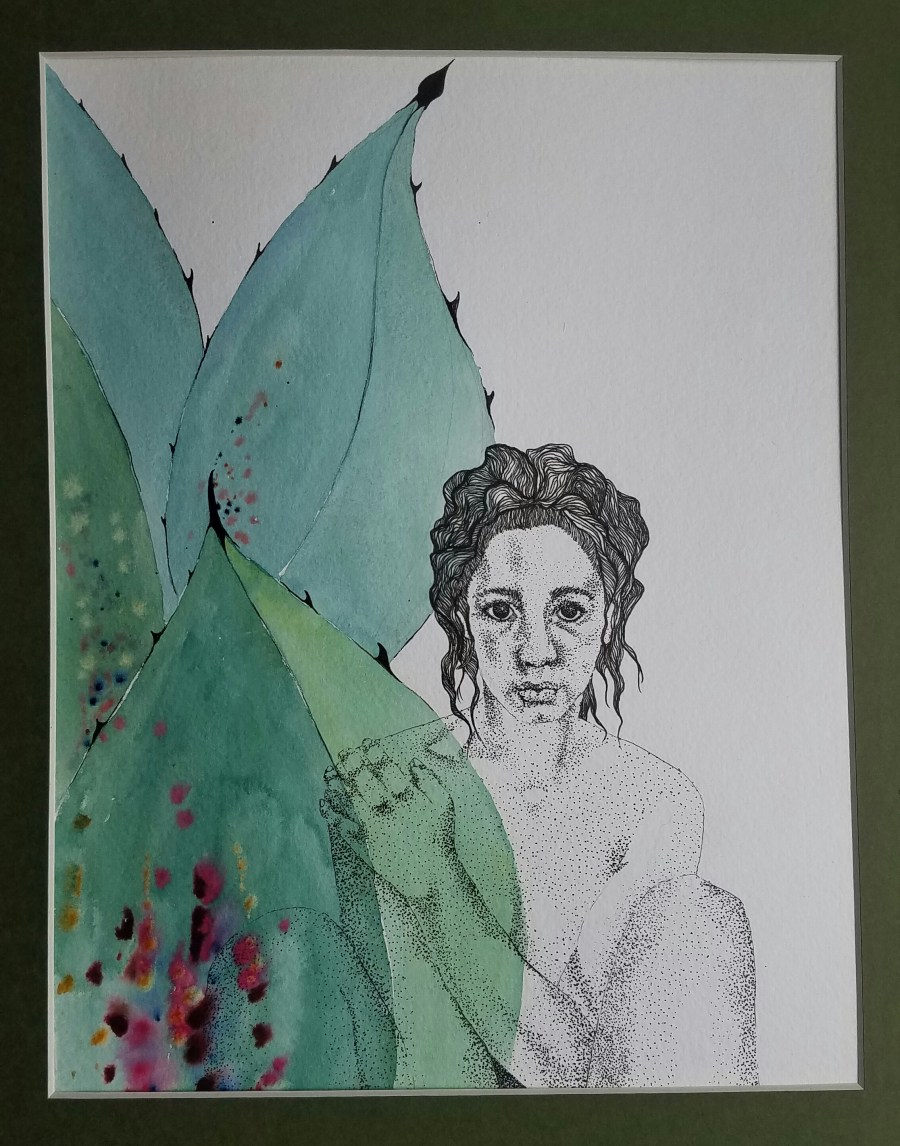
A Lady Yells Through The Open Side Door Into An Autistic Woman’s House
Don’t shout for me
I can’t answer you With what little words I have lodged in my throat
Jagged, rough stones painted with child’s words of endearment and scary,
With what little words I have lodged in my throat
Tufts of string tangled, matted into balls with lint and dust fluff that choke,
With what little words I have lodged in my throat
Long-lost pieces of jewelry, inherited but forgotten, dreams for heirs,
With what little words I have lodged in my throat
Frogs jumping, some without legs, others with poisonous purple and yellow skin,
With what little words I have lodged in my throat
Stickles of doubt, a twitchy snout, prodding the soil for grubs, friendship,
With what little words I have lodged in my throat
Wind and water, hail and lightning, electric trembling crashes, orgasmic catastrophe,
With what little words I have lodged in my throat
Swallow down, broken glass, internal bleeding, quiet feeling, not today.
Lady—
not today.
My door is open
But that doesn’t mean I’m home.
Breakfast in a Box – an entryfrom the On a Road poem series
Somehow we ended up at a Jack in the Box
a dumpy hut-like fast food joint
which, frankly, none of us had heard of
prior to this alcohol fogged trip to the coast
but they serve breakfast so here we are.
The place isn’t open yet
so we’re loitering in the parking lot
in what would look quite convincingly
like a stolen Pontiac Trans Am -no, really officer, it’s our friend’s car; disregard those beers in Sal’s pockets-
It might be a tough sell job.
The three of us followed a road map
to get us back here to Redondo Beach
after a little shuteye in a suburban
subdivision overnight. What a night!
When the place finally opens
we order some chow to quell our hangovers
while Dean finds a payphone and
makes a call to Damion back in the valley
“Hey, what’s up man?
Yeah, your car’s fine – we slept in it.
But somehow we ended up at a Jack in the Box.”
“Better to sleep in an uncomfortable bed free, than sleep in a comfortable bed unfree.”
Hellywood – an entry from the On a Road poem series
On our way to see a bit of Hollywood
what the big attraction is
driving down some six lane holocaust
through miles of calighetto in our chevy
– it just goes on and on, the blight –
rundown buildings, trash in the gutter
barred windows, last ditch cars
with junkyard fenders
duct-taped plastic windows
boarded up buildings, razor wire
and gates on every door
for godssake even the
sorry looking palm trees long for
the suburbs to try and get out of
this shithole. California is its own kind of
gecko changing colors without warning
and laying motionless in the hot sun.
It seems we’ve got to go through
hell to get to Hollywood.
Setting Pace – The first entry from the On a Road poem series
Sitting at the bar in southwest Minneapolis
the boys and I realize we’re starting the trip
out with recklessness and wonton disregard for schedule
as we sip our beers, talk and contemplate
the estimated forty hour trip we have in front of us.
Dean raises his glass and declares, “to California, boys!”
Sal and I echo back “to California.”
and take long draws from our
watered down American pilsners.
We’re just three twenty-somethings
with highly uncertain futures doing what we do best at
this point in our lives; drinking, hanging out and
living in the immediate because, if nothing, else
we’ve got each other, these drinks and dreams
of palm trees, the pacific ocean and So Cal girls
on this grey day in March and
I guess that will have to do for now.
At the moment, everything is alright by me
as the beer squelches the uncertainty of the road ahead
and the jukebox plays Def Leppard’s
counsel to the lost boys of minnesota
“All right
I got somethin’ to say
Yeah, it’s better to burn out
Yeah, than fade away…”*
“I was halfway across America, at the dividing line between the East of my youth and the West of my future.”
― Jack Kerouac, On the Road
*Lyrics courtesy of Def Leppard, “Rock of Ages” from the album Pyromania
This book came to be after I joined a writing workshop several years ago. I began writing humorous stories about trips I’d taken to the Boundary Waters Canoe Area Wilderness over the past 30 years. Over time, the number of stories grew and eventually the book developed into a three part memoir that crosses three generations, my father’s, mine and that of my children. It was published in 2014 and was my first book.
Boundary Waters Dreamin’
(An excerpt from Dirty Shirt: a boundary waters memoir, by eLectio Publishing)
Our trip to the Boundary Waters Canoe Area (BWCA) of northern Minnesota, for the four of us high school friends was, truthfully, a considerable downgrade. The original plan was to drive out west to California after graduation. When you’re eighteen, you take your newly ordained adulthood as a chance to assert your independence. What better way to do that than to drive two thousand miles with your friends? Since none of us owned a car, nor had the money or means to get much further west than South Dakota, we “right-sized” our dreams into a five day canoe trip. The California Dreamin’ was good while it lasted.
The BWCA is a million-plus acres of relatively untouched wilderness extending from northern Minnesota to the Canadian border. It consists of more than a thousand lakes strung together by crystal clear rivers and man-made portages cut through the dense forest. No motorized vehicles are allowed into the area, so all travel must be done on foot or in canoes. The natural beauty, abundant wildlife and deafening quiet of the deep wilderness, make the area attractive to any outdoor purist.
Disregard the fact that, after five days in this natural beauty, I wanted nothing more than to leave it. Leave it and seek such niceties as running water, hot showers, and the female form. Being in the woods, while good for the soul, is hard on the body. There’s something about wilderness living that assures me the Industrial Revolution was a good thing.
There were four of us high school buddies altogether; Pete, Doug, myself and Pat, who I still consider a “best friend” today. We did most of our organizing at a planning meeting in the basement of Pat’s house. Doug brought a map and the route was planned, paddling distances charted, schedules set; all things that seemed like rational, logical thoughts at the time. However, we were oblivious to the fact that, in the BWCA, the schedule is always the first thing to go. As wilderness rookies, we had to give the appearance of actually having a plan by charting out where we would eat, sleep and fish. In reality, by the time we set up our tent on the first night, we were already behind schedule. We quickly realized that the only time that matters in the woods is, how long until dark? For the most part, when it gets dark, everything stops.
Because most of us were eighteen and were relying entirely on our own means for transportation, there was relatively little parental input into the planning process. My guess is they were just relieved that we shed the California trip for something more local and attainable. The travel plan we crafted using our collective teenage brain trust, was to start out by train from St. Paul to Duluth, Minnesota. From there, we would catch the Greyhound bus to Grand Marais a hundred miles northeast. We would then rely on hitchhiking sixty miles up the Gunflint Trail to the outfitters at our “starting point.” Sounds like a slam dunk, doesn’t it? Yes sir, no possible holes in that itinerary. Rock solid.
***
Much of what makes or breaks a camping trip is determined by the quality and selection of equipment. This was our first foray into the woods without parents or other family involved. We packed what we thought would work best, given our experience and substandard budget. None of us knew any better, nor had the means to do anything about it if we did. Besides, it was just a canoe trip, how hard could it be? We would quickly learn how unforgiving the water and woods were to ungainly equipment and poor planning.
During the planning meeting, the subject of tents was brought up.
“I’ve got a couple of two man tents. One is brand new and the other is pretty beat. I think the zipper may even be broken. It’s down in my basement somewhere. You’re welcome to use it, but there are no guarantees on it,” I said.
After a few shrugs, no one else offered anything better, so we decided to make it work. When you’re a pie-eyed high school grad, you can make anything work. Needless to say, I was happy I made the investment in the new Eureka a few weeks before. My brother Tom always said that you cannot underestimate the value of a good tent, and I certainly knew which tent of the two I was sleeping in.
The rest of the equipment we took with us all bordered on substandard, designed more for car-camping than canoeing and portaging. Of course there was the “essential” Coleman lantern. It sounded good on paper; providing light for playing cards, warding off black bear, sending SOS signals to aircraft overhead, and the like. Unfortunately, we neglected to factor in the possibility of broken-mantles. Mantles are small sacks or pouches made of cloth. They tie to the gas outlets on a lantern and when they burn they turn to ash, serving as the ignition point for the lantern. They work fine as long as the ashen mantles are not bumped or broken. If they are broken, what you have on your hands amounts to a low-grade civilian flamethrower. They can be fun if you’re sporting an asbestos flannel shirt and a welder’s helmet, but otherwise, pretty useless in the woods.
After discovering the broken mantles, there were many moments when heaving the useless device into the woods seemed like the most prudent thing to do; a kind of a deep woods Molotov cocktail for the city boys. Instead, the item became our boat anchor. Not in the literal sense, but rather it was the item which, when rendered inoperable, suddenly becomes dead weight that must be lugged around for the duration of the trip. Every trip has one.
Another poorly chosen article for a couple of us on the trip were large, cumbersome, cotton-filled sleeping bags. Why mess with goose down when you could lug what amounted to a seven pound cotton sponge on your back? They were bulky and heavy when dry; when wet, they quickly doubled in weight. Ounce for ounce, they were undoubtedly the most burdensome items on the trip.
Perhaps the most definitive of all bad equipment choices was the drab green, army-issued folding military shovel. Unlike the cotton “sleeping bag sponges” and the “lantern flambeau,” which had functional purposes behind being packed, this item’s utility escapes me even to this day. Lord, what were we thinking? It turns out foxholes aren’t really necessary on most campouts. Trenches, not so much, either. If a US/Canadian war were to break out, though, we were set.
Some good advice for any camping trip is if you can’t eat it, wear it, sleep in it, or start a fire with it, leave it home.
Once the equipment was defined, we focused on choosing our route. We used a popular map series that existed for the area at the time. Having spent my entire career in computer mapping, I can appreciate many of the good qualities of these maps. They were simple to read, had decent cartography, and, for the most part, credible content. They also had a light film coating to them giving them a crackly feel and making them water resistant. This worked to our advantage when water from the canoe paddles would drip on them during our paddling. I can also attest that they float for short periods of time if blown overboard, but that is another story.
For all of the good qualities these maps have, I also recognize their shortcomings; small issues such as missing or incorrect portages, scale problems and, of course, the question of how up-to-date they were. To the manufacturer’s credit, however, they do have one of the most all-encompassing disclaimers I’ve ever seen, which reads:
This map is not intended for navigational use and is not represented to be correct in every respect.
Wow. A map not intended for navigation. My question then becomes, what is it supposed to be used for? Birdcage lining? Fish wrap? Fire kindling? Now, kindling was an idea we gave some thought to.
It’s a bit like publishing a cookbook and then disclaiming it by saying “Hey, this book shouldn’t be used to cook anything.” Or perhaps like the weatherman saying there’s a forty percent chance of rain. What does that really mean? The map might better be served by taking a meteorological approach by saying “You have a forty percent chance of getting lost if you use this map.” At least give me some odds to work with.
We continued our planning despite the heavily disclaimed map. Using it, we plotted a circuitous route beginning at the outfitters on Seagull Lake who would drop us off at our entry point on Gunflint Lake. From there we would head north, then west, then back south, eventually finishing at the outfitters back on Seagull Lake. The map indicated several portages that circumvented fast or impassible water using a dashed line. We knew portaging was part of the whole experience, so it did not deter us from sticking with the plan. In fact, the possibility of a little excitement was alluring to all of us. The entire route would be an ambitious, yet achievable paddle, especially for four young men in good physical condition.
The final planning details centered around meals and the food we would bring. It was unanimous that trying to make a meal plan comprised of freeze dried food would be prohibitively expensive. I pointed out that as long as we brought dried food and no meat, we would probably be okay.
“Oh, we can bring meat. My brother has brought hamburger up before,” Doug chimed in.
“How does he keep it from spoiling?” I asked.
“You just freeze it real good and pack it in ice. No problem.”
I looked at him with questioning cynicism. My brother Tom, who had been to the area on a few occasions and who I deemed the expert, always said that food requiring ice would add more bulk and weight than lugging it around would be worth. Furthermore, if you choose to bring frozen food, you should use dry ice, as it lasts longer and does not melt. I am not sure if I mentioned the dry ice idea, but I am sure my skepticism about bringing meat shone through fairly implicitly. Doug seemed sure and confident, so we agreed he would pack it and we would have hamburgers for a couple of our dinners. With the last of the details planned, we said our goodbyes and left, anxious and excited for our coming adventure.
***
While the planning was done corporately, we were all in charge of packing our own clothes, sleeping bags and other equipment. I started by setting up and airing-out the two tents in the front yard. The new Eureka was set up in less than ten minutes and was a thing of strength and beauty. Its poles stretched the nylon cream colored rain-fly taut, and the zippered screening was solid defense against mosquitoes and other bugs. On the inside, I would go so far as to say it had that new tent smell, not unlike a new car.
The second tent took a bit more to set up. The poles and joints were not as nicely engineered as the Eureka and it quickly became clear it was a cheap knock-off model. Unlike the subtle cream color of the Eureka, its bastard brother was highway cone blaze-orange and visible from a mile away. The only subtle quality about it was the protection it would provide against the bugs, given its broken zipper. It was more of the Charlie Brown variety, difficult to assemble and almost as difficult to look at.
As the evening grew late, I moved on to packing my clothes. I stuffed a couple of shirts, pants, underwear and socks into the hand-me-down frame backpack I inherited when Tom upgraded. When I went to pack what was probably my most essential piece of clothing, my heavy duty flannel shirt, I realized it was dirty.
I mentioned to my brother Tom that my favorite camping shirt was in the laundry and it was too late to try and wash it.
Now, he had been watching most of the packing process with great amusement, sprinkled with moments of disbelief, and felt compelled to offer some sage words of wisdom.
“You know, Jim, it’s always good to start a trip with a dirty shirt.”
His tone was dripping with sarcasm. It became the haunting voice of reason in my head for the rest of the trip. The actual dirty shirt was the least of my issues. It was the basic precepts behind starting a trip of such magnitude with substandard equipment and planning that haunted us in so many situations. The thing was, I knew he was right. Tom was a seasoned camper who backpacked his way across the country a few years earlier. I was determined to do this trip my way, however. I wanted to prove I could do it as well as anyone, so chose to press on and make my indelible mark in the woods.
Our call for submissions to the Swimming with Elephants Publications Monthly Feature project has concluded. Much to our surprise and enjoyment, we received far more submissions than expected. Our editing staff has been very busy reading the vast assortment of submissions.
When creating an anthology, we may receive a hundred submission and grant publication to anywhere from 25-50%. Unfortunately, with this project we only have six slots to fill. With the overwhelming number of submission, this made our publication rate at about 6% (Yes, we really received that many).
We are working diligently to review submissions and send responses by the end of the month. Please do not be dismayed if your collection was not chosen.
We plan on attempting this project again in six months. If your work wasn’t chosen, please consider resubmitting at that time. You may resubmit some of the same material or create a completely new submission.
We invite you to continue to following Swimming with Elephants Publications. Within the next year we will be running several chapbook competitions, as well as other possible publication opportunities through anthologies.
Remember: Writers need readers. Please support your fellow artists by reading, sharing, and commenting on their work. Pick up a poetry book, swing by an open mic, or follow a blog or two. If you want to have an audience, you need to be an audience.
It didn’t take my mother long to comment on how quiet I am, today.
“Awfully quiet, Sar.”
“I’m a pretty quiet person,” I replied, as mildly as I could. Sometimes I am surprised she hasn’t noticed this yet, or assimilated it into her understanding of who I am as a person, in the twenty-seven years we’ve known each other.
I refocused on getting ready for our hike, making sure I had water, stretching my hips.
We started out and it was a lovely day for hiking. My mother kept plowing of onto side paths, wrong ways, and I had to redirect her a few times before I decided to walk a few paces ahead of her and my father. My me about some plants he saw on the trail that were also at the stable where they keep their horses.
“That’s fennel,” I said. “It grows wild around here, and it’s edible.” I pointed out a couple more plants I knew, an invasive species, castorbean, that was abundant in the area, before I went back to walking quietly ahead. My mother kept up a steady chatter behind me, telling the lizards how much she loved them and yelling at the truck doing construction a few hills away, across the highway.
“Get outta here, you trucks, you’re blocking my view of nature!” A Chicago native turned Californian. She was also very upset by the presence of a water drainage pipe, a property boundary sign, and some telephone cables.
We stopped to take pictures at least three times on the way up, and at about eighty percent of the way there was a lone wind cave where we stopped to rest and, of course, take more pictures. I took some of my parents, watching their dynamic through the lens. My father stoic, a trouper, as mom grabbed his hand four photos in and wrestled him gently into a more affectionate pose for photos five through eight. I even got him to smile for the last one.
My turn came; Dad and I switched places. I leaned next to Mom on the low oak branch and smiled at my dad and the camera.
“Look Gav, Sarah’s in one of her ‘I don’t like to be touched’ moods,” my mother announced as she proprietarily threw her arm over my shoulder, pulled me in and put her other hand on my closer shoulder. I allowed it, it was her birthday, and what did it cost me? I could let go of somethings and be nice, on her birthday. And then I thought we were done, I made a move to get up, but she stopped me, put her arm further up my neck and used her palm to turn my cheek so that I was facing her.
“I want to take one like this, with us looking right at each other.”
I looked her in the eyes a moment, light green, ringed in makeup. I’m sure I pulled back from the thought before I made a conscious decision.
“No, this is too much,” I said. I got up and flapped my hands at her, like that might lessen the blow. “You’re making me uncomfortable.”
She gave a heavy sigh. “Can’t say I didn’t try,” as if that was something people accuse her of often.
Say you didn’t try what, I wondered. Didn’t try to make your daughter take an awkwardly staged photo? Didn’t decide to violate someone’s boundaries even though you made it clear you were aware of them?
“All right,” I said, clapping my hands together. “Are you guys ready to go to the top?”
“Let’s just go back,” my mom said, smoking her e-cigarette and facing away from us, to the mountains.
“What?” my Dad.
“Let’s just go back. I’m good.” She repeated.
“Well,” I said, “We’re really close. Like ten minutes from the top. I’d really like to go all the way up.”
“Okay, fine. I’ll wait here.” She puffed away, still not looking at us.
“I feel like you’re being passive-aggressive,” I ventured, slightly terrified of a mountain-side blowout and the subsequent silent hike down to the car where I would be both irritated and terrified that my mother would stumble in her anger and roll off a cliff.
“No, I’ll wait here, I’m fine.” she said again.
My dad and I mentally shrugged at each other and mosied up to the top, chatting about the best path, indigenous plants, my recent trip to the Grand Canyon with a boyfriend of whom I am unsure of their approval. It was pleasant, the view was lovely, I was satisfied with the completion of the hike.
We found our way back to Mom who was sitting on a rock, blowing bubbles. She apparently always has them in her purse. Most people don’t leave the house without their keys, cellphone; my mother: bubbles.
“How was it?” She is still not looking at us.
“Pretty cool.” My father is perennially nonchalant. “Really nice view.”
“Blow some bubbles.” She hands the tube and wand to Dad.
“I’m good for now, maybe later.”
“They make you happy.”
“I’m already happy,” he says, but he blows the bubbles. Makes some jokes about them causing airplane accidents. I marvel at his patience.
We make our way back to the car, pretty uneventfully, and make our way to the beach twenty minutes away where we have planned to picnic.
We get there and it is gorgeous. I jump in the ocean before I grab a chicken leg and eat with my parents.
“I can’t believe I didn’t bring a swimsuit!” Mom exclaims.
“Go naked,” Dad says. He still has his boots on.
“I have leggings on, and a sports bra.”
“I’ve gone in in a sports bra before,” I shrugged. I am smoking at a remove now, so as not to affront my parents who have been off cigarettes for a year. Graciously neither of them comments on my bad habit.
My mother says, “Is that a dare?” She is already stripping off clothes.
I said, “No, I’m just saying it can be done. I’ll join you in a minute.”
She runs in, screaming at the cold and flailing in the shallows. I walk in after her, past the breakers, and I glide around, doing my water dance, letting the ocean buoy and cradle me. I am chilly but at peace, I watch the water ripple through my fingers. This is the happiest I’ve been all day, and I am glad my mother is in the ocean with me. I look back at her.
She is still thrashing in the break line, yelping, plowing her body into the waves. She is smacking at the water as if she can beat it down. She reminds me of a child, specifically a boy child, aggressive for no discernable reason. “These waves are attacking me!” She yells.
And suddenly I realize, this is how it is for her. In her eyes, she is always under attack, she always has to fight, and if there isn’t anything to attack she must create it. Maybe she can’t feel strong on her own, there must always be an oppressor, she is the underdog, the caboose.
And I wonder why she bothers me so much, with that victim mentality; her fibromyalgia, her little toe that moves separate of her cognitive command, the way she views cancer as an evil force reaping strong, sweet people from her life, that time she had lupus, her restless leg syndrome, her recent diagnosis of bipolar disorder and subsequent bout of mood-stabilizing drugs that did everything but and in her words, ‘were going to kill her’.
How can I be so irritated by someone who has been diagnosed with mental illness. Shouldn’t I, as much as anyone who has struggled with depression, be more loving and compassionate? Or is this just the way of it with mothers and daughters, with parents and their children? Is it one of those things I won’t understand until she is dead and buried?
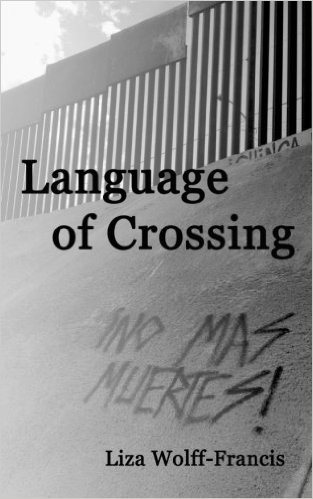
When the manuscript of Language of Crossing first crossed my desk, I immediately knew it was an important work which profoundly reflected upon some of the most disturbing issues concerning immigration in America. In light of recent events, the building of “the wall” and American relations with Mexico, it is even more important than ever.
Through poetry, Liza Wolff-Francis tells the stories, demonstrates the horrors, and gives a human face to those people who are so greatly affected by the immigration. The struggle continues. This is not a reflection of what is past, but a collection of what continues. If you want to truly understand the strife of the undocumented, start here.
Liza Wolff-Francis’s Language of Crossing is a collection of poetry that mirrors the true heart-stories along the US/Mexico border. Giving face, voice and humanity to all those who make their way across fronteras, her work is that of a necessary endeavor. She writes of a reality that must be ignored no longer. It is the struggle, strife, and violence that is endured by those who flee their country in hopes of a better life. Her poems, brutally honest and minute, rouse compassion as all good poetry must and begs the question of accountability. Language of Crossing is a political outcry, a finely tuned collection of endurance of a people, and a passionate advocacy for all to take notice. Wolff-Francis is a real activist planting poetic prayer flags across the vastness of a desert.
“In Brownsville there’s a hundred
stash houses where they keep the immigrants
once they’ve crossed over in north heaven.
The coyotes take their shoes from them,
take their clothes so they don’t run, keep them
behind locks. Quiet. Callados.
En silencio, until the next trek
on into the land of the free.
(from the poem “In Brownsville there’s a stash house where they keep the immigrants”)
The poems in Language of Crossing by Liza Wolff-Francis will break your heart. Is this the America we live in? Yes it is. Is this the way we treat the poor and the needy? Yes it is.
Whatever happened to: “Give me your tired, your poor, Your huddled masses yearning to breathe free, The wretched refuse of your teeming shore. Send these, the homeless, tempest-tost to me, I lift my lamp beside the golden door!” –The New Colossus, by Emma Lazarus
These words have become the Myth of America. Wolff-Francis brings the tragedy, the reality of the true faces of the immigrants to life, not the myth…she paints us a picture of what is going on right now on our southern borders. She gives individuals crossing our borders a human face, a human heart, and a human longing for a better land, a better place, a simple place where you can raise your family without the fear of death at every corner. And for many of these immigrants, what they find is everything but. Wolff-Francis doesn’t pull any punches. What she writes about, we can not ignore, we can no longer turn a blind eye to. This is an important collection of poems, and you need to read it.
I’m so glad I was able to get a copy of Language of Crossing. As I’ve been listening to NPR and hearing about humanitarian crises in Africa and the Middle East, I’ve kept wondering at how strong our national political policies must be, that we turn a blind eye to what’s happening at our threshold. Before the book launch reading at La Resistencia Bookstore in Austin, I knew there were people crossing the border, and many if not most of those journeys did not have a happy ending. But I hadn’t realized there was a humanitarian crisis in progress, so I feel that I’ve at least had my eyes opened in a way that allows me to look at what’s going on more critically and realistically. Not that I’ve saved any lives yet, per sé, but I’m glad to be able to read about your perspective, rather than only hear the President’s. And the found poem that opens the collection, “Border Trauma,” is still haunting me months later.
About the Author:
Liza Wolff-Francis is a poet and writer with an M.F.A. in Creative Writing from Goddard College. She was co-director for the 2014 Austin International Poetry Festival and a member of the 2008 Albuquerque Poetry Slam Team. She has an ekphrastic poem posted in Austin’s Blanton Art Museum by El Anatsui’s sculpture “Seepage” and her work has most recently appeared in Edge, Twenty, unseenfiction.com, Border Senses, and on various blogs. As a social worker, she has worked with Spanish speaking immigrant populations for twenty years. She wrote the play “Border Rising” from interviews with undocumented Mexican immigrants in Los Angeles. She currently lives in Albuquerque, NM.
is she in there
would they let me enter
can they smell my expatriation, my absence
the reek of logic and earthy pleasures
would I dip my hand
in that confusingly municipal
basin of hallowed water and
dredge it across my body
in quarters and
would I remember to genuflect and
would I find the comfort
she gave at fourteen:
slightly left of the altar
the byzantine magdalene
not who we are supposed
to supplicate to but
the mother instead,
the mother I still crave
22
Poetry by Gigi Bella
Available at Amazon for 12.95
This is Gigi Bella’s first full length collection of poetry. Encompassing many of her most popular performance pieces and a few new additions, this collection is a perfect representation of her current accomplishments as a young writer.
Pick up a copy today to help her get to WOWPS 2017, and don’t forget to leave a review on Goodreads and Amazon.com.
GiGi Guajardo//{gigi bella} is an award-winning poet, musical theatre actress, and educator of the arts. She recently earned the title of Albuquerque’s Woman of the World 2017 representative. She was named a group piece champion at the 2016 National Poetry Slam and a National Semi-Finalist at the 2013 National Poetry Slam as a member of the Albuquerque Slam Team. She is a student at the University of New Mexico pursuing a bachelor’s degree in American Studies with a Theatre minor. She loves marshmallows, sparkling purple lipstick, and Wes Anderson movies. She continues to be a hopeless roma
GiGi Guajardo//{gigi bella} is an award-winning poet, musical theatre actress, and educator of the arts. She recently earned the title of Albuquerque’s Woman of the World 2017 representative. She was named a group piece champion at the 2016 National Poetry Slam and a National Semi-Finalist at the 2013 National Poetry Slam as a member of the Albuquerque Slam Team. She is a student at the University of New Mexico pursuing a bachelor’s degree in American Studies with a Theatre minor. She loves marshmallows, sparkling purple lipstick, and Wes Anderson movies. She continues to be a hopeless romantic.
I log on to Mom’s computer; I have to print forms to renew a form, or something. I open her browser. While I’m waiting for everything to load I scan her bookmarks: Pinterest, Facebook, something about organic living, Instagram. My eye snags on the last one. It isn’t a link to my Mom’s account; it’s a bookmark for my sister’s page.
I feel the quick shock I always do when I see or hear her name, like sticking your tongue on a battery. I should know it’s coming, it has been years, and I’ve touched the tip of my tongue to hundreds of black and gold squares in my life, but that metallic zip catches me off guard and lingers in my mouth, every time.
I swallow.
I look back towards the hall, where my mother is laying in bed with a migraine. I feel immediately awful for her. I try not to think about Hannah. I try to come to terms with the fact that right now, and maybe always, she just isn’t here. And it hurts when I think about it, but I accept it, and swallow it down, and I go through my life just a little bit lonelier.
But I know Mom thinks about her every day, I didn’t need to see the bookmark to know that. There isn’t I time I come to visit her that she doesn’t mention the prodigal daughter. I just sit. I think about how Mom probably looks at pictures of her every day. I think about how she is dealing with the grief that most women hope they never know: the grief of losing a child. I think about how that grief is tempered by other things: the joy that my sister is still healthy, and alive, just somewhere else; the anger and pain of rejection, but multiplied a hundred by a hundred times; the guilt of thinking that maybe it is her fault and the paradoxical rage of knowing she did everything she knew how to do.
I press my tongue on the roof of my mouth. A man on the radio said if you do this, it is impossible for your body to produce tears. It was meant for as a helpful tip in stressful work situations. Quickly I realize the man on the radio lied, or was misinformed.
I dash the tears from my face. I can’t do this every day. It would rip me apart. I am now, for all intents and purposes, an only child. If I think about it the loneliness is too much, the betrayal is too much, the thought of her caring so little about us to do this, to give up, is gutting.
So I try not to think about it. I think, instead, of how I can be a better daughter. I think of how I can love my parents enough for the both of us. I think of how I can make my parents proud enough for the both of us.
If you own this publication, please take a minute to visit Amazon or Goodreads and give it some stars. If you do not own this publication, order it today and get some reading down on your lazy cloudy afternoons.
Thank you to everyone who have followed Swimming with Elephants Publications and to all those whom we met in 2016.
This year meet with some rocky times, and SwEP did not escape some of that downfall. We slumped in sales which lead to fewer publications than in past years. We had to end our quarterly anthology series due to lack of funds and low submissions. Also, a powerful project, entitled “Woke,” fell through which lead to disappointment for this Editor in Chief.
However, the year can not be denied some excellent successes. We have had some amazing author’s join our Parade including Wil Gibson, SaraEve Fermin, and Jennifer E. Hudgens.
One of our most popular titles, They Are All Me by Dominique Christina, has been picked up by the Women’s and Gender’s Studies, Sociology, Public Health, and Gender/Cultural Studies Department at Simmons College in Boston, MA. Also, one of our authors, Manuel Gonzalez of …But My Friends Call Me Burque, was named ABQ Poet Laureate and continues to perform prolifically around the New Mexico.
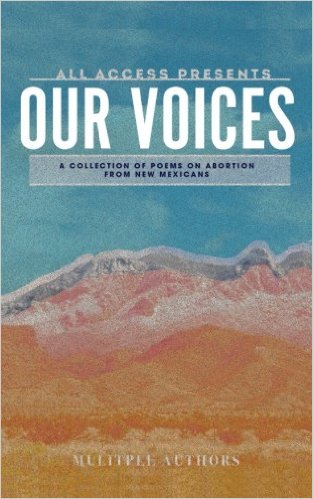
We also continue with our charitable causes by participated in putting together anthologies for All Access and Voces, an ABQ based youth program. We continue to work closely with various members of the community to create publications to spread awareness and give the youth a voice.
Most importantly haven’t gone bankrupt yet and are hopeful that we will be able to fund future projects.
The new year looks promising with an upcoming release from Gigi Bella, a chapbook contest guest judged by Jessica Helen Lopez, along with some other hopefuls projects peaking around the corners.
If you are one of our authors, please remember that your success does depend on your hustle. We will support you in every way possible, but the best (and most profitable) way to get your books into people’s hands is to place them there yourself. Share your work publicly by booking features or mini tours.
If you are one of our readers, please continue to check out our latest publications and submit reviews to Amazon, Goodreads, or send us a review for the website. We are always looking for more reviews and more readers.
Thank you to all for your support. We will be seeing you in 2017.
The People of the Sun is an emerging performance group made up of some very talented people credited with Albuquerque Fame.
The group, a threesome at its core, consists of Jessica Helen Lopez, former ABQ Poet Laurette, a nationally recognized published author with West End Press and Swimming with Elephants Publications, Manuel Gonzalez, current ABQ Poet Laurette and youth advocate, also published by Swimming with Elephants Publications, and Glenn “Buddha” Benavidez, of Reviva and Stoic Frame fame who also performs solo as DJ Buddhafunk. With a core group of that quality, this newly formed performance group holds high promise as a potential powerhouse.
On December 17th, the People of the Sun played their third show at the Draft Station in Albuquerque New Mexico. The venue offered a comfortable environment, good beer, and friendly enthusiastic patrons.
Opening with a meditative Chakra jam session and closing with a similar jam, the sandwich material was engaging, entertaining, varied, and compelling. Well received spoken word performances by Lopez and Gonzalez mixed with the professional beats of Benavidez created a show that is unique and inimitable.
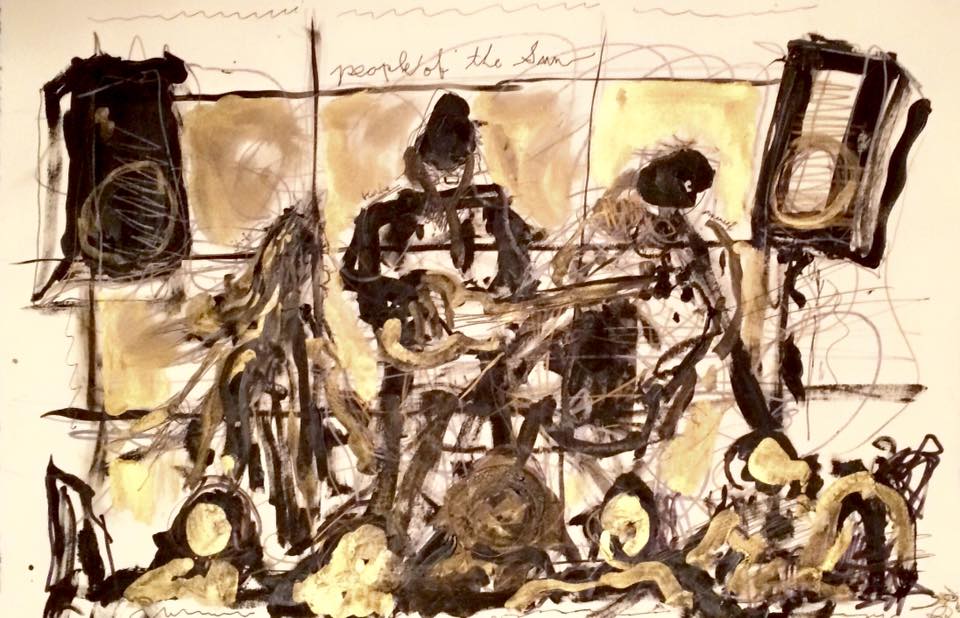
Because the group strives to represent community, other local poets were invited to perform with the group throughout the evening. Local poets, including Gina Marselle, Katrina K Guarascio, and Bill Nevins, fellow Reviva menstrual, Jerel Garcia, and local artist John Barney, who had a table in the corner where he created magnificent artistic renderings of the performances (represented in this review) throughout the evening, all contributed to the eclectic festivities of the evening.
The show ran roughly three hours with a couple of breaks for conversation and collaboration creating an incredible comfortable and open environment.
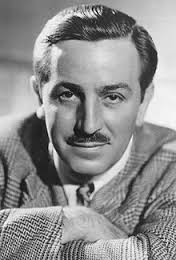
an unauthorized intimate reflections with Walt Disney
A Review by Katrina K Guarascio
Wish Upon a Star, an unauthorized intimate reflections with Walt Disney, presented by Enchanted Rose Theater, written by Andy Mayo and directed by James Cady, is a humanizing take on a legend of entertainment. Set in a screening room in 1966, Vernon Poitras portrays Walt Disney who, while conducting a video will of sorts, takes the audience through the details of the building of the Disney empire and his own childhood.
The concept is based on a rumored movie that Disney made weeks before his death, where he speaks to animators and story men, not only to thank them for their labors, but also to urge them to create his final dream: EPCOT. Since the video was never found and is often denied, writer Andy Mayo takes it upon himself to create that video for us in this short play.
Poitras gave a wonderful portrayal of Disney in what essentially was an hour and a half monologue. Poitras looked and played the part perfectly requiring the audience to fall into his story without question. Despite being a one man show, the audience was held at attention, listening to his stories and feeling his trials and successes. He shifted with ease through the history of some of the most well known Disney stories, including Snow White, Steamboat Willie, Bambi, connecting with the audience and their own personal associations with the Disney catalog. By the time the transition to a more personal history of the man came, Poitras had hooked the audience making the character alive, visceral, and engaging. Truly, it was a wonderful performance.
One of the most memorable parts of the story was when Disney spoke of his creation of Fantasia, particularly the episode entitled The Apprentice. He claims that in the story he was the sorcerer, “Yensid” (Disney spelt backwards) but through his story, he realized he was not the great wizard who mentored Mickey and cleaned up his mess, but instead Mickey himself. He states is frustration, “Turns out I’m not the sorcerer, just a damned mouse.” He claims to be “a phantom of myself” entertaining a very universal and human feeling, How many of us have lost ourselves trying to become someone else?
While watching the performance there were some questions that roamed my mind. Not being a Disney historian, I didn’t know what aspect of the play were factual and what may have been incorporated for entertainment factors. Did Disney really hate Cinderellla? Did he really think of Fantasia as his masterpiece? Where the stories of his own childhood, telling stories of a youth that was cold, difficult, and so very relatable, true or simply for entertainment purposes? Where these stories based on facts? An internet search might answer all these questions, but as I left the theater I found myself completely uninterested in fact checking. The purpose of the play was not to give a Wikipedia biography of the man. It was to connect us as human beings. The great character became someone that reminds people of their own difficulties, their own exhausted efforts, their own happiness.
While listening to Poitras speak, he became less the infamous Disney and more the common man filled with simple regrets, different personas, dreams, and disappointments. He was my grandfather talking about his childhood paper route. He was my fellow artist disappointed at the failure of a project he cared so much about. He was a man who thought he was one thing, but turned out to be something else.
If writer Andy Mayo’s goal was to humanize the character whilst filling his audience with positive memories, he was successful. Set your history books and internet searches aside for this one and listen to the story of a legend who was really just a man.
See Wish Upon a Star at The Cell Theater (liveatthecell.com) December 2-3, 9-10 at 7:30 and December 4th & 9th at 2:00pm. Rated PG for adult language.
A great big thank you to everyone who submitted to our upcoming anthology, tentatively entitled “Woke.” Our editors are completing the selection process and we hope to have a list of accepted submissions by the end of September.
Sometimes we all need a little inspiration in our journaling and creative writing endeavors. If you are feeling a little stuck in the mud, check out Swimming with Elephants Publications Interactive Writing Journal Vol 1. More than just a book of blank lined pages, this journal includes various prompts and challenges to inspire and affect your writing. Expect a new Journal 2-3 times a year.
The Interactive Writing Journal is available through Amazon and is priced as close to cost as allowable in order to give more value to the writer.
You may also consider ordering the Interactive Journal for a creative writing class or writing workshop. For discounts on bulk orders, contact Swimming with Elephants Publications directly at swimwithelephants@gmail.com. Use “Interactive Writing Journal Bulk Order” in the subject line for a quicker response.
Now available on Amazon.com, SaraEve Fermin’s second full length collection, You Must be This Tall to Ride. Order your copy today and keep your eyes open for the official book release happening soon.
What is being said about You Must Be This Tall to Ride
“This is how I make myself better. Measure flour, sugar, room temperature butter,” is one of the many fantastic lines from the roller coaster of emotions that is, You must be this tall to ride. SaraEve has found a way to to make us laugh while crying. The last time I felt like this is when we when SaraEve and I were baking our emotions in an oven and then sticking our heads in to see if it would make our poetry better. Thanks SaraEve. And thanks Sylvia Plath.
-Thomas Fucaloro poet: Depression Cupcakes and Mistakes Disguised as Stars
My God, this book. Thank you. My God. I loved it. The brilliance and tissue-tender resilience of (Fermin’s) words show the reader a beautiful brutality. The tears of joy in my eyes made it painful, if not impossible, to read each page more than once.
I am grateful for this experience.
– Sam Bassam, international performance poet and activist
In her second book, “You Must be This Tall to Ride” SaraEve Fermin does hard work with that which so many poets avoid; the poems here are not merely “how I got through/behold my strength” but rather, the nuanced and measured stories that happen after life’s big moments. In defiance of a life filled with so many “one-step-back” erosions, she shows us how simple actions can be the victories that enable us to move one-step-forward; she shows us how everyday, just-showing-up love means more, in the long run, than capital L fireworks ever can.
-Ryk McIntyre, performance poet, editor and author; After Everything Burns
So often in poetry collections, we read work that bear witness to the conflict, whether that be Poet vs. The World, Poet vs. Nature, or even Poet vs. Themselves. However, in You Must Be This Tall To Ride, we’re gifted with a unique perspective – namely, what happens after the battle is fought? Contained in these pages are poems that bear witness to the afterwards; to the fighter, post-victory & battle-wearied, who must carry on with their lives, with matters of day-to-day existence. If we consider the myth of Sisyphus, cursed for eternity to push the boulder up a never-ending hill, then we must look at this work as an exploration of what may have been, had Sisyphus ever found a way to finish his task.
– William James, author, rebel hearts & restless ghosts
SaraEve is a performance poet and epilepsy advocate from northeast New Jersey. A 2015 Best of the Net nominee, she has performed for both local and national events, including the 2013 Women of the World Poetry Slam, the Epilepsy Foundation of Greater Los Angeles 2015 Care and Cure Benefit to End Epilepsy in Children and as a reader for Great Weather for MEDIA at the 2016 NYC Poetry Festival on Governors Island. You might have met her volunteering at various national poetry slams. A Contributing Editor for Words Dance Magazine and Book Reviewer at Swimming with Elephants Publishing, her work can be found or is forthcoming in GERM Magazine, Yellow Chair Review, Drunk in a Midnight Choir and the University of Hell Press anthology We Can Make Your Life Better: A Guidebook to Modern Living, among others. Her second full length anthology, You Must Be This Tall to Ride, will be published by Swimming with Elephants Press in fall 2016. She believes in the power of foxes and self-publishing.
So often in poetry collections, we read work that bear witness to the conflict, whether that be Poet vs. The World, Poet vs. Nature, or even Poet vs. Themselves. However, in You Must Be This Tall To Ride, we’re gifted with a unique perspective – namely, what happens after the battle is fought? Contained in these pages are poems that bear witness to the afterwards; to the fighter, post-victory & battle-wearied, who must carry on with their lives, with matters of day-to-day existence. If we consider the myth of Sisyphus, cursed for eternity to push the boulder up a never-ending hill, then we must look at this work as an exploration of what may have been, had Sisyphus ever found a way to finish his task.
– William James, author, rebel hearts & restless ghosts
“In her second book, “You Must be This Tall to Ride” SaraEve Fermin does hard work with that which so many poets avoid; the poems here are not merely “how I got through/behold my strength” but rather, the nuanced and measured stories that happen after life’s big moments. In defiance of a life filled with so many “one-step-back” erosions, she shows us how simple actions can be the victories that enable us to move one-step-forward; she shows us how everyday, just-showing-up love means more, in the long run, than capital L fireworks ever can.”
SaraEve Fermin is a performance poet and epilepsy advocate from northeast New Jersey. A 2015 Best of the Net nominee, she has performed for both local and national events, including the 2013 Women of the World Poetry Slam, the Epilepsy Foundation of Greater Los Angeles 2015 Care and Cure Benefit to End Epilepsy in Children and as a reader for Great Weather for MEDIA at the 2016 NYC Poetry Festival on Governors Island. You might have met her volunteering at various national poetry slams. A Contributing Editor for Words Dance Magazine and Book Reviewer at Swimming with Elephants Publishing, her work can be found or is forthcoming in GERM Magazine, Yellow Chair Review, Drunk in a Midnight Choir and the University of Hell Press anthology We Can Make Your Life Better: A Guidebook to Modern Living, among others. Her second full length anthology, You Must Be This Tall to Ride, will be published by Swimming with Elephants Press in fall 2016. She believes in the power of foxes and self-publishing.
Saltwater Under Brittle Sky: A Chapbook of Poetry
Lori DeSanti
A Review by SaraEve Fermin
They say that we are made of about sixty percent water, give or take. Some of us more—babies, men, maybe water signs. Imagine a world of blues and greens. Close your eyes, water everywhere—lapping at your feet, falling gently into your cupped hands, misting gently to envelop your face. Water warm and gentle, water cleansing and bright.
Lori DeSanti’s Saltwater Under Brittle Sky is a lot like taking a walk through a sun shower on your own island, like waiting for the clouds to break and dry any wet that remains on your cheek—from dew to tears. This collection of poems is compact but beautiful, unpretentious in their succinct on page presentation. Each of the nineteen pages is no more than two pages long, and the collection is small enough to tuck into a back or inside coat pocket, a collection asking to be read in the open air, under trees and next to running streams.
In ‘The Artist’, DeSanti manages to capture the sharp beauty of South Shore, Bermuda. She gives the cove a personification that renders this land ancient and begging to be discovered, reminding us of how small we are in God’s palms-
…hurricane
god cupping teal water in his palm as it
dripped in big gulps from his chin.
There is a vein of darkness that runs through this collection, shadows that hide among the breeze. These poems temper the lightness of DeSanti’s work; keep the poems from floating away. The ‘Brittle’ of the title can be found in ‘Disclosure’-
I am full of sin and it’s growing.
How can you not know what
I’ve let his hands make of me?
Still, we return to water, like a stream empties into the ocean, like tears evaporating. There is a reminder that sadness can be all encompassing, that sorrow can be the beginning of healing-
Sometimes the rain is cathartic—sometimes I find myself
drowning in a puddle without even getting wet.
-The Continuum
There is a triumph to this collection, my favorite part. There is a reminder that in the mess of a struggle sometimes you have to ground yourself. Sometimes the only thing that you have to rely on is yourself. DeSanti reminds us that survival is attainable by metamorphosis, like in ‘Metaphor’:
We can grow scales in
the darkness or we can forget
there is venom building
up
in our teeth.
DeSanti reminds us to revolt against the water in our bodies. This brave collection carefully examines relationships with the earth, the self, with love and with her wild ocean heart. For who are we if not people constantly thrown into a current of emotions, forced to navigate the waters of humanity, each of us paddling our own boat madly, looking to make a connection with another? DeSanti reminds us that there are islands out there, waiting to be inhabited and perfumed with love. All you need to do is reach for them.
Let the ocean beat you
down to size. It teaches us.
-Bury That Moment
Saltwater Under Brittle Sky is available now from Swimming by Elephants Publishing. Order from Amazon here. To learn more about the author visit loridesantipoetry.wordpress.com.
Book Reviews by SaraEve Fermin:
SaraEve is a performance poet and epilepsy advocate from New Jersey. A 2015 Best of the Net nominee, she has performed for both local and national events, including the 2013 Women of the World Poetry Slam and for the Greater Los Angeles Epilepsy Foundation 2015 Care and Cure Benefit to End Epilepsy in Children. The Editor in Chief of Wicked Banshee Press, a Contributing Editor for Words Dance Magazine and Book Reviewer for Swimming With Elephants Publications, her work can be found or is forthcoming in GERM Magazine, Words Dance Magazine, Drunk in a Midnight Choir and the University of Hell Anthology We Can Make Your Life Better: A Guidebook to Modern Living,, among others. Her first full length book, View From The Top of the Ferris Wheel, will be published be Emphat!c Press in 2016. She believes in the power of foxes and self publishing. Learn more here: http://saraeve41.wix.com/saraevepoet
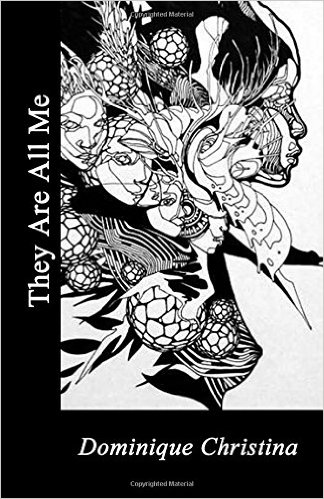
They Are All Me by Dominique Christina Book Review by SaraEve Fermin
Dominique Christina is a woman who wears many hats—activist, poet, performer, educator, author. Emblazoned across all of those titles one word sticks out, clearer than the rest: mother. Nowhere is that more of a celebration than in her newest book, They Are All Me. Please, don’t expect a book of sing-song rhymes or lullabies. Christina is here to sharpen her tongue and pen on the rarely explored edges of humanity, dealing with race, genocide, and womanhood.
In the books introduction, Jack Hirschman describes his reaction to first hearing and then reading Christina’s work ‘…I saw PAGE, I saw BOOK—which is not usually the case when it comes to a lot of so-called Slam or spoken word poetry I’ve heard.’ What makes Christina’s work so readable and relatable is the intensity as well as the connection to content. The first poem in the book is aptly titled Summer of Violence, words that ring heavy and true in our time, cutting into the heart of what is killing us–
Your tomorrow has a bullet in it. Ask Trayvon Martin. Your tomorrow has a bullet in it. Ask Jordan Davis. Your tomorrow has a bullet in it. Ask Michael Brown.
Christina dares the entire country to look at what it has done, to ask what is happening to all the black and brown bodies disappearing into the open mouths we call graves, guns, cells. No one is off the hook—not the president (A Letter To Obama, Which Means Nothing), not Hollywood (Bad Blood, For Whitney Houston and Her Daughter Bobbi), certainly not White Men (The Sons of Oil Men), even the Country has to answer for it’s inexcusable course in Oh, America:
I went out looking for what you promised and found a toothless grin, an empty pot, boneyard lullabies, sweet-less shores, witches burnt to cinder, little black girls bombed in churches,
they are all me.
…See how incurably permanent I am.
Many of the poems in this book are dedicated to the mothers or family members of people who have been murdered for simply living. From the Civil Rights Movement to #BlackLivesMatter, Christina refuses to turn a blind eye to the cruel treatment of African Americans, will not swallow the phase ‘post-racial’ no matter what you chase it with. She remains vigilant in the struggle to keep many of these names relevant in today’s clickbait and celebrity status driven world. A mother herself, the rage she feels over these losses as well as the heartache can be felt in every carefully placed word. She examines the devastating violence of the Civil Rights Movement in poems such as Birmingham Sunday and A Poem For Coretta:
They need me to do something about it, wrestle the past down to a fairy tale and affix ‘And they all lived happily ever after’ at the end.
It has been almost fifty years since the man who said ‘I Have A Dream’ was assassinated for sharing his ideas of tolerance and peace. Still, Christina opens her heart to those who are murdered, to the black and brown boys we are losing, to the mothers grieving. It is here we see the frustration in being so full of language and still so denied the right to speak, here that Christina howls for the mothers who have only tears. In Mothers of Murdered Sons (For Mami Till, Emmet’s Mother; Sabrina Fulton, Trayvon Martin’s Mother; and Leslie McFadden, Mike Brown’s Mother), she splits open each family drama, again drawing on the juxtaposition between violence and faith:
The prayers of mothers with murdered sons don’t arrive in heaven anymore. Could be they never did. And maybe God’s a charlatan pitching pennies to the sound of black boys breaking the world with their bleeding. Maybe he’s busy with more righteous indignation. Maybe the melody ain’t right.
Intersecting motherhood and poetry is a woman, a powerful woman who can conjure up words that might make you think twice before hitting send. When an unnamed ‘Dude on Twitter’ made an offputting comment about menstruation and sex, attempting to bring shame to womanhood, Christina wrote The Period Poem, blasting all misconceptions people may have about the resilience of being female–
And when you deal in blood, Over and over like we do, When it keeps returning to you, That makes you a warrior and While all good generals know not to discuss Battle plans with the enemy Let me say this to you, dummy on Twitter: If there’s any balance in the universe at all… You’ll be blessed with daughters.
Because women ARE strong as HELL! Christina has written a testimony to the women who have been holding it together for years, women fighting for their lives, women who have lost children, women who we have lost to violence. Through each poem, no matter how brutal the content shines a core of love, a central subject that is being a woman of color in today’s world. In Improbable Bird (for Elaine Brown), Christina writes about the fight between patriarchal expectations and the need for independence in order to make change–
You were supposed to grow up to Be one of them, To imprison you wanderlust, In favor of a husband and A job that asked of you high heels and long skirts, but you Knew something about the madness
That revolutionaries have to keep.
They Are All Me is a reminder that the past can not remain silent. That we need to keep digging at the damage until we find the source of what is wrong and fix it, that the band-aids are not working. She addresses national crisis the so many others have shied away from. She covers Vietnam, Katrina, 9/11, Ferguson, all from a personal perspective. These poems are powerful in the way they transport you back in time, how they pulse the blood, remind you there is more at stake than just a title or a prize. Christina is writing to save lives. In No Consonants, No Vowels, she writes
Language is slippery when you don’t use it, when nobody speaks to you, when no letters come. Language is a graveyard of carrier pigeons.
The book contains many of Christina’s slam poetry favorites that can be viewed on YouTube—Birmingham Sunday, Karma, The Period Poem, and others. It is a collection of heartbreak and of celebration. A telling of this country from the blood that runs through it, through us. Dominique Christina has given you all of her with this book. Take the gift with hungry hands.
SaraEve is a performance poet and epilepsy advocate from New Jersey. A 2015 Best of the Net nominee, she has performed for both local and national events, including the 2013 Women of the World Poetry Slam and for the Greater Los Angeles Epilepsy Foundation 2015 Care and Cure Benefit to End Epilepsy in Children. The Editor in Chief of Wicked Banshee Press, a Contributing Editor for Words Dance Magazine and Book Reviewer for Swimming With Elephants Publications, her work can be found or is forthcoming in GERM Magazine, Words Dance Magazine, Drunk in a Midnight Choir and the University of Hell Anthology We Can Make Your Life Better: A Guidebook to Modern Living,, among others. Her first full length book, View From The Top of the Ferris Wheel, will be published be Emphat!c Press in 2016. She believes in the power of foxes and self publishing. Learn more here: http://saraeve41.wix.com/saraevepoet
There is beauty in breathing razorblades and exhaling a painted sunset as delicate as it is too much to behold; that’s what Danielle Smith accomplishes in her first publication, GNARLY. And “gnarly” is the perfect description of Smith’s words as she takes you for a rollercoaster through first loves and heartbreaks, all playing out like a soundtrack under the visual madness of a New Mexico skyline. Smith has lit a match that burns just as bright as one of those remarkable sunsets.
And she manages to set the reader on fire, too, turning your heart into the campfire that might light the night as she whispers in your ear bittersweet-everythings; because this is the human experience. It is raw, gritty, soiled, messy, gnarly. From the truth showcased in teenage romance, in poems such as Minerals and Freckles, to the raw and heartfelt honesty of (His) Tie Dye and Making Nothing Out Of Something, Smith manages to take the reader down a new route where so many have tread before. She’s just wearing new shoes and holding a machete, fierce as a bleeding heart, to bushwhack her way through the bramble of her own thinking.
Her book reads like an indie record, but you want everybody to hear this one. Other poems, like Super 8, showcase true artistry, peppering the reader with hidden messages like whisper-kisses, finally ending on the “title track”, Gnarly which is everything and nothing you’d expect upon reaching the end: all madness, all frantic, all knees knocking, lip biting, nail scratching grit.
Overall, both deeply touching as it is a shock that such a young voice could carry so much wisdom and experience.
Her book, as with all Swimming With Elephants Publications, can be found online on Amazon and goodreads, where you can leave a review for this up-and-coming brilliant poeta.


 With what little words I have lodged in my throat




















 Swimming with Elephants Publications