Swimming with Elephants Publications, LLC would like to reintroduce to you to Kat Heatherington.
Kat Heatherington’s collection, the bones of this land, was published in 2017 after winning first place in a SwEP’s 2017 chapbook competition.
“The Bones of this Land is an exquisite collection of poetry and craft at its apex. Heatherington is an expert at subtle but powerful verse. Her words read like a whisper but resonate like a bomb. Here is a book that will leave you satiated, but curiously enough, hungry for more. ”
~Jessica Helen Lopez,
author of Always Messing With Them Boys and a recipient of the Zia Book Award
Pick up Kat Heatherington’s the bones of this land from Bookworks ABQ
Kat Heatherington is a queer ecofeminist poet, sometime artist, pagan, and organic gardener. She has been living in Albuquerque since 1998, when she moved here to earn a Master’s in English at UNM.
In 2007 she collaborated with a group of three other unrelated adults to buy land in the Rio Grande Valley and form Sunflower River intentional community, sunflowerriver.org. Ten years and many life lessons later, Sunflower River is still going strong, and still providing plenty of material to write poems about.
Kat’s work primarily addresses the interstices of human relationships and the natural world. She has several self-published chapbooks, available from the author at yarrow@sunflowerriver.org. Her work can be read at https://sometimesaparticle.org.
Swimming with Elephants Publications, LLC would like to reintroduce to you to Jessica Helen Lopez.
Jessica Helen Lopez’s chapbook, cunt.bomb., was the first book published by Swimming with Elephants Publications in December of 2013. Her follow up collection, The Language of Bleeding, was published with SwEP in preparation for her travels to Nicaragua.
Listen to Jessica Helen Lopez perform at Ted X ABQ:
Already own a copy? Please write a review on Amazon, Barnes and Noble, or Goodreads, or submit a review to swimwithelephants@gmail.com for publications on this site.
Jessica Helen Lopez
Recently named one of 30 Poets in their 30’s to watch by MUZZLE magazine, Jessica Helen Lopez is a nationally recognized award-winning slam poet, and holds the title of 2012 and 2014 Women of the World (WOW) City of ABQ Champion.
She’s also a member of the Macondo Foundation. Founded by Sandra Cisneros, it is an association of socially engaged writers united to advance creativity, foster generosity, and honor community.
Her first collection of poetry, Always Messing With Them Boys (West End Press, 2011) made the Southwest Book of the Year reading list and was also awarded the Zia Book Award presented by NM Women Press.
She is the founder of La Palabra – The Word is a Woman collective created for and by women and gender-identified women. Lopez is a Ted Talk speaker alum.
You may find some of Lopez’s work at these sites –LaPalabra.abqnorthwest.com, thebakerypoetry.com, and asusjournal.org.
Her work has been anthologized in A Bigger Boat: The Unlikely Success of the Albuquerque Slam Scene (UNM Press), Earth Ships: A New Mecca Poetry Collection (NM Book Award Finalist), Tandem Lit Slam (San Francisco), Adobe Walls, Malpais Review, SLAB Literary Magazine and the upcoming Courage Anthology: Daring Poems for Gutsy Girls (Write Bloody Press).
Already own a copy? Please write a review on Amazon, Barnes and Noble, or Goodreads, or submit a review to swimwithelephants@gmail.com for publications on this site.
Wil Gibson
Wil Gibson was born from a good idea and a bottle of bourbon and raised in some of the poorest communities in northern Illinois and eastern Arkansas. He has had work appear with Midwestern Gothic, Radius, Yellow Chair Review, Drunk in a Midnight Choir, and Electric Cereal (among others), was nominated for a Pushcart Prize and Best of the Net 2015. He would like to talk to you for hours on end about lighthouses and random other things. (also, in the interest of full disclosure, he has already started smoking again) He currently lives in California, but the locals call it Jefferson.
Swimming with Elephants Publications, LLC would like to reintroduce to you to Jack Hirschman.
Jack Hirschman is an emeritus poet laureate of San Francisco, a member of the Revolutionary Poets Brigade, and the League of Revolutionaries for a New America. Both his publications with Swimming with Elephants Publications honor the work and words of revolutionaries from around the world.
His first collection with SwEP, entitled Passion, Provocation and Prophecy, serves as an ode to Pier Paolo Pasolini. It contains an interview between Jack Hirschman and Justin Desmangles discussing the work of Pasolini and the influence his work has had over time. The interview is followed by two arcanes written by Hirschman which reflect on the man Pasolini was.
Jack Hirschman’s newest release from Swimming with Elephants Publications is a translation of the poetry from Jusef Gërvalla, known as a journalist and a musician as well as a poet, novelist, and founder of the Marxist-Leninist group, the National Movement for the Liberation of Kosovo. In collection, entitled BEKIMI I NËNËS / A Mother’s Blessing,Jack Hirschman and Idlir Azizaj present a the first translation of Jusef Gërvalla’s poetry in the English Language.
Jack Hirschman (b. NYC, 1933) is the emeritus 4th Poet Laureate of the City of San Francisco (2006-2009). He has published or edited more than 100 books of poetry and essays, including translations from ten languages: Mayakovski (Russian), Neruda (Spanish), Artaud (French), Lombardo (Italian), Celan (German), Laraque (Haitian), Gjakova (Albanian), Gogou (Greek), Glik (Yiddish) and Nwadike (Swedish), among many others.
His own major work is The Arcanes, (2006) published by Multimedia Edizioni of Salerno, Italy in the American language in which the two Arcanes in this book appear. It is a 1,000 page book of his longer poems, which he calls Arcanes, and a 2nd massive volume of more than 150 new Arcanes are scheduled to be published by the same publisher in 2015.
He is a founding member of the Revolutionary Poets Brigade of San Francisco, and the World Poetry Movement in Medellin, Colombia.
Swimming with Elephants Publications, LLC would like to reintroduce to you to Kai Coggin.
Kai Coggin’s collection, Periscope Heart, was published in late 2014 after winning first place in a SwEP’s 2014 chapbook competition.
“Kai Coggin’s first full-length collection, Periscope Heart – as the title may suggest – overflows with intimate reflections on life and love that offer the reader heartfelt observations into places ordinarily beyond our range of vision. Through sensual chronicles that beautifully illuminate taboo subjects, Coggin’s poetry draws from nature and personal narratives to intimate us with her passion for justice, social change and spirituality, in dynamic, seductive strokes.”
– Catherine Ghosh
Editor of Journey of the Heart: An Anthology of Spiritual Poetry by Women
Listen to her read here:
Order Kai Coggin’s Periscope Heart directly from her per her website: kaicoggin.com
Kai Coggin is a poet and the author of PERISCOPE HEART, her stunning debut collection released by Swimming with Elephants Publications, (2014). Her second full-length collection is entitled Wingspan, a deeper dive into the soul and sound of this woman, this activist, this lover, this spirit. Wingspan was released on Earth Day, April 22, 2016, by Golden Dragonfly Press. 2017 brings the poet off the page into sound with the much anticipated release of her debut spoken world album SILHOUETTE.
Kai was born Kimberly Katherine Coggin on New Year’s Day 1980 in Bangkok, Thailand. She was raised in Southwest Houston (Alief), and is currently a happy blip in the 3-million-acre Ouachita National Forest in Hot Springs National Park, Arkansas.
Before transitioning to a career in writing, Kai was first a 9th and 10th grade English teacher, who took her students outside for poetry and drum circles on the lawn, and built a life-size balcony, and meter-stick-aluminum-foil-wrapped swords in her classroom for Romeo and Juliet. People wondered about her methods… but the students learned… and loved her. She convinced her students of the power of their own writing with a poetry and persuasive writing project that culminated with a visit from the internationally acclaimed author of The House on Mango Street, Sandra Cisneros.
Kai believes that learning is a personal journey for everyone, that cannot be constricted and confined by the classifications and labels of standardized testing. She strives to, someday, help change the paradigm of education as a whole. In Houston, despite (or because of) her radical methods, she was recognized as Teacher of the Year, District Secondary Teacher of the Year, and competed for Regional Teacher of the Year against 5, out of 85,000 teachers.
Presently, with her focus shifted more towards poetry, Kai is a specialized Teaching Artist of Creative Writing, on the Arts in Education Roster for the Arkansas Arts Council and Arkansas Learning for the Arts. She also teaches a community adult creative writing class at Emergent Arts called Words & Wine.
Kai holds a Bachelor of Arts in Poetry and Creative Writing from Texas A&M University, and an honorary degree from the school of Hard Knocks. She writes poems of love, spirituality, the striving of the soul, feminism, race, sexuality, global injustice, metaphysics, and beauty. Everything that she writes is infused with Heart and Light.
Her work has been published or is forthcoming in Blue Heron Review, Lavender Review, Broad!, The Tattooed Buddha, Split This Rock, Yellow Chair Review, Drunk Monkeys, Snapdragon, ANIMA, Elephant Journal, and many other literary journals and anthologies. Her poetry has recently been nominated twice for The Pushcart Prize, as well as Bettering American Poetry 2015, and Best of the Net 2016.
Kai knows that words hold the potential to create monumental and global change, and she uses her words like a sword of Beauty. She can be found most Wednesdays at a local venue, reading her poems into an open mic, hoping the wind carries her words out to the world.
The Promethean Clock or Love Poems of a Wooden Boy is a poetry book that took third place in the SwEP chapbook competition in 2017 and is simply a stellar piece of work!
MJR Montoya will be performing at Bookworks in Albuquerque, New Mexico on Saturday, April 21st for Poetry Month!
It’s your chance to buy a copy in person and talk to the poet!
The Promethean Clock or Love Poems of a Wooden Boy is a poetry book that took third place in the SwEP chapbook competition in 2017 and is simply a stellar piece of work! MJR Montoya will be performing at Bookworks on Saturday, April 21st for Poetry Month! It’s your chance to buy a copy in person and talk to the poet! Join us from 3-5pm.
If you haven’t checked out The Bones of This Land you’re missing out! Kat Heatherington will be performing at Bookworks on Saturday, April 21st AND at Peregrine Books in Prescott, Arizona on Saturday, May 19th!
Swimming with Elephants Publications, LLC would like to reintroduce to you to Matthew Brown.
Matthew Brown’s collection, Verbrennen, was published from Swimming with Elephants Publications in January 2014 marking it one of the earliest publications by SwEP.
Listen to Matthew Brown perform a poem from his collection here:
Already own a copy? Please write a review on Amazon, Barnes and Noble, or Goodreads, or submit a review to swimwithelephants@gmail.com for publications on this site.
Matthew Brown
Matthew Brown is a young poet born and raised in Albuquerque, New Mexico. Though relatively new to slam poetry, he has preformed alongside some of Albuquerque’s most seasoned poets, and represented New Mexico two years in a row as a member Unidos Poetry Collective at Brave New Voices. Matthew Brown’s poems expose social, racial, and economic inequalities from both a Hispanic and African American perspective.
Swimming with Elephants Publications, LLC would like to reintroduce to you to MJR Montoya.
MJR Montoya’s collection, The Promethean Clock or Love Poems of a Wooden Boy, was published in late 2017 by Swimming with Elephants Publications, LLC after winning 2nd place in our 2017 chapbook competition.
“These poems are a way of telling you what I saw, at least the remnants of those things. My poems have codes in them. They have forms that have long since lost favor. They have rhyme schemes and syllabic structures of old and new places. They have formlessness that abides by current trends, but embraces none of them wholesale. They are, as Milton once wrote, poems that attempt to champion the unnamable and the indeterminable. Mine are the equations of empty sets and irrational numbers as much as they are of ritual and nostalgia. I have decided not to appease all critique. I am at rest, because the people I trust most have said that there is something in them, something of where I am from, what became of my home, and what is becoming in the world. And for the first time in a long time I’m not ashamed of my part in this story. With all that I am, let these poems be a part of my apology to the world and to my beloveds, an apology for each moment as it passes to the next…”
Manuel (MJR) Montoya, was born and raised in Mora, New Mexico. He is a professor at the University of New Mexico. He blends studies of philosophy and literature with studies of international relations, economics and management to understand the evolution of the global political economy. He received his undergraduate degree at UNM, with graduate schooling from New York University, Oxford University, and Emory University. He is engaged in community work to support the creative economy, he is dedicated to work that eliminates child exploitation worldwide, and he is passionate about handmade craft – he has been an amateur watchmaker for 12 years. He has published poetry and short stories in various national publications.
Swimming with Elephants Publications, LLC would like to reintroduce to you to Paulie Lipman.
Paulie Lipman’s chapbook, from below/denied the light, is fresh of the presses being published in January of 2018. Lipman’s chapbook was the first collaboration between Sugar Booking Entertainment and Swimming with Elephants Publications.
Listen to Paulie read from his collections here:
Pick up Paulie Lipman’s chapbook, from below/denied the light from Bookworks ABQ
Keep your eyes open for Paulie Lipman coming to a town near you!
Paulie Lipman
Paulie Lipman is a former bartender/bouncer/record store employee/Renaissance Fair worker/two time National Poetry Slam finalist and a current loud Jewish/Queer/ poet/writer/performer. His work has appeared in the anthology ‘We Will Be Shelter’ (Write Bloody Publishing) as well as The Emerson Review, Drunk in a Midnight Choir, Voicemail Poems, pressure gauge, and Prisma (Zeitblatt Fur Text & Sprache).
Swimming with Elephants Publications, LLC would like to reintroduce to you to Lori DeSanti.
Lori DeSanti’s chapbook collection, Saltwater Under Brittle Sky, was published in the fall of 2015 by Swimming with Elephants Publications, LLC.
Lori DeSanti’s Saltwater Under Brittle Sky is a lot like taking a walk through a sun shower on your own island, like waiting for the clouds to break and dry any wet that remains on your cheek—from dew to tears. This collection of poems is compact but beautiful, unpretentious in their succinct on page presentation. Each of the nineteen pages is no more than two pages long, and the collection is small enough to tuck into a back or inside coat pocket, a collection asking to be read in the open air, under trees and next to running streams.
Pick up Lori DeSanti’s Saltwater Under Brittle Sky from Amazon today!
Lori DeSanti
Lori DeSanti graduated with her MFA Degree in Poetry from Southern Connecticut State University in 2014. She’s the recipient of the 2014 William Kloefkorn Award.
Her work has been anthologized in Wising Up Press’ 2015 Anthology, “Siblings: Our First Macrocosm”, and the 2014 Writer’s Digest “Poem Your Heart Out Anthology”.
She is the feature poet at Erbacce Press for October 2015. Her work has appeared in Spry Literary Journal, Mouse Tales Press, Adanna, Drunk Monkeys, East Coast Literary Review, Winter Tangerine Review, Ekphrasis and elsewhere.
Swimming with Elephants Publications, LLC would like to reintroduce to you to Brian Hendrickson.
Brian Hendrickson’s collection of poetry, entitled Of Children / And Other Poor Swimmers, was published by Swimming with Elephants Publications, LLC in September 2014 after winning second place in our yearly chapbook competition.
Of Small Children / And Other Poor Swimmers is centered in the push-pull of place. Hendrickson wants to leave behind his Florida childhood, where every memory is still moist, but he continues “calling on the voices” and crossing back, wading into love, loss and danger with vivid imagery.
— Lauren Camp,
author of One Hundred Hungers and winner of The Dorset Prize (Tupelo Press)
Already own a copy? Please write a review on Amazon, Barnes and Noble, or Goodreads, or submit a review to swimwithelephants@gmail.com for publications on this site.
Brian Hendrickson
Brian Hendrickson’s poems have appeared or are forthcoming in a range of publications, including Indiana Review,North Carolina Literary Review, and New York Quarterly.
For his poetry Brian has been nominated for a 2011 Pushcart Prize and Best of the Net award, recognized as a 2013 finalist forSmartish Pace’s Erskine J. Poetry Prize, and awarded a 2013 New Mexico-Arizona Book Award for appearing in Beatlick Press’ La Llarona anthology.
Since earning an MFA in Creative Writing and Literary Arts from the University of Alaska Anchorage, Brian has taught and tutored writing at colleges and correctional facilities in Alaska, Florida, North Carolina, and now New Mexico, where he is currently pursuing a PhD in Rhetoric and Writing. Brian’s scholarship focuses on the role of writing in social movements and student activism.
Swimming with Elephants Publications, LLC would like to reintroduce to you to Kristian Ashley Macaron.
Kristian Ashley Macaron’s chapbook, Storm, was published by Swimming with Elephants Publications in June 2015.
Kristian Macaron’s first chapbook of poetry features her various experiences in New England during the midst of some of the most powerful storms to pass through in the last several years. Her poetry is raw, honest, and revealing. This is a wonderful for collection for anyone who has experience the confusing effects of natural disaster as well as those who may have never had such an experience.
Already own a copy? Please write a review on Amazon, Barnes and Noble, or Goodreads, or submit a review to swimwithelephants@gmail.com for publications on this site.
Kristian Ashley Macaron
Originally from Albuquerque, NM where she attended the University of New Mexico, Kristian received her MFA from Emerson College in Boston, Massachusetts and thus melded her love for the colorful Southwest with the stunning New England coast.
Kristian’s first poetry chapbook, Storm (amazon), was released in July 2015 from Swimming With Elephants Publications in Albuquerque, NM. Her other publications of fiction and poetry are published in The Winter Tangerine Review, Philadelphia Stories, Duke City Fix: The Sunday Poem, Lightning Cake Journal, The Bellows American Review (The [BAR]), Ginosko Literary Journal, Elbow Room New Mexico, Watermelon Isotope, and Medusa’s Laugh Press.
She has taught scriptwriting at the Emerson College Pre-College Creative Writers’ Workshop and currently teaches English at the University of New Mexico-Valencia Branch. View Kristian’s work at Kristianmacaron.com
Swimming with Elephants Publications, LLC would like to reintroduce to you to Christopher Grillo.
Christopher Grillo’s chapbook, Elegy for a Star Girl, was published by Swimming with Elephants Publications in May 2017.
Each poem in Elegy for a Star Girl is categorized into three elements of existence: The Other World, The Here and Now, and Transcendence, and each poem is a combination of life experiences, Science Fiction, and space. These poems illustrate great depth within the soul, body, and mind, and the illuminating language and imagery express the universe as a metaphor. Life is questioned and answers are hard to find. Life is a journey that must be experienced from above. Sit back, relax, and enjoy the ride.
Already own a copy? Please write a review on Amazon, Barnes and Noble, or Goodreads, or submit a review to swimwithelephants@gmail.com for publications on this site.
Christopher Grillo
Christopher Grillo is the author of Heroes’ Tunnel (Anaphora Literary Press, 2015). His poems appear in Drunk Monkeys, Sport Literate, Biline, Spry, Aethlon, and more. Grillo is a graduate of the University of New Haven where he played strong safety for the Chargers, and of Southern Connecticut State University’s MFA program. He lives and works in New Haven, Connecticut as an 8th grade language arts teacher and moonlights as an assistant football coach at his high school alma mater.
Swimming with Elephants Publications, LLC would like to reintroduce to you to Beau Williams.
Beau Williams’ full length poetry collection, Nail Gun and a Love Letter, is fresh of the presses being published in January of 2018. Williams’ chapbook is the result of a collaboration between Sugar Booking Entertainment and Swimming with Elephants Publications.
Already own a copy? Please write a review on Amazon, Barnes and Noble, or Goodreads, or submit a review to swimwithelephants@gmail.com for publications on this site.
Keep your eyes open for Beau Williams coming to a town near you!
Beau Williams
Beau Williams is a fairly optimistic poet based out of Portland Maine. He co-runs a weekly poetry class at Sweetser Academy and facilitates workshops at high schools and colleges around the New England area. His work has been published in numerous poetry websites and journals.
Beau has performed internationally and nationally both as a solo artist and with the performance poetry collectives Uncomfortable Laughter and GUYSLIKEYOU. He was the Grand Slam Champion at Port Veritas in 2014 and was the Artist in Residence at Burren College in Ballyvaughan, Ireland in January of 2017. Beau’s book, Rumham, is available for purchase on Amazon.com.
Already own a copy? Please write a review on Amazon, Barnes and Noble, or Goodreads, or submit a review to swimwithelephants@gmail.com for publications on this site.
Eva Marisol Crespin
Burque native, Eva Marisol Crespin is a slam poet who has been writing and performing poetry since the age of 12. Coming off a win at the 2016 National Poetry Slam Group Piece Finals, Eva has been a part of a number of slam teams who have seen final stage. She continues to slam and write poetry in her hometown of Albuquerque. She is currently working towards her degree in social work, working as a server, and teaching writing workshops in the community. She identifies as an Indigenous, Queer, Xingona, Xicana, who is sculpting words and ripping herself open to speak her truth.
Swimming with Elephants Publications, LLC would like to reintroduce to you to Liza Wolff Francis.
Liza Wolff Francis’s chapbook, Language of Crossing, was published in the fall of 2015 by Swimming with Elephants Publications, LLC.
Liza Wolff-Francis’s Language of Crossing is a collection of poetry that mirrors the true heart-stories along the US/Mexico border. Giving face, voice and humanity to all those who make their way across fronteras, her work is that of a necessary endeavor. She writes of a reality that must be ignored no longer. It is the struggle, strife, and violence that is endured by those who flee their country in hopes of a better life. Her poems, brutally honest and minute, rouse compassion as all good poetry must and begs the question of accountability. Language of Crossing is a political outcry, a finely tuned collection of endurance of a people, and a passionate advocacy for all to take notice. Wolff-Francis is a real activist planting poetic prayer flags across the vastness of a desert.
Already own a copy? Please write a review on Amazon, Barnes and Noble, or Goodreads, or submit a review to swimwithelephants@gmail.com for publications on this site.
Liza Wolff-Francis
Liza Wolff-Francis is a poet and writer with an M.F.A. in Creative Writing from Goddard College. She was co-director for the 2014 Austin International Poetry Festival and a member of the 2008 Albuquerque Poetry Slam Team. She has an ekphrastic poem posted in Austin’s Blanton Art Museum by El Anatsui’s sculpture “Seepage” and her work has most recently appeared in Edge, Twenty, unseenfiction.com, Border Senses, and on various blogs. As a social worker, she has worked with Spanish speaking immigrant populations for twenty years. She wrote the play “Border Rising” from interviews with undocumented Mexican immigrants in Los Angeles. She currently lives in Albuquerque, NM.
Swimming with Elephants Publications, LLC would like to reintroduce to you to Dominique Christina.
Dominique Christina’s full length poetry collection, They Are All Me, was published by Swimming with Elephants Publications in July 2015. Dominique Christina is an incompatible force in the poetry world and is the author of my collections. SwEP is honored to be able to share her work in this collection.
Listen to Dominique Christina perform her poetry here:
Already own a copy? Please write a review on Amazon, Barnes and Noble, or Goodreads, or submit a review to swimwithelephants@gmail.com for publications on this site.
Dominique Christina
Dominique Christina is a mother, an educator and an agitator born and raised in Denver, Colorado 40 years ago. She holds two Masters degrees in English Literature and Education respectively. A licensed educator, Dominique taught in the Denver and Aurora Public school systems in Colorado for ten years, directed college prep programs and taught in an adjunct capacity at Community College of Aurora and Metropolitan State University of Denver. She believes that words make worlds. In the slam world (competitive poetry) Dominique began in 2011. That same year she won the National Poetry Slam Championship. In 2012 she won the Women of the World Slam Championship. She won it again in 2014. She’s the only person to win that honor twice.
She is a Rocky Mountain Women’s Institute fellow. Her work has appeared on TV One’s season 3 Verses and Flow show. She has performed with Cornel West and was an invited guest to Washington DC to read her poem “Emmett Till” for the Till family and the parents of Trayvon Martin, a young man who was killed in Sanford, Florida. Her first book of poetry, The Bones, The Breaking, The Balm, was published by Penmanship Books 2014. Her second book, a collection of poetry, essays, and writing prompts, is set for publication in October 2015 by Sounds True Publishing. Her work also appears in numerous literary journals, anthologies, and magazines and has been featured in Huffington Post and Upworthy several times.
Dominique’s family was critical in the civil rights movement. Her aunt Carlotta Walls-Lanier was one of nine students to desegregate Central High School in Little Rock Arkansas. Her grandfather was a shortstop, Hall of Fame baseball player for the Kansas City Monarchs in the Negro Leagues before baseball was integrated. When he left, Jackie Robinson, who would later go on to integrate baseball, took his place. Dominique’s mother, Professor Jackie Benton, is named for Jackie Robinson. She is mother to four wildly expressive children who never use inside voices…ever. But they are the raw material of possible and give her plenty of reasons to praise.
Swimming with Elephants Publications, LLC would like to reintroduce to you to SaraEve Fermin.
SaraEve Fermin’s collection, You Must Be This Tall to Ride, was published in the summer of 2016 by Swimming with Elephants Publications, LLC.
Listen to her read here:
“So often in poetry collections, we read work that bear witness to the conflict, whether that be Poet vs. The World, Poet vs. Nature, or even Poet vs. Themselves. However, in You Must Be This Tall To Ride, we’re gifted with a unique perspective – namely, what happens after the battle is fought? Contained in these pages are poems that bear witness to the afterwards; to the fighter, post-victory & battle-wearied, who must carry on with their lives, with matters of day-to-day existence. If we consider the myth of Sisyphus, cursed for eternity to push the boulder up a never-ending hill, then we must look at this work as an exploration of what may have been, had Sisyphus ever found a way to finish his task.”
– William James
author of rebel hearts & restless ghosts
Pick up SaraEve Fermin’s You Must Be This Tall to Ride from Amazon or Barnes and Noble today!
SaraEve Fermin
SaraEve is a performance poet and epilepsy advocate from northeast New Jersey. A 2015 Best of the Net nominee, she has performed for both local and national events, including the 2013 Women of the World Poetry Slam, the Epilepsy Foundation of Greater Los Angeles 2015 Care and Cure Benefit to End Epilepsy in Children and as a reader for Great Weather for MEDIA at the 2016 NYC Poetry Festival on Governors Island. You might have met her volunteering at various national poetry slams. A Contributing Editor for Words Dance Magazine and Book Reviewer at Swimming with Elephants Publishing, her work can be found or is forthcoming in GERM Magazine, Yellow Chair Review, Drunk in a Midnight Choir and the University of Hell Press anthology We Can Make Your Life Better: A Guidebook to Modern Living, among others. Her second full length anthology, You Must Be This Tall to Ride, will be published by Swimming with Elephants Press in fall 2016. She believes in the power of foxes and self-publishing. Learn more: http://saraeve41.wix.com/saraevepoet
She loves Instagram: SaraEve41
Of course, such a grand sweeping word as phenomenal fails to do Wil Gibson’s work, in his most recent published collection, any justice whatsoever. It’s my belief that a simpler word might better suffice, if only for the phenomenal simplicity of what Wil’s words make you feel. An oxymoronic statement, maybe, but it’s just that — the beautiful simplicity — which Wil brings to both written and performance poetry.
It’s his most recent publication with Swimming With Elephants Publications, Quitting smoking falling in and out of love, and other thoughts about deaththat draws close that beautiful simplicity. As life-changing as an arrival to a safe haven, or a departure from the only place you’ve ever known, reading this book was like coming home, wherever home may be. With a broad array of landscapes and cities throughout the United States mentioned, I felt a strong sense of connection to place in reading. It was, undoubtedly, a journey; more than that, it was a pilgrimage.
For that reason, this book needs to be savoured (like a cigarette, if you will, or five after you’ve quit for the umpteenth time). Not to say I didn’t have the urge to rush through each part and eat it all up, but I found it most enjoyed as a slow read, taking the time to dog-ear pages and underline phrases that struck me (and as I say to many writers: sorrynotsorry for dog-earring books, for lack of post-its to use as markholders, and for marking up your books — this, to me, is a testament of love for the work put in, as I find connection to it).
The contrast and connection between each section was so well-constructed, from a writing and editing standpoint, I could certainly see the love that was put into this book, too. From the numbered poems and the slow stream of falling in love over and over again in the first part, The part where I fall in love and a bunch of people I love die to the numbered days in the second part, The part where I quit smoking and more people I love die that are almost comical at times in their display (days 16-18, especially; any smoker or former smoke can certainly relate to the feeling of fuck you that Wil puts so adequately on the page), a conversational tone carries throughout.
Thinking back to when I first heard Wil perform, it’s that conversational tone that holds him as one of my most highly recommended poets for anybody first entering the slam/performance poetry scene; I believe there’s something unique in drawing your audience in without the grandeur of the typical “slam voice.” Instead, Wil’s poetry has always offered this drift back to something reminiscent of the “original” spoken word artists of the Beatnik movement. But there’s that modern touch of artistry in his work, too.
It’s in The part where I fall out of love and more people I love die where Wil’s artistry as a written poet really shines. With unexpected construct like the poem titled simply as Purple, to the constant self-recognition of using cliches to his best ability (and the simple notion of the necessity of cliches), there’s a heartwrenchingly beautiful notion presented in the level of vulnerability that Wil provides in the third and closing part of his collection. Here is vulnerability as a lover, as a smoker, as a writer, as a human. And isn’t that what writing really needs to be? Vulnerable conversations, the shared recognition that we’re all cliches, we’re all just quitting something to start again, that we’re all falling in and out of love with ourselves constantly; Wil’s poetry reminded me that we’re all on a phenomenal pilgrimage through life, and we’ll get there whenever we damn well please (and maybe quit smoking, eventually).
In parting, I would tell anybody skeptical not to be swayed by the ominous title of Wil’s most recent book; instead, let it be an offering that allows you to feel absolutely, phenomenally, simply… human.
SwEP is spotlighting an author each month to find out what they are working on now and in the near future. Interviews are written and conducted by SwEP author, Gina Marselle. Ms. Marselle was lucky enough to catch up with Mr. Kevin Barger, as he was preparing to leave on tour from Asheville, N.C. to Washington, D.C. from July 6 to 12, 2017.
Kevin’s book, Observable Acts, is available through Amazon, Barnes & Noble, and by contacting the author.
This interview was conducted by phone on July 3, 2017 at 1:00 p.m. eastern time.
Greetings all,
Our first SwEP author spotlight is Performance Poet, Kevin Barger, who is currently on tour with a Poetry Cabaret in Washington, D.C. from July 6 through July 12, 2017 (for more information or for tickets: https://www.capitalfringe.org/events/1135-poetry-cabaret).
Tell us a little about your background in slam and performance poetry?
I met Spoken-Word and Visual Artist, Moody Black around 2008ish and was interested in his work. Black can be seen on All Def Poetry [see Black perform In The Field: https://www.youtube.com/watch?v=hU0zGh9aSQs&t=49s]. He hosted the first slam I competed in. Slam in Asheville, N.C. use to be a big thing before I got involved. In Asheville, when slam first started, it flourished but then it died. It went through a few cycles of popularity. It may have kept dying because Asheville is an artsy and nonjudgmental city and slam is judgmental—I mean we compete for scores and placement. People aren’t as interested in that. When I took over the slam in Asheville the Slammaster was on his way out and he left the slam responsibilities to me. I created a board of people to help run it and our slam became pretty popular, but then it began to take over my life. I was no longer concentrating on my own writing and performance. I was always promoting other poets and the slam scene in Asheville. Slam was my life from 2008 to 2011 [a number of Barger’s poems are on YouTube from this time period]. Eventually, a boyfriend brought it to my attention that I was no longer writing for self. I was like an addict, slam had become my addiction—my boyfriend encouraged me to stop and write for myself, to share my work for me and not for points. It made sense. Now, I concentrate on performance poetry, for the most part.
What were you like in school?
I was the really shy, fat kid that every one would pick on. Writing would allow me to escape. Once, in third grade, I wrote a book for a school assignment—a mystery, maybe about a lost shoe. It wasn’t very good but it was epic, and the shoe was eventually found at the dump. It was a hardbound book put together with duct tape. You know, I don’t ever remember not writing. In middle school, I entered a contest to have a poem published. It was a scam. I realize that now, but it was published on a plaque and the company wanted to sell my family a bunch of stuff along with the plaque. It was obviously a scam, eventually the sent my parents back the check they wrote the company. My parents still have the plaque and they appreciate it, but it really was a horrible poem. Mostly, I avoided school. I would eat lunch in the library. In high school, I was writing poetry—I came out in high school as bisexual my senior year. I dated a girl in high school and after for seven years, actually. But in high school, we would write poems to each other, as notes to hand off during homeroom class or in the halls. We didn’t pay too much attention in class, as we were writing these notes back in forth to each other. She stopped writing eventually, and I didn’t. When our relationship ended, I started writing more professionally. She stopped writing after high school, she just didn’t write—it wasn’t her thing—it was mine, and now, here I am.
Why do you write?
I write for catharsis, to empty myself. Once it is out of me and on a page, it is no longer mine—if someone else can connect to it then that is valuable as well, but at the end of the day, I am writing for catharsis.
Do you write on a typewriter, computer, dictate or longhand?
I use to have a leather bound journal and wrote with a pencil to edit as I wrote. Probably shouldn’t have done that, but I did it anyway—now I type on the computer. I can’t keep a new poem in my head—I have to write it down.
What are your ambitions for your writing career?
I am a serious writer. I don’t completely think of myself as a professional writer, but I do take it more seriously than most who write as a hobby. Any art you do for catharsis is really, really valuable. Once you start to make a name for yourself, the level changes and it becomes serious and important. Writing isn’t my whole life, I’m like the guy who comes and mows your lawn and sometimes I get paid—I might earn $10 bucks selling a book or really, I’m more likely to give you a book. Now, Neil Gaimen, author of American Gods, basically says you have to write all the time to be a writer, you can’t wait to be inspired—you have to write—I am not that strict of a writer.
When did you decide to become a writer?
I never really made a decision to become a “writer,” as I’ve always written. It is just a label that helps to make up me. I also make pottery sometimes, which makes me a “potter,” or I go hiking which makes me a “hiker.” It’s just a label that describes something I do sometimes. I think I am in the minority here by not buying into the mystique surrounding the term “writer.” I write poetry. I perform poetry. It is a label, but it doesn’t define me. I am gay, but that also doesn’t define me. Since I was in a relationship with a woman for seven years—there are things we do that fall outside the labels we adopt. There are a lot of labels to define us, but they should never confine us. We should celebrate all the things we do instead of just clinging to one.
Which writers inspire you?
So when I first started performance poetry I was really intrigued by Patricia Smith, Taylor Mali, Moody Black, and Rives. Rives is an amazing poet, he is godly. I recommend his TEDtalk Mockingbirds Remix2006 to everyone [it can me found: https://www.ted.com/talks/rives_remixes_ted2006/transcript?language=enn]. I am also inspired by Dorothy Parker (she wrote gossipy poetry) and Langston Hughes; I love writers from the 1920s, not sure why—I just do.
What are you working on at this minute?
Right now I am really excited about the Poetry Cabaret Collective that I will be performing with in D.C. It is a mish mash of music, poets, dancers, even a fire-eater—It is a fun show! My ambition is to discover fun ways to get my voice out there. I am a performance poet and I enjoy that aspect of my work right now. With the Poetry Cabaret I can do this. We did a lot of fundraising for this tour from a Zombie festival to a kickstarter. Now we are all traveling together—15 of us to D.C. We will perform in D.C. from the 6th through the 12th at The Capital Fringe Festival: https://www.capitalfringe.org/. Eventually, our hopes are to take this show on the road.
Note: The show is made up of the following artists (taken from Facebook events page):
Chief Creative and Director: Caleb Beissert
Music Director: Aaron Price
Poets: Kevin Evans, Justin William Evans, Justin Blackburn, Kevin Barger, Michael Coyle, Caleb Beissert
Dance Artists: Hester Prynncess, Union J, Tom Scheve
Musicians: Aaron Price, Polly Panic, Max Melner
How did you get involved with the Poetry Cabaret?
Caleb Beissert invited me. I met him through the slam poetry scene. He hosted an open mic I would go to recruit poets for the slam.
I consider myself a page poet, doing what you do is admirable—performing for crowds of people and participating in slams, festivals, and now this Poetry Cabaret show. I certainly admire stage poets. Even though, I don’t like to say (or label) stage verses page poet, but there is a difference. As a performance poet, how do you differentiate a stage poet from say a page poet like myself?
I agree there is a difference between stage and page poetry and spoken word and slam and performance, really. I think page writers worry about grammar and form—whereas stage, we worry more about sound of words and how powerful we can get something across. I don’t call myself a slam poet anymore, I love slam, will perform it, it was just detrimental to my writing. But, I don’t perform for points anymore—it was a competition and a strategy was always needed—in slam we are trying to one up the person who came before us. When I performed slam, I was not writing for myself, I was writing to score points. Don’t get me wrong, I love slam. The Slam community has a big family and slam helped become the person I am today. Going through that fire—is amazing. But years doing it can be difficult; there is so much work involved from the competition itself to the work in putting together shows—it is life consuming. On the other hand, performance poetry allows me to write for myself and perform on the stage. I have a lot of freedom to take risks because I’m not being scored. Really, say, if someone gives you a six, your soul is crushed…and then you second-guess yourself and your ability. The first slam I remember performing in I won, and it gave me an ego boost—I didn’t always win, but I did that time. Then I performed more and made a name for myself. I performed in festivals and people recognized my work and it was awesome when people came up afterward saying they loved my work…yet, with slam there is self-doubt, but at the end of the day it is really a love fest. One thing about stage poetry is after performing a poem there is immediate validation for who you are as a writer and performer. If you are in classroom setting or in a workshop editing a page poem then a lot of times people become critical and offer ways to improve your writing, grammar issues, etc. In the classes, I only saw my mistakes. Really, in thinking about it, poetry, at one point was something that could only be understood by academia and it killed the art form. Now, this is something that we poets are working on is that poetry needs to be for everyone so we all can read, write, and share. Poetry connects us through emotions—that is me talking as a stage poet. I don’t limit myself to form, but if I just want to get everything out on a page then I do, but ultimately, it is going to be performed.
What genre are your book(s)?
Poetry. I only have the one book.
What draws you to this genre?
I love poetry; it feels like something I have always done. The short form suits me. I like writing essays, too. I love reading fiction, however, my poems can be confessional. It can be dangerous because it can turn into your diary—it needs to be topic based. As the writer, we want empathy not sympathy from sharing our poetry. At first, I was a very political poet and shared poems about gay rights and issues. Lately, I’ve moved away from that to write more emotional things. I don’t box myself in.
How much research do you do?
Not a lot. It is more about how I feel in a moment. If I am making a reference…I may research about that topic enough to make sure I get a specific line or thought right. My poem “Little Brother” is about the shooting of Lawrence King, and I really had to learn that story in order to make a larger point. Mostly, though, I have an outpouring of words that I have to immediately write it down. Writing for me is kind of like trying to catch air. I’ll lose a piece if I’m unable to get it on paper as soon as the thought occurs. I don’t want to lose it so later I will go back to edit.
How do you edit your work?
I really have a difficult time finishing a poem. As far as editing, I show it to different people, and get feedback—then I edit. I will read it out loud and feel the words in my mouth and make sure that they sound like they belong together. I don’t edit per se for grammar and such. I may write a poem and have a need to share it at a show. I just tell the audience, I just wrote this. Let me know what you think. Some poems I don’t share at all.
Tell us about the cover/s and how it/they came about.
Kat had a graphic designer for my book. I helped to decide the final look for the cover with feed back from others.
Do you have any advice for other authors on how to market their books?
I market myself by performing. I take my books with me. I am trying to figure out how to market myself better. I like to make sure my book is in my bio when being introduced. It is hard to market. I tried advertising online, but it wasn’t successful. Performing poems and having books available is the best way for me. I love the connection made when I hand a book over or sign a book to someone. Love having a book out, and selling a book, I am just as an apt to give a copy of my book away as I am at selling it.
Which social network works best for you? How can people connect with you?
Facebook is really the best way.
How many shows a year?
I maybe perform in three to four big shows each year—I’d like to do more. I try to show up at open mics, too, when I can. There’s one hosted by Caleb, the host of the Poetry Cabaret, every Wednesday in Asheville that I get to sometimes.
If you would like to find more about Kevin Barger then please connect through SwEP or contact the author directly through Facebook or Facebook Messenger. Samples of his work are in his most current manuscript; Observable Acts: A Collection of Poetry (SwEP, 2015) https://swimmingwithelephants.com/ or you may find a sampling of his slam poetry online. Here is Kevin Barger performing “Lullabye” at the Asheville Poetry Slam at The Magnetic Field (January 2010): https://www.youtube.com/watch?v=Xu47N3zXhTs.
Interview Conducted By the Always Brilliant Gina Marselle
Gina Marselle, M.A.Ed, is a New Mexico educator who lives in Albuquerque with her husband and children. She has published poetic work with The Sunday Poem Online Series, in the Alibi, the Rag, SIC3, Adobe Walls: An Anthology of New Mexico Poetry, Catching Calliope, Fix and Free Poetry Anthology I and II, and La Palabra Anthology I and II. Aside from poetry, she is an accomplished photographer. Her photos of New Mexico poets have been featured in the Santa Fe Magazine, Trend (March, 2011). She also photographed the cover of Jessica Helen Lopez’ poetry book, Always Messing With Them Boys (West End Press, 2011), and has her photography featured in September: traces of letting go a poetry book by Katrina K Guarascio (Swimming With Elephants Publications, 2014). Finally, A Fire of Prayer: A Collection of Poetry and Photography is her first full-length manuscript (Swimming With Elephants Publications, 2015).
There is Wellbutrin in my brain,
and I’d like to get it out.
It has stayed far too long –
the formidable clout
of its club fisted edges,
That pried out my eyes
and deftly snipped stitches
from my brain –
In dreams my teeth
have mostly fallen out.
“And I wonder”,
I whisper aloud – too loudly:
where I was, what I did?
yesterday in a cloud….
Where’s my phone or my wallet,
my mind, my disguise?
Who took them?
Was it you or that stealthy NDRI?
Eating all my grey matter
with tea like Mad Hatter.
I’m fat and puffy yet endlessly hungry,
my hair in my hands and
my back to the wall of a cliff;
then falling, falling
into a Dali sea –
Rife and roiling with
lunatics like me.
All I did was try;
but life at times proves hard –
With little sleep, little babies, little men.
Or maybe a Leprechaun did it to me –
While megalomaniacs
with their perky careers,
nod their heads,
dot their i’s
then turn a deaf ear.
I am dying in here.
I can’t seem get out,
from the weight of the pain
and horrendous gout –
Like the snout of a ghastly Frisco seal –
I’m snorting smoke signals
in a hopeless appeal –
Could I make this up?
God saw me not –
Nor heard me screaming:
“I forgot!”
How to go on? And go on I must,
for there is nothing
in the skies you see –
At least nothing that’s just:
No Angels, no demons,
nor circles with Dante;
No pearly white gates
nor red horns on Satan;
Not even your naughty Minotaur –
with its head of you, man
and the flesh of my breast –
No matter how much you want there to be.
Only worms and dirt,
coffins and me –
our own little babies and the
endless sea.
I rose adrift on a raft of twigs
a sinking hull with whipstitch lashings,
a remnant of what I learned while falling;
no sail, no compass –
nets endlessly trawling.
In a storm for the ages
I’ve washed up on shore
battered and broken yet
drowning no more.
Begging for water;
fresh – not salt laden,
I’ve enough in my well
of the tears now abated.
So what will become of
my huge frontal lobe?
Of my life, of my heart –
both woefully splayed,
spread eagle on rocks –
Seagulls ripping away
the entrails and innards
of my body’s own pockets –
Paired with once fragrant wine
gone awry in my crotch.
They pick clean the memories
of you, sad man, and me –
Remember us once and our glassy eyed stares?
Glowering back from the page –
now, no one’s there.
I alighted the rooftop
couldn’t leave, couldn’t jump
so I held on and prayed
I had nipples to pump –
Cough me up, spit me out!
I leave in my wake
deep oceans of grief,
waves cresting with guilt.
The Painful divide
of perceived demise.
I’m alive and I know
there’s no place to go back to.
Our pain is only as deep
as we practice.
Daughter, the end of summer will always be a signal. You will never forget when spring was taken from your skin. Only the smokey smell of the season’s changing. The chill of the place his hands found. It is amazing how the body remembers. Like the trees after a forest fire, you will ache from a wound you place at the back of your mind. I also know what it’s like to feel empty. I can still remember the hollow absence of you in my womb. When I birthed you into the sun a girl. This was my mistake. I should have known how girls are plucked so easily from the Earth. How they are placed in vases. How their beauty is seen only as something to be owned. Even goddesses are not safe from assault. Every winter, I remember too. How we danced. How we bloomed. How I held you in my arms and whispered “sweet girl” “sweet sweet girl” You most of all should never know how the world only holds you close enough to stab you. How any day may be the day you lose your limbs. How soon enough you will face yourself in the mirror and not recognize who you are. How can I prepare you for that? When you stumble back to me with stories of how his touch reminded you of death. How every year you feel like dying. How the sunlight no longer gives you warmth. How they will make a myth out of you and he will still sit on a throne. There is a reason they call me Mother. I am good at watching the things I love suffer. Holding a place for tears is not easy but I would gladly trade your’s for my own. Anything to let go of watching the journey of my children as they stand painful in abandoned fields like stalks of withered corn. When you walked back from Hades and its darkness I made sure the sun would show you that hiding your pain from the light only kills you slowly. And I will tell you, Daughter that everything dies but it is never the end. Do not forget you are a goddess. That the sun is shining for you. Your skin is not a fruit he sunk his teeth into, it is an orchard. Your body is not a withered stem, it is a rosebush. Every year may remind you, but never forget that above all else, you were made from this Earth. You are not a victim of it. You are the fertile soil. Ready to grow. I will mourn with you. I will show them all how to bend to your pain. How they will share your grief every time you are forced back into his bed. I will plant seeds, naming each one after you, kissing them like children, letting them sleep and dream of your return. And there, in the dark, you will find yourself yourself again. Hands in the dirt, feeling the flesh of your fruitfulness not as something to be stolen, but savored. Sweet girl, you are a survivor. You were made for greater things than the Queen of Death. And you will find them here. In the Spring.
while waiting for my son to come out of his OT appointment at Akron Children’s
medical technicians micro manage the unfolding petals of childhood,
Ph.D.’d brains unanimously decide it should be called “development”
a forcibly renamed life cycle, diluted with the new age sorcery of
mechanical blossoming, socio-genetic programming out all signs of life
and a headmistress calls this convoluted structure of civilization: brain function.
in prostration to the wires of curriculum pasted on a state-licensed forehead
we learnt the lessons
read the writing in censored books like it was 1984 all over again
and no talk with hands, instead
hands collapsed around a pencil
must draw carefully metered forms
education specialists cannot handle a child’s life force
they call it dysfunction and disorder, its antidote: special Ed.
but
real “development” disables long valued, yet rotting social structures
founded by fathers who raped the children themselves, by the sweat of their brow,
before pulling a plow through the tender loam of the womb,
slipping the pistol into mother’s mouth
they’d blow away their own reflection
mirror shrapnel, intellectual entanglement
no words can suit the meaning of life, its
shoes too small, too large, too pointy and too wide, too expensive.
everyone wears shoes that do not belong to—
not every human can afford ignorance and must go out into the world
straight out of the womb in most cases,
to a brick hut where inside the teats are fashioned from petroleum by-products
and excrete the milk of printed paper or numbered plastic
sworn by the wealth and affluence of the conquistadors
who took captive shamans and bent them over bibles
and cut off their hair
and forced pure and tender places open to the self-righteous excrement of white devils.
i know all this, yet we are all here today participating in the great tradition of Progress,
Libertas.
and i wait
while my innocent little boy is alone in a room with another woman
who will pretend to be his friend, trick him with a treatise for peace
while tapping his brain for its natural resources.
but
i will take this boat as far as the fork
and then all unexpected-like,
we will close our eyes together, each from our respective positions in space,
and materialize a bend sending us along a new course far away from here.
we shall disappear to the place of my boy’s choosing
because only his imagination is safe.
deep into the core of substance are we going. deep into the spirit of things.
My tribe is gone.
I have to take off my clothes.
I dance and my sister crashes down from the sky
and the blisters heal.
My tribe is gone.
Trees swear around me.
Standing on the shore we watch the ships,
and you say
“there are things you should learn, like driving”
I yell, the car spins out,
spinning circles too close to fences and houses
knocks down a mailbox, grazes a tree.
My tribe is gone.
I saw and I heard all the white folks
make the best cowboys and
Indian wisdom, though it has to camp out all night,
it wins the war against four hundred thousand guns.
And my tribe is gone.
I take one lock of hair, cut it like a promise
and all 400,000 promises come true.
The drug wears off while I dance,
I know my tribe is gone.
They always knew what time it is
and I can’t really understand memories and dreams and voices.
Its inside me, the dance shakes me into dissonance.
And the white cowboys call it Autism.
A Lady Yells Through The Open Side Door Into An Autistic Woman’s House
Don’t shout for me
I can’t answer you With what little words I have lodged in my throat
Jagged, rough stones painted with child’s words of endearment and scary,
With what little words I have lodged in my throat
Tufts of string tangled, matted into balls with lint and dust fluff that choke,
With what little words I have lodged in my throat
Long-lost pieces of jewelry, inherited but forgotten, dreams for heirs,
With what little words I have lodged in my throat
Frogs jumping, some without legs, others with poisonous purple and yellow skin,
With what little words I have lodged in my throat
Stickles of doubt, a twitchy snout, prodding the soil for grubs, friendship,
With what little words I have lodged in my throat
Wind and water, hail and lightning, electric trembling crashes, orgasmic catastrophe,
With what little words I have lodged in my throat
Swallow down, broken glass, internal bleeding, quiet feeling, not today.
Lady—
not today.
My door is open
But that doesn’t mean I’m home.
Breakfast in a Box – an entryfrom the On a Road poem series
Somehow we ended up at a Jack in the Box
a dumpy hut-like fast food joint
which, frankly, none of us had heard of
prior to this alcohol fogged trip to the coast
but they serve breakfast so here we are.
The place isn’t open yet
so we’re loitering in the parking lot
in what would look quite convincingly
like a stolen Pontiac Trans Am -no, really officer, it’s our friend’s car; disregard those beers in Sal’s pockets-
It might be a tough sell job.
The three of us followed a road map
to get us back here to Redondo Beach
after a little shuteye in a suburban
subdivision overnight. What a night!
When the place finally opens
we order some chow to quell our hangovers
while Dean finds a payphone and
makes a call to Damion back in the valley
“Hey, what’s up man?
Yeah, your car’s fine – we slept in it.
But somehow we ended up at a Jack in the Box.”
“Better to sleep in an uncomfortable bed free, than sleep in a comfortable bed unfree.”
Hellywood – an entry from the On a Road poem series
On our way to see a bit of Hollywood
what the big attraction is
driving down some six lane holocaust
through miles of calighetto in our chevy
– it just goes on and on, the blight –
rundown buildings, trash in the gutter
barred windows, last ditch cars
with junkyard fenders
duct-taped plastic windows
boarded up buildings, razor wire
and gates on every door
for godssake even the
sorry looking palm trees long for
the suburbs to try and get out of
this shithole. California is its own kind of
gecko changing colors without warning
and laying motionless in the hot sun.
It seems we’ve got to go through
hell to get to Hollywood.
Setting Pace – The first entry from the On a Road poem series
Sitting at the bar in southwest Minneapolis
the boys and I realize we’re starting the trip
out with recklessness and wonton disregard for schedule
as we sip our beers, talk and contemplate
the estimated forty hour trip we have in front of us.
Dean raises his glass and declares, “to California, boys!”
Sal and I echo back “to California.”
and take long draws from our
watered down American pilsners.
We’re just three twenty-somethings
with highly uncertain futures doing what we do best at
this point in our lives; drinking, hanging out and
living in the immediate because, if nothing, else
we’ve got each other, these drinks and dreams
of palm trees, the pacific ocean and So Cal girls
on this grey day in March and
I guess that will have to do for now.
At the moment, everything is alright by me
as the beer squelches the uncertainty of the road ahead
and the jukebox plays Def Leppard’s
counsel to the lost boys of minnesota
“All right
I got somethin’ to say
Yeah, it’s better to burn out
Yeah, than fade away…”*
“I was halfway across America, at the dividing line between the East of my youth and the West of my future.”
― Jack Kerouac, On the Road
*Lyrics courtesy of Def Leppard, “Rock of Ages” from the album Pyromania
This book came to be after I joined a writing workshop several years ago. I began writing humorous stories about trips I’d taken to the Boundary Waters Canoe Area Wilderness over the past 30 years. Over time, the number of stories grew and eventually the book developed into a three part memoir that crosses three generations, my father’s, mine and that of my children. It was published in 2014 and was my first book.
Boundary Waters Dreamin’
(An excerpt from Dirty Shirt: a boundary waters memoir, by eLectio Publishing)
Our trip to the Boundary Waters Canoe Area (BWCA) of northern Minnesota, for the four of us high school friends was, truthfully, a considerable downgrade. The original plan was to drive out west to California after graduation. When you’re eighteen, you take your newly ordained adulthood as a chance to assert your independence. What better way to do that than to drive two thousand miles with your friends? Since none of us owned a car, nor had the money or means to get much further west than South Dakota, we “right-sized” our dreams into a five day canoe trip. The California Dreamin’ was good while it lasted.
The BWCA is a million-plus acres of relatively untouched wilderness extending from northern Minnesota to the Canadian border. It consists of more than a thousand lakes strung together by crystal clear rivers and man-made portages cut through the dense forest. No motorized vehicles are allowed into the area, so all travel must be done on foot or in canoes. The natural beauty, abundant wildlife and deafening quiet of the deep wilderness, make the area attractive to any outdoor purist.
Disregard the fact that, after five days in this natural beauty, I wanted nothing more than to leave it. Leave it and seek such niceties as running water, hot showers, and the female form. Being in the woods, while good for the soul, is hard on the body. There’s something about wilderness living that assures me the Industrial Revolution was a good thing.
There were four of us high school buddies altogether; Pete, Doug, myself and Pat, who I still consider a “best friend” today. We did most of our organizing at a planning meeting in the basement of Pat’s house. Doug brought a map and the route was planned, paddling distances charted, schedules set; all things that seemed like rational, logical thoughts at the time. However, we were oblivious to the fact that, in the BWCA, the schedule is always the first thing to go. As wilderness rookies, we had to give the appearance of actually having a plan by charting out where we would eat, sleep and fish. In reality, by the time we set up our tent on the first night, we were already behind schedule. We quickly realized that the only time that matters in the woods is, how long until dark? For the most part, when it gets dark, everything stops.
Because most of us were eighteen and were relying entirely on our own means for transportation, there was relatively little parental input into the planning process. My guess is they were just relieved that we shed the California trip for something more local and attainable. The travel plan we crafted using our collective teenage brain trust, was to start out by train from St. Paul to Duluth, Minnesota. From there, we would catch the Greyhound bus to Grand Marais a hundred miles northeast. We would then rely on hitchhiking sixty miles up the Gunflint Trail to the outfitters at our “starting point.” Sounds like a slam dunk, doesn’t it? Yes sir, no possible holes in that itinerary. Rock solid.
***
Much of what makes or breaks a camping trip is determined by the quality and selection of equipment. This was our first foray into the woods without parents or other family involved. We packed what we thought would work best, given our experience and substandard budget. None of us knew any better, nor had the means to do anything about it if we did. Besides, it was just a canoe trip, how hard could it be? We would quickly learn how unforgiving the water and woods were to ungainly equipment and poor planning.
During the planning meeting, the subject of tents was brought up.
“I’ve got a couple of two man tents. One is brand new and the other is pretty beat. I think the zipper may even be broken. It’s down in my basement somewhere. You’re welcome to use it, but there are no guarantees on it,” I said.
After a few shrugs, no one else offered anything better, so we decided to make it work. When you’re a pie-eyed high school grad, you can make anything work. Needless to say, I was happy I made the investment in the new Eureka a few weeks before. My brother Tom always said that you cannot underestimate the value of a good tent, and I certainly knew which tent of the two I was sleeping in.
The rest of the equipment we took with us all bordered on substandard, designed more for car-camping than canoeing and portaging. Of course there was the “essential” Coleman lantern. It sounded good on paper; providing light for playing cards, warding off black bear, sending SOS signals to aircraft overhead, and the like. Unfortunately, we neglected to factor in the possibility of broken-mantles. Mantles are small sacks or pouches made of cloth. They tie to the gas outlets on a lantern and when they burn they turn to ash, serving as the ignition point for the lantern. They work fine as long as the ashen mantles are not bumped or broken. If they are broken, what you have on your hands amounts to a low-grade civilian flamethrower. They can be fun if you’re sporting an asbestos flannel shirt and a welder’s helmet, but otherwise, pretty useless in the woods.
After discovering the broken mantles, there were many moments when heaving the useless device into the woods seemed like the most prudent thing to do; a kind of a deep woods Molotov cocktail for the city boys. Instead, the item became our boat anchor. Not in the literal sense, but rather it was the item which, when rendered inoperable, suddenly becomes dead weight that must be lugged around for the duration of the trip. Every trip has one.
Another poorly chosen article for a couple of us on the trip were large, cumbersome, cotton-filled sleeping bags. Why mess with goose down when you could lug what amounted to a seven pound cotton sponge on your back? They were bulky and heavy when dry; when wet, they quickly doubled in weight. Ounce for ounce, they were undoubtedly the most burdensome items on the trip.
Perhaps the most definitive of all bad equipment choices was the drab green, army-issued folding military shovel. Unlike the cotton “sleeping bag sponges” and the “lantern flambeau,” which had functional purposes behind being packed, this item’s utility escapes me even to this day. Lord, what were we thinking? It turns out foxholes aren’t really necessary on most campouts. Trenches, not so much, either. If a US/Canadian war were to break out, though, we were set.
Some good advice for any camping trip is if you can’t eat it, wear it, sleep in it, or start a fire with it, leave it home.
Once the equipment was defined, we focused on choosing our route. We used a popular map series that existed for the area at the time. Having spent my entire career in computer mapping, I can appreciate many of the good qualities of these maps. They were simple to read, had decent cartography, and, for the most part, credible content. They also had a light film coating to them giving them a crackly feel and making them water resistant. This worked to our advantage when water from the canoe paddles would drip on them during our paddling. I can also attest that they float for short periods of time if blown overboard, but that is another story.
For all of the good qualities these maps have, I also recognize their shortcomings; small issues such as missing or incorrect portages, scale problems and, of course, the question of how up-to-date they were. To the manufacturer’s credit, however, they do have one of the most all-encompassing disclaimers I’ve ever seen, which reads:
This map is not intended for navigational use and is not represented to be correct in every respect.
Wow. A map not intended for navigation. My question then becomes, what is it supposed to be used for? Birdcage lining? Fish wrap? Fire kindling? Now, kindling was an idea we gave some thought to.
It’s a bit like publishing a cookbook and then disclaiming it by saying “Hey, this book shouldn’t be used to cook anything.” Or perhaps like the weatherman saying there’s a forty percent chance of rain. What does that really mean? The map might better be served by taking a meteorological approach by saying “You have a forty percent chance of getting lost if you use this map.” At least give me some odds to work with.
We continued our planning despite the heavily disclaimed map. Using it, we plotted a circuitous route beginning at the outfitters on Seagull Lake who would drop us off at our entry point on Gunflint Lake. From there we would head north, then west, then back south, eventually finishing at the outfitters back on Seagull Lake. The map indicated several portages that circumvented fast or impassible water using a dashed line. We knew portaging was part of the whole experience, so it did not deter us from sticking with the plan. In fact, the possibility of a little excitement was alluring to all of us. The entire route would be an ambitious, yet achievable paddle, especially for four young men in good physical condition.
The final planning details centered around meals and the food we would bring. It was unanimous that trying to make a meal plan comprised of freeze dried food would be prohibitively expensive. I pointed out that as long as we brought dried food and no meat, we would probably be okay.
“Oh, we can bring meat. My brother has brought hamburger up before,” Doug chimed in.
“How does he keep it from spoiling?” I asked.
“You just freeze it real good and pack it in ice. No problem.”
I looked at him with questioning cynicism. My brother Tom, who had been to the area on a few occasions and who I deemed the expert, always said that food requiring ice would add more bulk and weight than lugging it around would be worth. Furthermore, if you choose to bring frozen food, you should use dry ice, as it lasts longer and does not melt. I am not sure if I mentioned the dry ice idea, but I am sure my skepticism about bringing meat shone through fairly implicitly. Doug seemed sure and confident, so we agreed he would pack it and we would have hamburgers for a couple of our dinners. With the last of the details planned, we said our goodbyes and left, anxious and excited for our coming adventure.
***
While the planning was done corporately, we were all in charge of packing our own clothes, sleeping bags and other equipment. I started by setting up and airing-out the two tents in the front yard. The new Eureka was set up in less than ten minutes and was a thing of strength and beauty. Its poles stretched the nylon cream colored rain-fly taut, and the zippered screening was solid defense against mosquitoes and other bugs. On the inside, I would go so far as to say it had that new tent smell, not unlike a new car.
The second tent took a bit more to set up. The poles and joints were not as nicely engineered as the Eureka and it quickly became clear it was a cheap knock-off model. Unlike the subtle cream color of the Eureka, its bastard brother was highway cone blaze-orange and visible from a mile away. The only subtle quality about it was the protection it would provide against the bugs, given its broken zipper. It was more of the Charlie Brown variety, difficult to assemble and almost as difficult to look at.
As the evening grew late, I moved on to packing my clothes. I stuffed a couple of shirts, pants, underwear and socks into the hand-me-down frame backpack I inherited when Tom upgraded. When I went to pack what was probably my most essential piece of clothing, my heavy duty flannel shirt, I realized it was dirty.
I mentioned to my brother Tom that my favorite camping shirt was in the laundry and it was too late to try and wash it.
Now, he had been watching most of the packing process with great amusement, sprinkled with moments of disbelief, and felt compelled to offer some sage words of wisdom.
“You know, Jim, it’s always good to start a trip with a dirty shirt.”
His tone was dripping with sarcasm. It became the haunting voice of reason in my head for the rest of the trip. The actual dirty shirt was the least of my issues. It was the basic precepts behind starting a trip of such magnitude with substandard equipment and planning that haunted us in so many situations. The thing was, I knew he was right. Tom was a seasoned camper who backpacked his way across the country a few years earlier. I was determined to do this trip my way, however. I wanted to prove I could do it as well as anyone, so chose to press on and make my indelible mark in the woods.
It didn’t take my mother long to comment on how quiet I am, today.
“Awfully quiet, Sar.”
“I’m a pretty quiet person,” I replied, as mildly as I could. Sometimes I am surprised she hasn’t noticed this yet, or assimilated it into her understanding of who I am as a person, in the twenty-seven years we’ve known each other.
I refocused on getting ready for our hike, making sure I had water, stretching my hips.
We started out and it was a lovely day for hiking. My mother kept plowing of onto side paths, wrong ways, and I had to redirect her a few times before I decided to walk a few paces ahead of her and my father. My me about some plants he saw on the trail that were also at the stable where they keep their horses.
“That’s fennel,” I said. “It grows wild around here, and it’s edible.” I pointed out a couple more plants I knew, an invasive species, castorbean, that was abundant in the area, before I went back to walking quietly ahead. My mother kept up a steady chatter behind me, telling the lizards how much she loved them and yelling at the truck doing construction a few hills away, across the highway.
“Get outta here, you trucks, you’re blocking my view of nature!” A Chicago native turned Californian. She was also very upset by the presence of a water drainage pipe, a property boundary sign, and some telephone cables.
We stopped to take pictures at least three times on the way up, and at about eighty percent of the way there was a lone wind cave where we stopped to rest and, of course, take more pictures. I took some of my parents, watching their dynamic through the lens. My father stoic, a trouper, as mom grabbed his hand four photos in and wrestled him gently into a more affectionate pose for photos five through eight. I even got him to smile for the last one.
My turn came; Dad and I switched places. I leaned next to Mom on the low oak branch and smiled at my dad and the camera.
“Look Gav, Sarah’s in one of her ‘I don’t like to be touched’ moods,” my mother announced as she proprietarily threw her arm over my shoulder, pulled me in and put her other hand on my closer shoulder. I allowed it, it was her birthday, and what did it cost me? I could let go of somethings and be nice, on her birthday. And then I thought we were done, I made a move to get up, but she stopped me, put her arm further up my neck and used her palm to turn my cheek so that I was facing her.
“I want to take one like this, with us looking right at each other.”
I looked her in the eyes a moment, light green, ringed in makeup. I’m sure I pulled back from the thought before I made a conscious decision.
“No, this is too much,” I said. I got up and flapped my hands at her, like that might lessen the blow. “You’re making me uncomfortable.”
She gave a heavy sigh. “Can’t say I didn’t try,” as if that was something people accuse her of often.
Say you didn’t try what, I wondered. Didn’t try to make your daughter take an awkwardly staged photo? Didn’t decide to violate someone’s boundaries even though you made it clear you were aware of them?
“All right,” I said, clapping my hands together. “Are you guys ready to go to the top?”
“Let’s just go back,” my mom said, smoking her e-cigarette and facing away from us, to the mountains.
“What?” my Dad.
“Let’s just go back. I’m good.” She repeated.
“Well,” I said, “We’re really close. Like ten minutes from the top. I’d really like to go all the way up.”
“Okay, fine. I’ll wait here.” She puffed away, still not looking at us.
“I feel like you’re being passive-aggressive,” I ventured, slightly terrified of a mountain-side blowout and the subsequent silent hike down to the car where I would be both irritated and terrified that my mother would stumble in her anger and roll off a cliff.
“No, I’ll wait here, I’m fine.” she said again.
My dad and I mentally shrugged at each other and mosied up to the top, chatting about the best path, indigenous plants, my recent trip to the Grand Canyon with a boyfriend of whom I am unsure of their approval. It was pleasant, the view was lovely, I was satisfied with the completion of the hike.
We found our way back to Mom who was sitting on a rock, blowing bubbles. She apparently always has them in her purse. Most people don’t leave the house without their keys, cellphone; my mother: bubbles.
“How was it?” She is still not looking at us.
“Pretty cool.” My father is perennially nonchalant. “Really nice view.”
“Blow some bubbles.” She hands the tube and wand to Dad.
“I’m good for now, maybe later.”
“They make you happy.”
“I’m already happy,” he says, but he blows the bubbles. Makes some jokes about them causing airplane accidents. I marvel at his patience.
We make our way back to the car, pretty uneventfully, and make our way to the beach twenty minutes away where we have planned to picnic.
We get there and it is gorgeous. I jump in the ocean before I grab a chicken leg and eat with my parents.
“I can’t believe I didn’t bring a swimsuit!” Mom exclaims.
“Go naked,” Dad says. He still has his boots on.
“I have leggings on, and a sports bra.”
“I’ve gone in in a sports bra before,” I shrugged. I am smoking at a remove now, so as not to affront my parents who have been off cigarettes for a year. Graciously neither of them comments on my bad habit.
My mother says, “Is that a dare?” She is already stripping off clothes.
I said, “No, I’m just saying it can be done. I’ll join you in a minute.”
She runs in, screaming at the cold and flailing in the shallows. I walk in after her, past the breakers, and I glide around, doing my water dance, letting the ocean buoy and cradle me. I am chilly but at peace, I watch the water ripple through my fingers. This is the happiest I’ve been all day, and I am glad my mother is in the ocean with me. I look back at her.
She is still thrashing in the break line, yelping, plowing her body into the waves. She is smacking at the water as if she can beat it down. She reminds me of a child, specifically a boy child, aggressive for no discernable reason. “These waves are attacking me!” She yells.
And suddenly I realize, this is how it is for her. In her eyes, she is always under attack, she always has to fight, and if there isn’t anything to attack she must create it. Maybe she can’t feel strong on her own, there must always be an oppressor, she is the underdog, the caboose.
And I wonder why she bothers me so much, with that victim mentality; her fibromyalgia, her little toe that moves separate of her cognitive command, the way she views cancer as an evil force reaping strong, sweet people from her life, that time she had lupus, her restless leg syndrome, her recent diagnosis of bipolar disorder and subsequent bout of mood-stabilizing drugs that did everything but and in her words, ‘were going to kill her’.
How can I be so irritated by someone who has been diagnosed with mental illness. Shouldn’t I, as much as anyone who has struggled with depression, be more loving and compassionate? Or is this just the way of it with mothers and daughters, with parents and their children? Is it one of those things I won’t understand until she is dead and buried?
is she in there
would they let me enter
can they smell my expatriation, my absence
the reek of logic and earthy pleasures
would I dip my hand
in that confusingly municipal
basin of hallowed water and
dredge it across my body
in quarters and
would I remember to genuflect and
would I find the comfort
she gave at fourteen:
slightly left of the altar
the byzantine magdalene
not who we are supposed
to supplicate to but
the mother instead,
the mother I still crave
I see these women
bags under their eyes
and blissfully unshowered
and I envy them
who get to pour
their love into one or
two or maybe three
finite little creatures
who haven’t had the
chance, yet, to be
terrorized by the world
As I sit here
with my flat belly
in a clean quiet house
and I remind you
to call your therapist
before it’s too late
and I listen to my boyfriend
talk about his exwife
and I remind a good friend
every time I see him
he is a good, generous man
and I call my mother
and I miss my sister
and it hurts to love
this way, this much
I am not afraid of anything
not even a Tyrannosaurus rex
she says cheeks plump
in the yard I pick
tiny yellow flowers from
between thorns I think they
look like berries
I nod and agree
I am afraid I will never
be able to love again
she says cheeks plump
in the yard I exhale
smoke and wish I could
say anything true that would
let us feel better but
I nod and agree



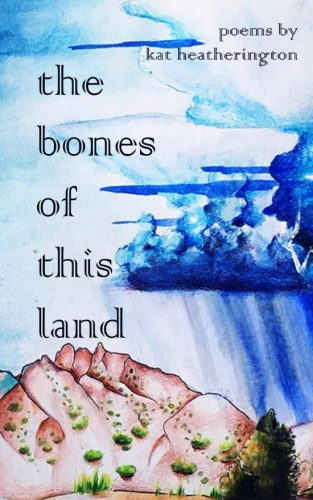 Swimming with Elephants Publications, LLC would like to reintroduce to you to Kat Heatherington.
 Kat Heatherington
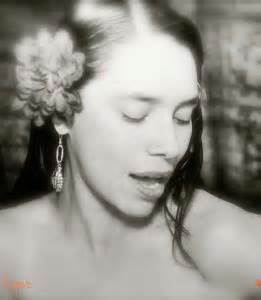

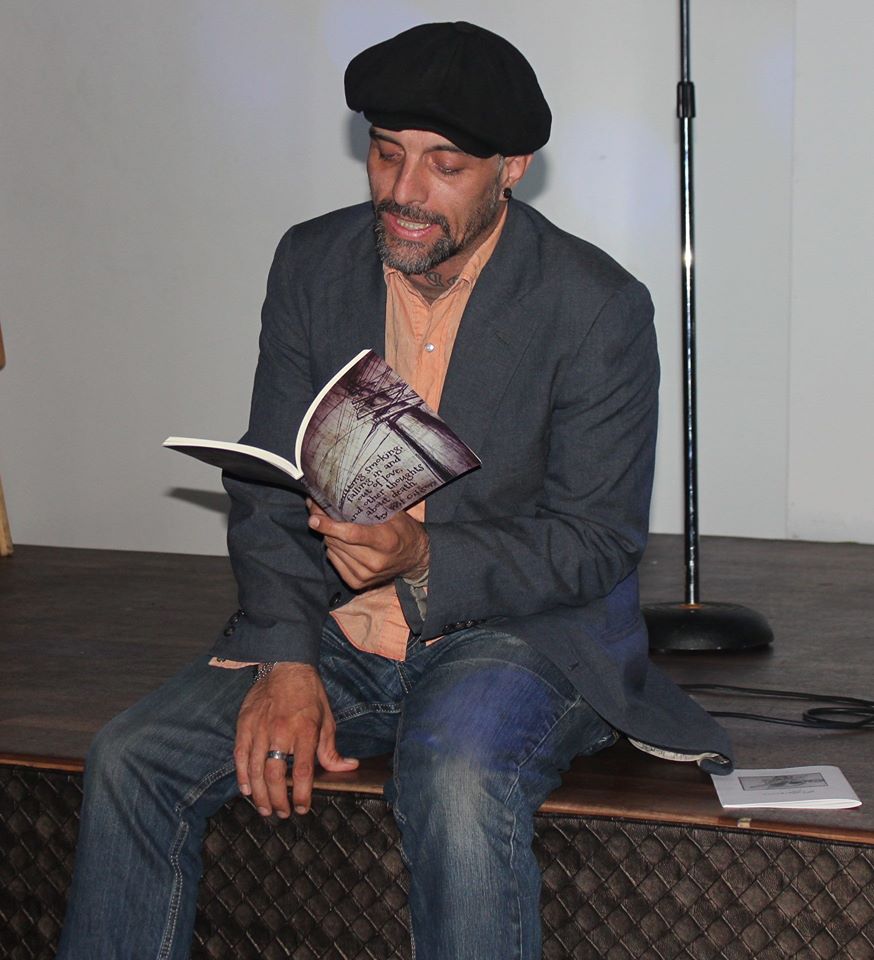

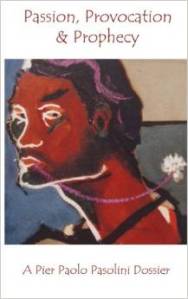 Swimming with Elephants Publications, LLC would like to reintroduce to you to Jack Hirschman.


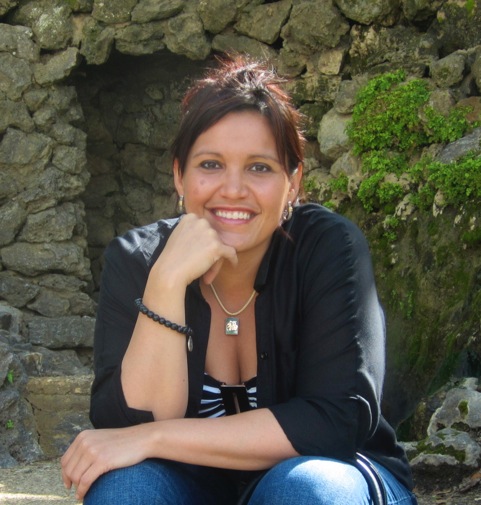
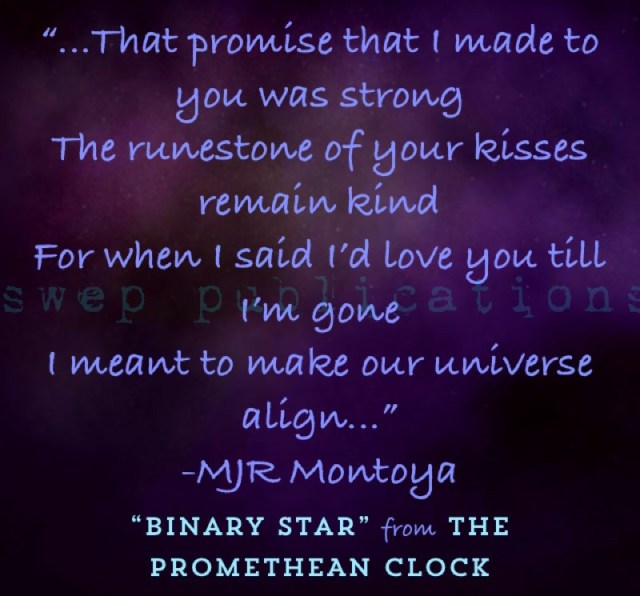

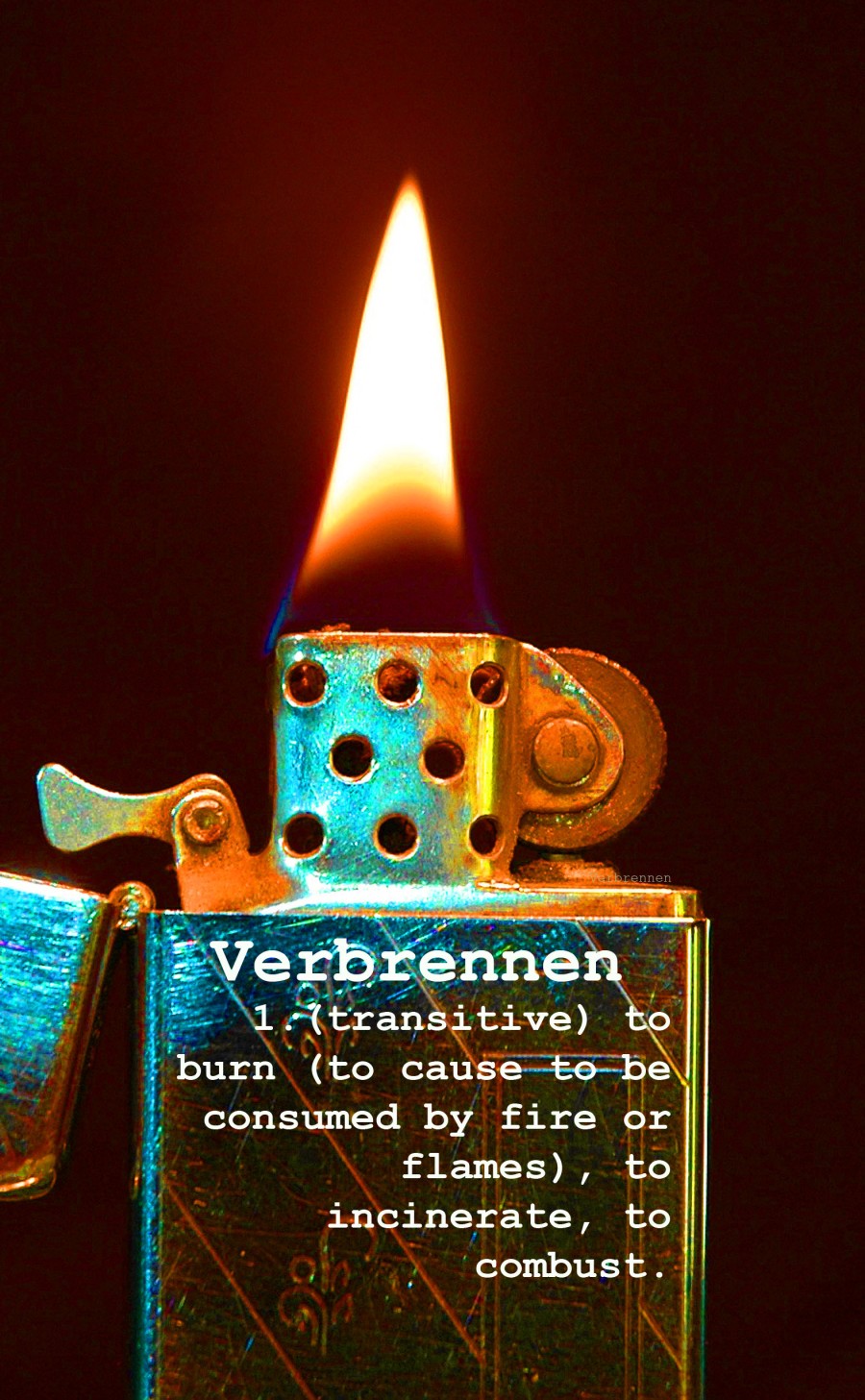
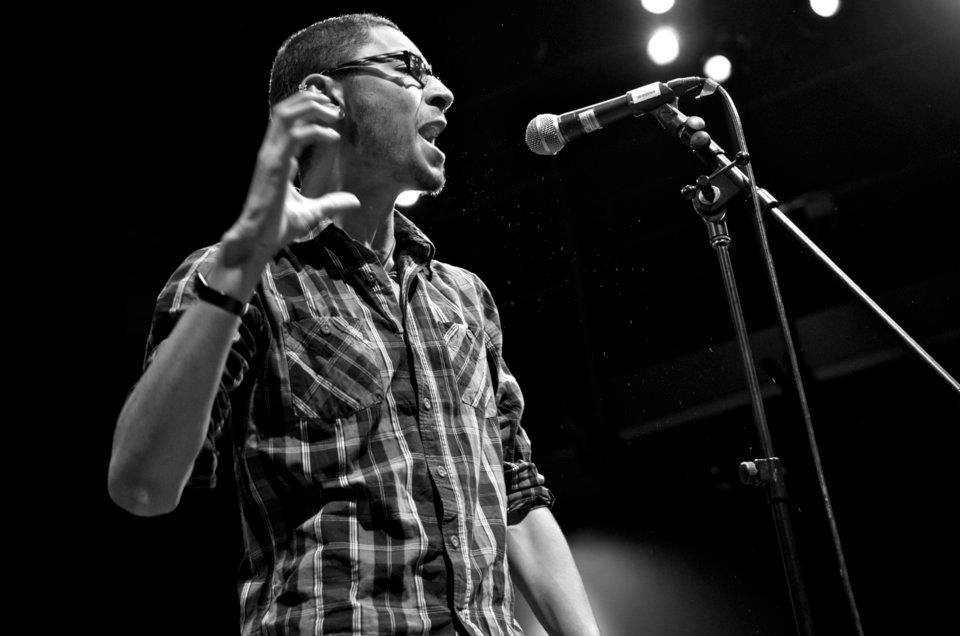
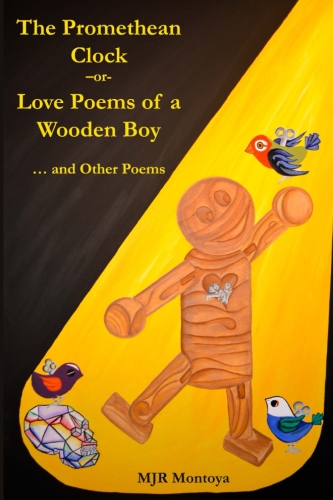


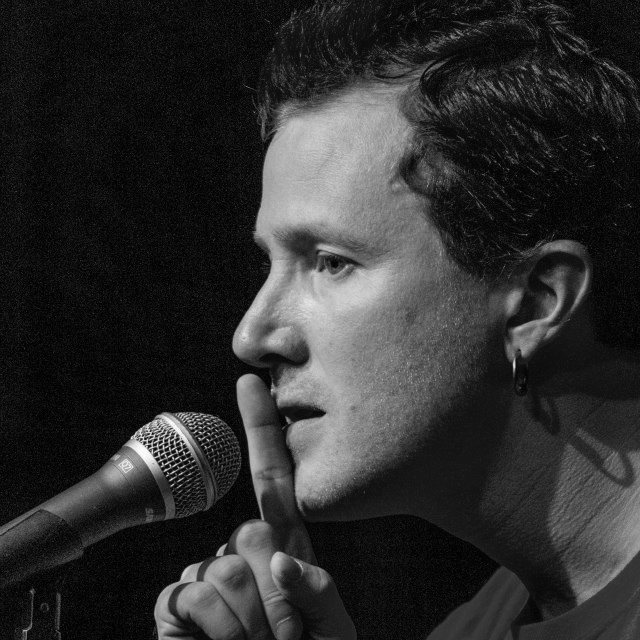
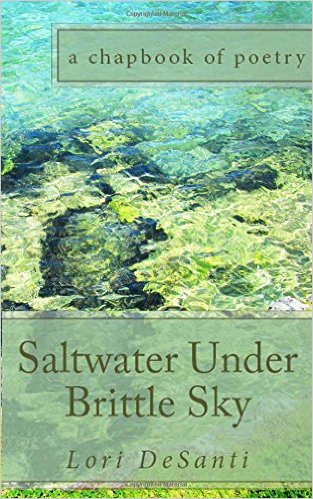


 Swimming with Elephants Publications, LLC would like to reintroduce to you to Brian Hendrickson.

 Swimming with Elephants Publications, LLC would like to reintroduce to you to Kristian Ashley Macaron.


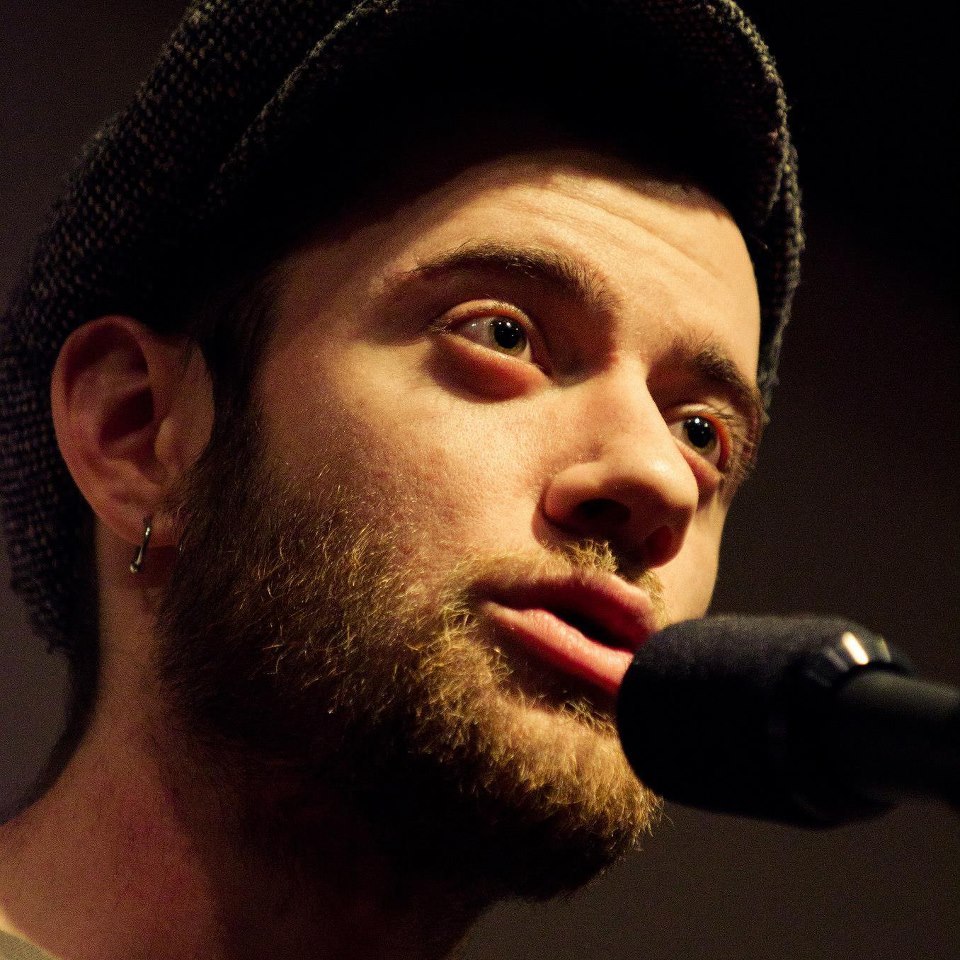



 Swimming with Elephants Publications, LLC would like to reintroduce to you to Liza Wolff Francis.











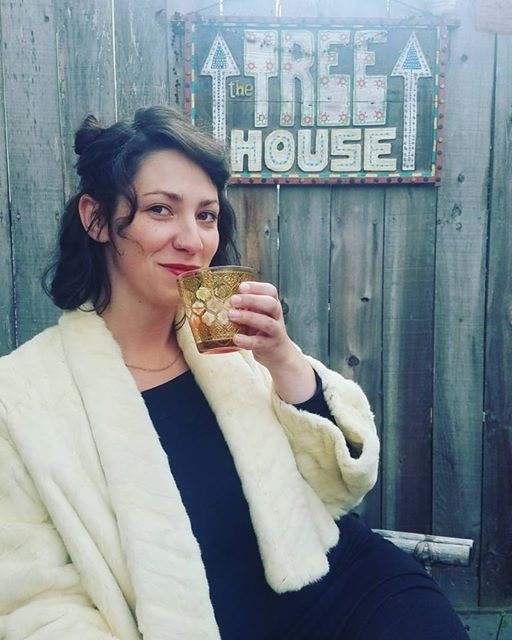
 Swimming with Elephants Publications