Pre-orders are Available for A Duet of Dying

“What is it to face something defined as inevitable and find some still breathing beauty within, however imperfect that beauty may be? If you are Shanna Alden or Erin Schick, then the answer is: sing your heartsong as vibrantly, fiercely and unapologetically as possible. With this collection, they do all of that and more. These are poems that do not attempt to define or even simply describe the experience of living with disability, or surviving terminal illness within a broken system of care. No, these are poems that translate every breath into a minor miracle, speaking to the blossoming of pain as eloquently as the slow simmer of determination beneath the surface. A Duet of Dying is, almost, improperly titled – because with every poem, you can almost hear the swelling voices of the choir, of all of those out there in the wide world who have experiences that will make this work invaluable. This collection is so utterly, inevitably human, it will leave you shaken.”

Zachary Kluckman, CPSW

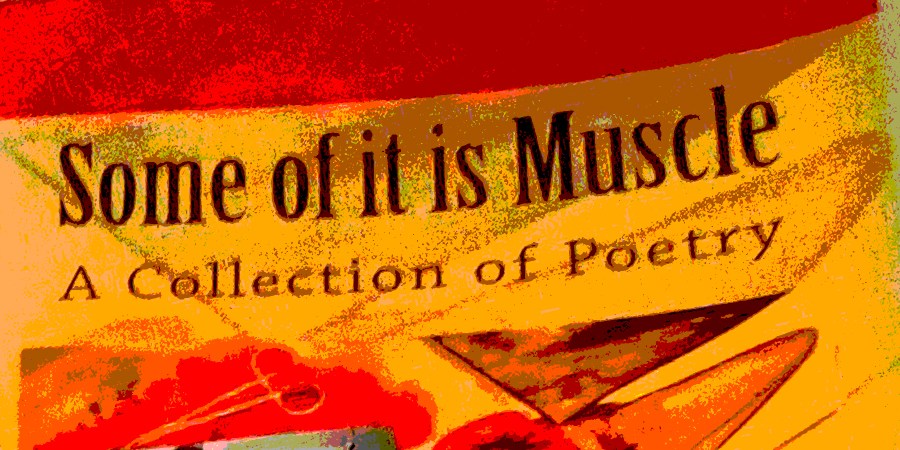
Author of Some of It is Muscle and The Animals in Our Flesh

Pre-order A Duet of Dying today: https://py.pl/AMg6UcckG7C !

SwEP Mid-Month Review

Into the Sunset

A Review of Courtney A. Butler’s Wild Horses
By Beau Williams

Like the name suggests, Wild Horses is the struggle of an unbridled soul ready to escape from the reins. Courtney A. Butler dissects the intricacies of a fierce heart under stress and scatters them through this collection in twenty-two poems.

This collection is a frustrated soul screaming from behind a crumbling barrier. In the book’s introductory poem, “Words, Like Meat,” the first line reads:

“I scrape words
like meat
from the inside of my ribs
They have hung there
clinging desperately to what
oxygen they could”

This line summarizes why this book exists. Butler portrays a person that has had this “meat”, these weighing parts of her that needed to be released, and Wild Horses is that release. Butler tackles the delicate topics of loss of a loved one, being the “other” girl, carrying secrets, searching for love, and (like true wild horses) learning to break free. This collection has the longing and reflection of Plath, the fierceness of Ke$ha, the nature influences of Wordsworth, with a hint of zany like Lewis Carroll.

This book has hidden its structure quite well. There are no full-stops, though there are commas, hyphens, italics, and capitalized letters to subliminally guide the reader’s eye through the pages. The lack of full-stops gives the book a sense of uncertainty that Butler carries with grace; a slight unease that really sets the tone ahead of time and prepares the reader for the topics soon to follow. There are no sections, no interludes, and no quotes, Butler just gets straight to it and gives you exactly what you came there for.

As previously mentioned, the introductory poem seems to be Butler giving herself permission to write the rest of the work; “Words, like Meat” is Butler strapping the bomb to the dam, once the switch is flipped, whatever has been pushing itself against the walls will finally be released, and it was.

After that, the book really dives into relationships between the subject and the people closest to them. The second poem: “DNR,” lays out the concept of the book. It is about a person who is trying to come to terms with a situation in a relationship that neither of the participants have any control over. This is a recurring theme throughout the book. In “DNR,” the topic is death. In later poems the topics are love, lust, miscommunication, and distance.

It can be argued that one of the most intimate, relatable, and touching poems in the collection is “The Importance of Being Broken (Or Sitting in a Bathtub with Your Clothes On and the Lights Off).” Here, Butler describes the deafening moment of collapse; the moment where all the stress and all the worry has finally become too much.

“because all the shit has been hitting all the fans”

This poem gets into the mind of a person who has reached a breaking point and literally crumples into a ball, fully clothed, in their bathtub with the lights off; contemplating turning the water on, the light on, removing their clothes, finding strength but ultimately doing none of these. The content of this poem is relatable to nearly everyone. Everyone has hit rock bottom. Everyone has given up hope. Everyone has crawled into an unlikely place in an awkward fashion in search of any sort of comfort. Butler doesn’t sugarcoat anything about this mental state.

“Maybe you were pushed off that cliff
Maybe it was your fault
or maybe you got caught in the landslide
The reality is
everything you were was on that cliff
and now everything you are is
broken in a bathtub?”

Though raw and heavy, Butler ends the poem on a strong note; describing how, at the end of this, you will start to mold your new shape together like a carved bar of soap — highlighting the brand new you that will finally be able to stand up and turn on the light.

Butler also has a fun, cutesy side which is apparent in her poem “The Long Slow Huzzah! (or Tea Time Going Over a Cliff).” This one has a very surreal feel, like Salvador Dali meets Alice in Wonderland. In this poem, the author describes falling in love as a metaphor for having a tea party… while tumbling off a cliff.

“Pale yellow tablecloth rippling in the breeze
taking all the fine china with it (…)
Well then, I’ve gone and fallen in love with you ”

This might be the most animated piece in the collection. Short and sweet, “The Long Huzzah!” is quaint and joyful, with underlying tones of terror. There is no mention of fear, no imminent crash to end the plummet, just weightlessness. The mention of a cliff face insinuates it is connected to a ground and with no mention of the ground throughout the poem or plans to get out of this situation, one can only assume the postscript is bloody and riddled with shattered porcelain.

Wild Horses is a solid collection that would find home on the bookshelves of the strong-of-heart. “Closer to One” is one of the last poems in the book and sums up the target audience very well. Here, the subject considers themself as two people: the untamed animal in a cage, and the caregiver.

“Yes! I say, finally
Yes to your thirst
Yes a thousand times
to the nectar you crave (…)
You are right to thirst
and I will answer you”

This book is for any static heart who has ever felt tied down or unheard. This book is for the wild of spirit; for anyone who has needed to scream and doesn’t have the haven. Wild Horses lets you know that you are never alone in these places, and that others have been where you’ve been and (like you) survived to ride free.

Click here to help support Independent Bookstores during this time of social isolation by purchasing Wild Horses from Bookworks Albuquerque. 


Review by Beau Williams:

Beau Williams is a fairly optimistic poet based out of Portland Maine. He co-runs a weekly poetry class at Sweetser Academy and facilitates workshops at high schools and colleges around the New England area. His work has been published in numerous poetry websites and journals.

Beau has performed internationally and nationally both as a solo artist and with the performance poetry collectives Uncomfortable Laughter and GUYSLIKEYOU. He was the Grand Slam Champion at Port Veritas in 2014 and was the Artist in Residence at Burren College in Ballyvaughan, Ireland in January of 2017. Beau’s book, Rumham, is available for purchase on Amazon.com.

September: traces of letting go /Review by Nicholas Kovach

SeptemberIn the book September by Katrina K Guarascio accompanied by the photographs of Gina Marselle, the author expresses a longing to letting go.

Guarascio is definitely capable of expressing her own process of “letting go” as she shows in three sections of the book. Her poems range from anger to nostalgia. Guarascio seems to have loved the memories that the specific baggage has given her; but she obviously is angered at what this has brought her.

In section I we see poems like “Impermanence” that expresses how she will always remember the memories of whatever she is trying to let go. She explains that, “Like a sunburn, I know you will absorb into me and fade into memory” because she enjoyed what was their but now views it as simple nostalgia.

In section II we see her demeanor change from a place of nostalgia to hate and relief that she is letting go. In the poem “Badge” we see that whatever she is letting go of is inconsiderate of her feelings being like a “scar dug into my [her] flesh… which you ignore every time you brush past.” “Badge” expresses her pain that this thing gave her and the loathing she now has for it.

SeptemberIn section III we see Guarascio’s attitude relax. In the poem “Warrior” we see now that she is joyous in newfound freedom and how “a sense of posture and responsibility is near impossible to slouch.”. She can finally let go and not care about the pain her baggage has given her. Overall, I thought that Guarascio is outstanding at expressing her feelings through poems.

Normally with poems I feel like I am reading another language. However, Guarascio is able to express her feelings through three stages of letting go. September is truly an excellent read with photography that is relevant to the poetry.

Book Review: Rock Paper Scissors

i need poemspoemspoemspoems
a universe of nothing but–
just to keep the light on
just to keep my head
in a world gone madmadmad

The ending stanza of Mary Oishi’s first poem in Rock Paper Scissors showcases exactly how I needed this book, at this point in my life especially. Co-written with her daughter, Aja Oishi, Rock Paper Scissors is divided into two parts: part one being Mary’s, a mother’s poetry of strength and survival. And it radiates and embodies those two qualities so well, but it gMaryO (1)oes beyond the theme of motherhood alone — though it was this theme that I clung to desperately, now raising two daughters of my own, and an old friend of much survival and some strength.

Mary’s part in the book starts with a subtle strength, though; short poems pack brief blows of heartbreak and speak a story of resilience, touching on abandonment (when i asked how my mother could give me away), growing up biracial (at least I had siblings, you said), the impact of racism, and politics (in numerous poems, though most notably in Thoughts on the Execution of Troy Davis).

Heaven help us,” Mary writes, “We are ALL Troy Davis.” But in the same stride that she seeks to remind readers of our unified human-ness with this and other works, her poem prior, Ghosts of Penn’s Woods, packs a reminder of the brutality of colonization. Her heavy concentration on politics does not cease here: broken frame left a lump in my throat, womb-heart aching not only because I am both mother and woman, but because I have faced the choice of abortion.

this poem is a graphic picture on a sign
in front of every senator, every candidate
who calls for escalation, for “tough measures”
this is a pro-life poem.
THIS. is a PRO-LIFE poem.

She begins with this brave declaration, placing the reader briefly in the shoes of a war-ridden woman; for every politician who screams PRO-LIFE, we are left with the echoing question, “What about the children in Syria, Palestine, Iraq, Afghanistan?” The list could go on, loud as bombs.

But then, there is perhaps a message more easily related to.

she wonders if her pro-choice sisters,” she writes, “will stand with her now,” speaking of a doubt that has flooded the minds of too many women more concerned with the thoughts of others than the impact of making their own choice may have on their futures. With unwavering finality, we are left with the firm belief of the author:

this poem demands all women’s right to choose,
ALL women, to really have choice, choices, opportunity
this is a pro-choice poem.

THIS. is a PRO-CHOICE poem.

This is a pro-life/pro-choice poem
looking for a new frame.

Never before had I read something that so wonderfully/horribly resonated with my own thoughts on the constant debate of choice, and for that, I cannot offer enough praise to Mary Oishi.

Her daughter, Aja Oishi, proves to be just as radiant in writing as her mother, though certainly with her own unique voice in the second part, a daughter’s poetry of chance and fate. Visually enlightening, Aja’s poetry awoke something visceral within me. Immediately, I felt as though I was being taken on aajaauthorphoto  spiritual journey; but perhaps there was no surprise in such spirituality resonating in Aja’s writing with titles such as Creation Story and Of the three Fates, I choose scissors. Other poems, like Beast vibrated with simplistic form, and still strongly echoed that deep and complex spiritual feel.

Get down

Dig dig dig because you are small
and the small will survive.

Stay alive

Touch your hands to the earth
and do what it tells you.

Remember what you came for

Love and joy, and love and joy,
and love and joy.

She goes on to write about defending the sacred, reiterating that it is we who are sacred things; assuredly, each of her pieces are equally as beautiful and enlightening, offering a semblance of inner peace. But there is a bittersweetness, too, in poems like Fireflies that seek to remind us of our dying earth, of what we once thought of as eternal and how it’s now fading. In a political landscape strife with debate of climate change and global warming (and the list goes on from there, of course), I feel like Aja’s voice is necessary for my generation — we are the ones who witnessed little miracles like fireflies, and constantly buzzing bees, and our children will, perhaps, be the last to see such things as they fade only to be revisited in memories.

And perhaps this is why earth itself (or maybe it’s more apt to say herself) is such a beautifully repeating theme in Aja’s work. In don’t be afraid of the beautiful and high mountains, she again succeeds with offering a very visual piece, the message of which is simple and still so very important: don’t give up.

Don’t give up
for unbearable sorrow.
Don’t give up
for the terrible anger.
Every day
suffering piles up
on yesterday’s suffering
be we have work to do.

Even at night a miracle happens
with every in breath.
Somewhere
frogs emerge singing

and precious strawberries
are red
in the mouth.

Written like a letter to a woman named Carol, it begins with the declaration, “Your very name is a praise song.” I was so utterly struck by this statement, and the lasting sentiment, “We need you here to sing the welcome song.”

Like her mother, Aja also speaks of heritage, of being a woman in this wild world, of the choices that we face. With My Body Between acts as a witness, from the perspective of patient escort, to every woman who has walked into an abortion clinic.

She’s worn every label you can think up
from good girl to fuck up.
She keeps her chin up.
She’s come in a rusty blue Mustang
and her brother’s pickup truck.
She saved to come out from Texas
—cause it’s much worse in Texas—
and her boyfriend’s come with her
on the bus from uptown.
They thought she wouldn’t get here,
cause she just finished
fifth grade.
She thought she wouldn’t get here
cause in her forty-five years
she’d never been.

This entire piece chipped off pieces off my heart, not only because I have been there for reasons numerous, but because it made me feel seen. It made me ache and cry, it made me feel as though I were a part of a unified front, even with the recognition that this choice isn’t made lightly, and without hurt. And I think that was the most important thing: Aja’s words don’t seek to act as though this isn’t a painful choice, but certainly reiterates the fact that it is a CHOICE; a choice that women in all walks of life have had to make.

I could go on to wax poetic about each of Aja’s poems that follow, written from various personal experiences (though written in such a way that they are not impersonal, and allow the reader to insert themselves into the words and images and places), but maybe that would be too redundant. Instead, I leave you with the simple insistence that you buy this book. I speak as a mother, but believe this is a worthwhile collection to add to anyone’s library.


Mary Oishi has two poetic voices: one stark and simple like that
of her Japanese ancestors, and one that echoes the rhythms of
preachers from her upbringing by her American father’s
fundamentalist relatives. Both voices sing her songs of truth
and social justice. She is the author of Spirit Birds They Told Me
(2011) and is one of twelve U.S. poets in 12 Poetas: Antologia De
Nuevos Poetas Estadounidenses (2017), a project of the Mexican
Ministry of Culture. Her poems have appeared in Mas Tequila
Review, Malpais Review, Harwood Anthology, Sinister Wisdom, and
other print and digital publications. Oishi is a public radio
personality since 1996, most at KUNM-FM Albuquerque,
where she hosts The Blues Show.

Aja Oishi lives in northern New Mexico. Her writing draws
from ecology, anthropology, and the years she spent in Spain,
Japan, and New Zealand. She revels in the uncaged world and
makes a living (and a life) by fighting for prisoners as an
appellate public defender. This is her first collection of poetry.

Featured SwEP author: Jennifer E. Hudgens

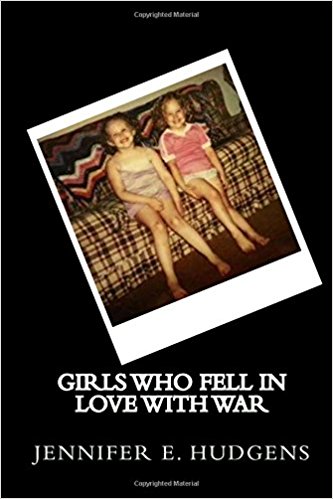
Swimming With Elephants Publications would like to reintroduce you to Jennifer E. Hudgens, author of Girls Who Fell in Love with War. Jennifer was born and raised in Oklahoma City. She has always danced to the beat of her own drummer, just ask her mom. Using poetry as a means of expression and survival, Jennifer lives poetry. She watches the sky the way most people watch television. Jennifer is terrified of clowns, horses, and animatronic toys. That damned Snuggle bear is secretly trying to steal souls.

Girls Who Fell in Love with War is Jennifer’s first full collection of poems. She has plans to release a couple poetry chapbooks and her first novel in 2016. Jennifer promises the novel is quite murdery. She is also working to bring more diversity and light to the amazingly talented poets in the Oklahoma Poetry Community.

Jennifer is currently pursuing her Bachelor’s degree in English and Creative Writing at the University of Central Oklahoma with plans to teach high school students after graduation. She teaches creative writing classes for the Oklahoma City Arts Council and is a pretty rad substitute teacher.

Jen genuinely hopes you like her poems. If you don’t, that’s okay too.

Recently, she released a collection, Paloma, with Blood Pudding Press. So it goes…

You were the only one who believed me when I said what he did hurt

You were the only one who knew I was burying myself in too much fat and flux

Paloma kickstarts with 1996, a punk rock war-cry of nostalgia and a final lingering note of sadness. This, like many others in the collection, is a poem that resounds with everything oh-so-90s; but make no mistake, this is meant in the best possible way. A mixed tape soundtrack that plays like growing up, it sets the tone to whom this collection is dedicated– as much funeral dirge as it is love song for a sister and friend. The final line of the first poem rings melancholic: “Who’s gonna take care of us strays now?”

It is this echoing theme of finality, of trying to grasp the concept of loss, that carries on through the entire collection, questions of mortality and suffering scattered like the ashes of the departed, asking the question specifically in Lauren Kate is Dead: “Where the hell is this better place people are always talking about” and present in lines like:

How is it life if we aren’t suffering
Pain keeps us still {here} latched to gravity

With each poem thereafter comes a chapter of both closure and reawakening old memories; Paloma is remarkably bittersweet in the tug-of-war of saying goodbye to somebody who can no longer hear you, and Hudgens’ voice is so clear and combative against adhering to traditional standards. If nothing else, it is clear that Hudgens proves to be anything but a traditional poet; she rocks the reader’s thoughts, with gruesome details suggesting unkempt murder, encouraging one to further unravel the mayhem behind a sudden loss. Nonetheless, this proves to be a beautiful read, a true work of dedication and memory even with scattered wishes to be unseen, like that found in Bizarre Love Triangle:

You always saw me
Now
I’m trying not to be seen

And isn’t that so like loss, and how we process it? Loud as bombs, but in the quiet, in solitude, trying to process in peace, even if the death was anything but peaceful. But with this thought, I wonder at the intention of the book title: Paloma– a name that means peace, it is perhaps, with this offering, the dearly departed (because judging by Hudgens’ words, Lauren Kate was, indeed, so very dear) may be at peace, too.

Overall, as with all of our SwEP family, I can only offer heartfelt recommendations to reach out and read more of Jennifer Hudgens’ work. You can purchase her full-length title, Girls Who Fell in Love with War, published with Swimming with Elephants, on Amazon, and keep an eye on her wordpress for more news directly from the author.

Available Now: I Bloomed a Resistance from my Mouth by Mercedez Holtry

Book ended artfully by two poems (“Dear Donald Trump” and “For Latinos Who Voted for Trump”) that bring much needed attention to the political climate and how the Trump presidency affects her and her people, Mercedez Holtry’s newest publication from Swimming with Elephants Publications is everything you could imagine from the renowned poeta. It, as the title proclaims, is a resistance of performance, blooming like sunflowers stretching to an Albuquerque sunset sky.

Mercedez goes further in speaking not only about the national political climate but also local change and gentrification of her beloved hometown — Albuquerque, New Mexico — in poems like “La Central gets a Makeover” in which she calls out by name former Mayor Berry and the many failings of the Albuquerque Rapid Transit (ART) and its continued construction. Woven with a deep woe for being the final generation that might cruise Central Avenue, she takes you on a journey of the Albuquerque she knows and loves.

But there is a softness to this resistance, too. In “You Bring Out the Burqueña in Me,” dedicated to her beloved, she journeys through all the makings of herself and her culture, her love and her home, painting an image that echoes the vulnerability in the poem prior, “The Heat of Summer.” Both veer away from the political undertone of this publication and yet, there is still a softly flowering rebellion in her words. A rebellion of self, of love, of light.

But as with nature, there is darkness behind the light. A persona poem, entitled “La Llorona Speaks,” takes the reader on a shadowed journey into muddy waters of loss, exploring the legend of La Llorona, or The Wailing Woman. Another stunning exploration of her own culture, this particular poem was a hauntingly beautiful read.

As ever, Mercedez does not fail to enlighten and educate with her second collection from Swimming with Elephants, bringing an artfully entwined variety of work.

You can purchase I Bloomed a Resistance from my Mouth on Amazon, along with her first publication, My Blood is Beautiful. And don’t forget to like Mercedez’s artist page on Facebook, and keep a lookout as she heads out for the Blooming Resistance Tour this May (and for inquiries about booking her for a feature, please contact our partners at sugarbookingentertainment@gmail.com).

Now Available: Nail Gun and a Love Letter by Beau Williams. 

Heralding from Portland, Maine, Beau Williams describes himself as a “fairly optimistic” poet, and what better way to describe his newest collection of poetry from Swimming with Elephants Publications than as “fairly optimistic.” Bittersweet journeys to bar floors and the bottoms of bottles, Nail Gun and a Love Letter is reminiscent of beat poetry days and the pilgrimages we must take to find ourselves.

Whether these pilgrimages occur literally or otherwise, Beau has managed to make an astonishing and beautiful book; these are love letters soaked in liquor, poking nails through your heart only to fill the holes with the sort of honesty that only being three sheets to the wind can bring. This book is better described as a cure for hangovers, best enjoyed with a hot cup of tea (or maybe a hot toddy for those frigid winter nights). Beau is undeniably honest in his descriptions, and there’s something chilly in his work, reminiscent of winter along the Northeast coast, but he always manages to wrap the reader up in warm words. From micropoems like “Sacred Vows” to full length bar hymns like “Looking for Brooklyn in a Shit Bar in Portland,” it’s clear that Beau has an inspired affinity for storytelling based heavily in symbols and setting. This book is a journey.

I first met Beau when he was on his own journey with GUYSLIKEYOU, a poetry collective with Wil Gibson and Ryan McLellan. It was his soft demeanour that caught my attention, allowing a contrast to his occasionally sharp edged poetry. Again, this brings to mind poets like Allen Ginsberg; there is a subtlety in these pages, a sharp as a nail, unforgiving as alcohol sort of sensation. And yet, reading this collection was like having a drink with an old friend. Like coming out of the Maine cold to warmth, at long last. And maybe he’ll burn a bit of you, but he will always wrap you up again with a love letter.

Nail Gun and a Love Letter will be released soon. Meanwhile, don’t forget to like Beau’s Facebook page to show him some support and for book release updates.

Wil Gibson just can’t quit…

…being phenomenal.

Of course, such a grand sweeping word as phenomenal fails to do Wil Gibson’s work, in his most recent published collection, any justice whatsoever. It’s my belief that a simpler word might better suffice, if only for the phenomenal simplicity of what Wil’s words make you feel. An oxymoronic statement, maybe, but it’s just that — the beautiful simplicity — which Wil brings to both written and performance poetry.

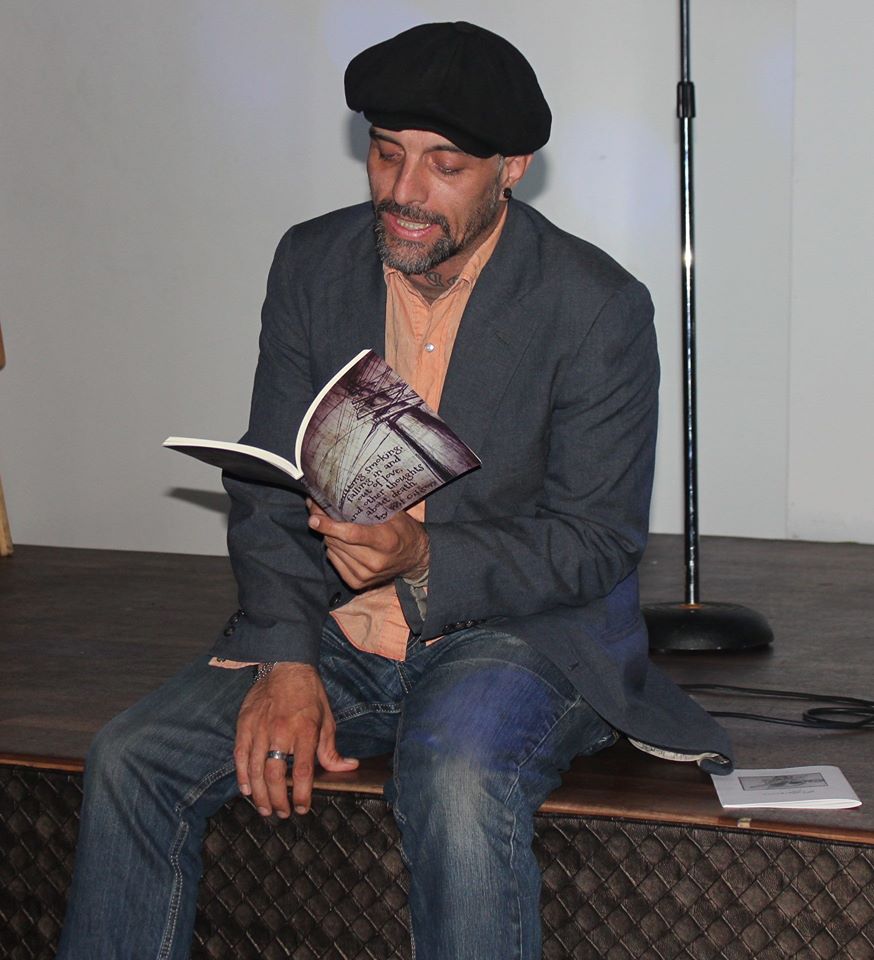
It’s his most recent publication with Swimming With Elephants Publications, Quitting smoking falling in and out of love, and other thoughts about death that draws close that beautiful simplicity. As life-changing as an arrival to a safe haven, or a departure from the only place you’ve ever known, reading this book was like coming home, wherever home may be. With a broad array of landscapes and cities throughout the United States mentioned, I felt a strong sense of connection to place in reading. It was, undoubtedly, a journey; more than that, it was a pilgrimage.

For that reason, this book needs to be savoured (like a cigarette, if you will, or five after you’ve quit for the umpteenth time). Not to say I didn’t have the urge to rush through each part and eat it all up, but I found it most enjoyed as a slow read, taking the time to dog-ear pages and underline phrases that struck me (and as I say to many writers: sorrynotsorry for dog-earring books, for lack of post-its to use as markholders, and for marking up your books — this, to me, is a testament of love for the work put in, as I find connection to it).

The contrast and connection between each section was so well-constructed, from a writing and editing standpoint, I could certainly see the love that was put into this book, too. From the numbered poems and the slow stream of falling in love over and over again in the first part, The part where I fall in love and a bunch of people I love die to the numbered days in the second part, The part where I quit smoking and more people I love die that are almost comical at times in their display (days 16-18, especially; any smoker or former smoke can certainly relate to the feeling of fuck you that Wil puts so adequately on the page), a conversational tone carries throughout.

Thinking back to when I first heard Wil perform, it’s that conversational tone that holds him as one of my most highly recommended poets for anybody first entering the slam/performance poetry scene; I believe there’s something unique in drawing your audience in without the grandeur of the typical “slam voice.” Instead, Wil’s poetry has always offered this drift back to something reminiscent of the “original” spoken word artists of the Beatnik movement. But there’s that modern touch of artistry in his work, too.

It’s in The part where I fall out of love and more people I love die where Wil’s artistry as a written poet really shines. With unexpected construct like the poem titled simply as Purple, to the constant self-recognition of using cliches to his best ability (and the simple notion of the necessity of cliches), there’s a heartwrenchingly beautiful notion presented in the level of vulnerability that Wil provides in the third and closing part of his collection. Here is vulnerability as a lover, as a smoker, as a writer, as a human. And isn’t that what writing really needs to be? Vulnerable conversations, the shared recognition that we’re all cliches, we’re all just quitting something to start again, that we’re all falling in and out of love with ourselves constantly; Wil’s poetry reminded me that we’re all on a phenomenal pilgrimage through life, and we’ll get there whenever we damn well please (and maybe quit smoking, eventually).

In parting, I would tell anybody skeptical not to be swayed by the ominous title of Wil’s most recent book; instead, let it be an offering that allows you to feel absolutely, phenomenally, simply… human.

You can find Wil’s book on Amazon and Goodreads, along with other books in the Swimming With Elephants Publications family. And don’t forget to keep up with him on his website and Instagram as he continues to tour and scatter his words across the country.

Elegy for a Star Girl Review by Amanda Cartigiano

A Review of Elegy for a Star Girl

by Amanda Cartigiano

Each poem in Elegy for a Star Girl is categorized into three elements of existence: The Other World, The Here and Now, and Transcendence, and each poem is a combination of life experiences, Science Fiction, and space. These poems illustrate great depth within the soul, body, and mind, and the illuminating language and imagery express the universe as a metaphor. Life is questioned and answers are hard to find. Life is a journey that must be experienced from above. Sit back, relax, and enjoy the ride.

Pick up your copy at Amazon or Barnes and Noble today.

A Review: You Must be This Tall to Ride

You Must be This Tall to Ride

by SaraEve Fermin

A Review by Kevin Barger

The first time I remember seeing the words that make up the title of SaraEve Fermin’s book, You Must be This Tall to Ride, I was probably around eight years old. My parents had taken me and a couple of my friends to the state fair and I stood in a line with tickets in my hand for what felt like hours to be able to ride this massive pirate ship that rocked back and forth like it was being tossed around by waves at sea. It was basically just a giant boat shaped swing, but it would speed up and go higher and higher until it eventually would flip upside down and go around in a circle a couple of times before slowing back down and stopping. I remember pretending to be a pirate and saying “Arr!” a bunch of times while standing next to my slightly older and slightly taller friend. I remember getting up to the gate, standing beneath an outstretched wooden hooked pirate hand, and being an inch or two too short to ride. I remember my friend barely reaching it and the excitement in his eyes as he was let in the gate–and I remember the crushing disappointment I felt as I stood outside the fence watching him rock back and forth scared and laughing and turning slightly green.

You Must be This Tall to Ride reflects that sort of crushing disappointment of having to stand outside while watching the world go on around you. Here, though, having to stand apart is due to physical and mental illnesses requiring medications and surgeries. Split into two parts, it’s the poetry of the caged–the shaking of the bars. If you are not prepared it will wound you in the most beautiful of ways. Fermin does her due diligence, though, and prepares us for the journey ahead with the first several poems. She lets us know that, no matter how bad things seem, light can be found in the darkest of places. She lets us know that, even though we will be caged with her, there is beauty and love and laughter here. In the first poem, “After you think you are going to die and instead live…” she paints a picture of her lover who

…will preempt your every stubborn refusal
with a reason to live.
He will hang your wind chimes,
install a new showerhead so you are safe after surgery,
pay the stylist to fix your hair after you’ve cut it off to spite your face.

In the second poem “This is How I Own You” Fermin seems to define what the rest of the book is about stating:

Call this coming clean. Call it my start over,
my claiming. These scars. This drawer of
medication bottles, watch me fantasy them
into hope. Into holding on.

This is a fight song, and one of my personal favorite poems throughout the collection. Fermin reminds us to embrace what wounds us and celebrate our own survival. It’s a call to heal through bleeding. It’s a reminder that no matter what we have our breath. That we are all a “maker of star magic.”

The first half of the book also deals a lot with family. These are some of the darkest poems in the book, highlighting highly complex strained relationships between a mother and daughter and siblings. These are the poems that will wound you if you are not prepared. Here we see glimpses of the interplay of addiction and abuse and illness. We are told of the pain of having an absent father. We are told of the guilt felt for not being able to cure an addicted mother. In “For My Sister, The Youngest, Earnest Apologies” Fermin apologizes for these interplays even though she is just as much a victim of circumstance as her sister:

Sorry about the cops and EMTs that huffed and puffed outside the door like a bad fairy tale, sorry you knew the smell of hospitals well before you knew the smell of a classroom.

But, again, through these dark poems are moments of love and laughter. In “We Get Ice Cream, 2013” we see a family that, if only for 30 minutes, can ignore their demons just long enough to laugh. In “Sia Explains How My Mother Loved Me Like Singing” we see what motherhood should be with lines like:

Tough girl, pulled the thorn from
all your bad days, uncovered a better
version and a waterfall hook.

If the first half of the book deals with the external, of being caged and examining the people outside and the effect they have, the second half deals with the internal. These are more cerebral, focusing on the “I” instead of the “you.” In “But What You Could Be” the speaker asks what would happen if she got rid of everything she sees as a flaw. In “When I Tell Him ‘I Think of Dying Every Day’” we’re faced with the reality of fighting depression:

What I mean is,
I swallow these pills because
I love myself too much to let go,
I love the dark and sharp and red
because I enrage myself enough but
don’t know how to let go.

Music plays a big part in this collection with song lyrics peppered throughout along with quotes from tv shows like [H]ouse, m.d. and Doctor Who and authors like Stephen King. No one plays more of a role than enigmatic singer Sia, though, whose music is the subject of three poems. “Sia Teaches Me How to Fight My Way Through a Panic Attack and Get to the Bus on Time” is a semi-found poem brilliant in how it perfectly mimics the stuttering kind of speech one might experience during a panic attack:

quick step/ stop paying attention to everyone else/ I don’t care if you don’t look pretty/ us what you got left/ teeth/ giggling eyes/ a wig/ your entire range

The second half, while dealing a lot with mental illness, are also where poems of healing are found. Fermin showcases the moments when we have realized that life is never going to be perfect, but we strive to make it as good as it can be anyway. “How To Be Something Other Than” highlights this process by focusing on the little things only to learn to surrender:

…To cry with the door
open, to cry with abandon. How to learn
to love a plum again, to taste it sweet
and still warm from the tree. To surround
yourself in something other than damage
and yourself.

This is the message of You Must Be This Tall To Ride. That we will all continue to grow. That eventually we will be tall enough. That even if we don’t conquer our pasts or various demons completely, we have the capacity to live with them in ways where we can at least contain the daily damage they do by turning to face them–by surrendering to the fact that they are there.

Amazon Reviews Needed

YouMustBeThisTallFront CoverWe are always looking for reviews on any of our 40 published books via Amazon or Goodreads.

Currently our search is for people to review SaraEve Fermin‘s latest publication You Must Be This Tall to Ride.

If you own this publication, please take a minute to visit Amazon or Goodreads and give it some stars. If you do not own this publication, order it today and get some reading down on your lazy cloudy afternoons.

Learn more about the publication here.

People of the Sun Live at the Draft Station: A Review


People of the Sun / Gente del Sol

A Review

The People of the Sun is an emerging performance group made up of some very talented people credited with Albuquerque Fame.

15578612_10207301685051832_5927719407295171059_n

The group, a threesome at its core, consists of Jessica Helen Lopez, former ABQ Poet Laurette, a nationally recognized published author with West End Press and Swimming with Elephants Publications, Manuel Gonzalez, current ABQ Poet Laurette and youth advocate, also published by Swimming with Elephants Publications, and Glenn “Buddha” Benavidez, of Reviva and Stoic Frame fame who also performs solo as DJ Buddhafunk. With a core group of that quality, this newly formed performance group holds high promise as a potential powerhouse.

15541997_10207301684411816_2884333723261827441_nOn December 17th, the People of the Sun played their third show at the Draft Station in Albuquerque New Mexico. The venue offered a comfortable environment, good beer, and friendly enthusiastic patrons.

Opening with a meditative Chakra jam session and closing with a similar jam, the sandwich material was engaging, entertaining, varied, and compelling. Well received spoken word performances by Lopez and Gonzalez mixed with the professional beats of Benavidez created a show that is unique and inimitable.

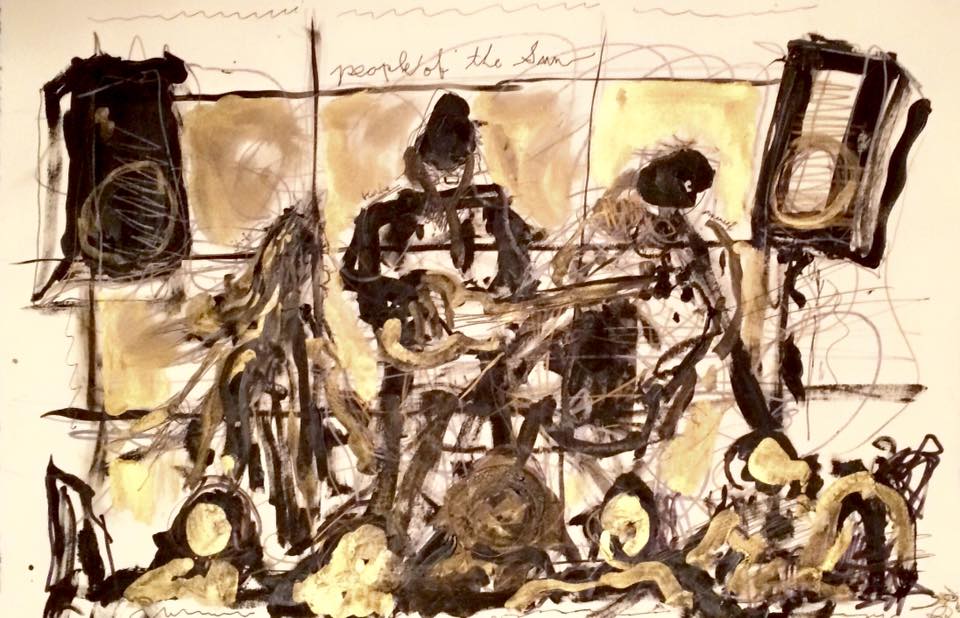
15622196_10207301685131834_6545859473532425450_nBecause the group strives to represent community, other local poets were invited to perform with the group throughout the evening. Local poets, including Gina Marselle, Katrina K Guarascio, and Bill Nevins, fellow Reviva menstrual, Jerel Garcia, and local artist John Barney, who had a table in the corner where he created magnificent artistic renderings of the performances (represented in this review) throughout the evening, all contributed to the eclectic festivities of the evening.

The show ran roughly three hours with a couple of breaks for conversation and collaboration creating an incredible comfortable and open environment.

Find People of the Sun – Performance Art Collective on Facebook for more information and keep your eye open for future shows featuring this group in and around Albuquerque.

Wish Upon A Star: A Review

Wish Upon A Star

an unauthorized intimate reflections with Walt Disney

A Review by Katrina K Guarascio


wish-upon-a-star-1_origWish Upon a Star, an unauthorized intimate reflections with Walt Disney
, presented by Enchanted Rose Theater, written by Andy Mayo and directed by James Cady, is a humanizing take on a legend of entertainment. Set in a screening room in 1966, Vernon Poitras portrays Walt Disney who, while conducting a video will of sorts, takes the audience through the details of the building of the Disney empire and his own childhood.

The concept is based on a rumored movie that Disney made weeks before his death, where he speaks to animators and story men, not only to thank them for their labors, but also to urge them to create his final dream: EPCOT. Since the video was never found and is often denied, writer Andy Mayo takes it upon himself to create that video for us in this short play.

Poitras gave a wonderful portrayal of Disney in what essentially was an hour and a half monologue. Poitras looked and played the part perfectly requiring the audience to fall into his story without question. Despite being a one man show, the audience was held at attention, listening to his stories and feeling his trials and successes. He shifted with ease through the history of some of the most well known Disney stories, including Snow White, Steamboat Willie, Bambi, connecting with the audience and their own personal associations with the Disney catalog. By the time the transition to a more personal history of the man came, Poitras had hooked the audience making the character alive, visceral, and engaging. Truly, it was a wonderful performance.

mickey_apprenticeOne of the most memorable parts of the story was when Disney spoke of his creation of Fantasia, particularly the episode entitled The Apprentice. He claims that in the story he was the sorcerer, “Yensid” (Disney spelt backwards) but through his story, he realized he was not the great wizard who mentored Mickey and cleaned up his mess, but instead Mickey himself. He states is frustration, “Turns out I’m not the sorcerer, just a damned mouse.” He claims to be “a phantom of myself” entertaining a very universal and human feeling, How many of us have lost ourselves trying to become someone else?

While watching the performance there were some questions that roamed my mind. Not being a Disney historian, I didn’t know what aspect of the play were factual and what may have been incorporated for entertainment factors. Did Disney really hate Cinderellla? Did he really think of Fantasia as his masterpiece? Where the stories of his own childhood, telling stories of a youth that was cold, difficult, and so very relatable, true or simply for entertainment purposes? Where these stories based on facts? An internet search might answer all these questions, but as I left the theater I found myself completely uninterested in fact checking. The purpose of the play was not to give a Wikipedia biography of the man. It was to connect us as human beings. The great character became someone that reminds people of their own difficulties, their own exhausted efforts, their own happiness.

download-1While listening to Poitras speak, he became less the infamous Disney and more the common man filled with simple regrets, different personas, dreams, and disappointments. He was my grandfather talking about his childhood paper route. He was my fellow artist disappointed at the failure of a project he cared so much about. He was a man who thought he was one thing, but turned out to be something else.

If writer Andy Mayo’s goal was to humanize the character whilst filling his audience with positive memories, he was successful. Set your history books and internet searches aside for this one and listen to the story of a legend who was really just a man.

See Wish Upon a Star at The Cell Theater (liveatthecell.com) December 2-3, 9-10 at 7:30 and December 4th & 9th at 2:00pm. Rated PG for adult language.

Book Review: Observable Acts


Observable ActsObservable Acts: A Collection of Poetry

By Kevin Barger
Review by SaraEve Fermin

     This is a public service announcement to all my future
lovers
Come prepared…

I have a great appreciation for poets who hold nothing back in their writing, for poets who say exactly what they mean, who write narratives of their own heart and life.  The opening lines of Kevin Barger’s first collection of poetry do just that—let you know that you are holding not just a story, but a personal storytelling, almost a bloodletting.  In Public Service Announcement, Barger goes on to let readers know he has-

     …looked into the core of your soul
And found a light there
That they wish to make brighter.

Barger, a North Carolina native, has divided this collection into eight Observable Acts, which come together in the final poem of the book.  Each act sets the tone for the following section and covers a wide scope of topics including love, lust, sexuality, race and economics.  Most importantly, it is a study in words, and how we apply them to ourselves and others.

Observable Acts #3 bring us poems of love lost and what we can learn from them.  In Lessons, Barger brings Faith into the practice of love, something that people often forget that is missing but necessary–

This is a poem for those
Who have loved
And lost,
And wished to God they had never loved at all.

It is easy to forget that Barger was once a performance poet, as his writing is so sincere and does not seem to target a specific audience.  Still, there is a cadence that can be recognized here and there, a familiar pattern of words, a rhyme scheme that is not overt but flows throughout some of the poems, a graceful dance.

Love is a lot like religion
It requires faith to grow;
Belief I had plenty of
But faith I never showed.

In Lullaby, Barger states very clearly- ‘I don’t want to write this poem.’  It is the bloodletting that I mentioned earlier.  Some ghosts eat at us, fester and kill from the inside out.  Poetry is a balm for the soul because it so often allows us to create small wounds and let these ghosts out when necessary, allows us to create bonds with others and let them know they are not alone in their experiences and trauma–

I don’t want to write this poem
but I do want to tell this story
For the cathartic numbness to quiet
The pain of the child locked in me
And that child wants to write this poem
To be his lullaby
Not for the applause
Or for the scores
But for a thousand voices in a harmony of understanding
And he will sleep…

…I’ve said all the words.

Still, Barger apologies repeatedly for crimes of love and nature, crimes one cannot be charged for committing—crimes of the heart.  He apologies for a childhood he did not choose, and later, in Dear First Crush, he apologizes for the crime of wanting what one can never have.

I’m sorry for my wide eyed stare
And unwanted finger messing up your hair
But I swallowed my lungs every time you were near
Forcing my voice into
A mold that my misguided 18 year old self thought
Might somehow change you
Into the embodiment of my family

Observable Act #5 speaks to the climate of today’s society, is the most powerful of the micro-poems in the book, both as a writer and a human.

A shot
Destroyed a boy’s life
I cried
And then I wrote
And then I screamed

This micro-poem is followed by the poem Little Brother, a poem dedicated to Lawrence King, who died at age 15, victim of a hate crime for being openly gay.  He was shot to death in his computer lab by a fellow student, only 14 years old.  Barger writes–

We have grown complacent in imagined normalcy
They gave us a cable channel
And we felt equal
In a world where the phrase
That’s so gay
Is thrown around in everyday conversation
To deride that which is inferior
And the word faggot is justified by those
Who claim not to be homophobic
By announcing they just use it as a term for those they don’t
like
We have failed you

Barger insists on celebrations—celebration of the self, of love and acceptance, of who we are in this world.  He talks about life in North Caroline, a stifling upbringing and a straight-jacketed town where there is only one normal.  Still he proclaims that we are who we are, that we sing high praise to what we are made of and to stop fighting both the self and each other.  How else can we overcome tragedy if we don’t learn to celebrate ourselves and others?

Amen to all the heterosexuals.
Amen to all the homosexuals.
Amen to all bisexuals
Amen to all transsexuals
Amen to all try sexuals
Amen to all people
Of all sexual orientation

For God is all love…

…A philosophy based solely in belief and hatred
Has no right proclaiming who I should love
-Amen

With Focus, he tells the reader to cast all doubt aside, to understand that lust is not so much an animalistic act but a human one, something that we return to—the touch, the need to connect to others, the way another person can level you with just a look.  Yes, sex can be a drug, but who are we to deny the need for companionship, the need to feel a warm body on the coldest nights?  Barger brings all these questions to light, surfaces the needs that drive us to unnamed faces and beautiful but sometimes devastating acts.

Focus on me now
And I’ll focus on you
Turning attention to the warmth of another body
In order to melt the chill of loneliness
That dragged me from bed
To bar
Then back again

Not all of these poems are a celebration.  There is mourning and loss scattered throughout the collection, a reminder that this is a fully fleshed manuscript, not a one sided conversation about buzz-worthy topics.  In the graceful but haunting Dementia (In Memory of Katherine), Barger uses repetition to echo the loss of memory and relationships one encounters when dealing with persons living with the disease that steals so much–

It’s lunch time now
And she wheels herself down the white halls
To the dining room
Forgetting that we spoke
But she’ll be back at my desk
In a couple of hours
And we’ll do this again

And it’ll be the first time I’ve heard it
Through all of this, Barger wants you to remember that we are all human.  That there is a thread that connects us, from the blood in our veins, the air in our lungs, the love in our hearts and the emotions that drive our every impulse, we are connected in our humanity.  Barger strives to remind us of this, no more so in the poem Fingernails

And in our shared am-ness
We represent a universe
Constantly growing
And trying its best to shine
Light in its own darkness
By creating stars
And planets
And hearts

Observable Acts is an honest and refreshing collection of poetry.  It is a reminder that touch is necessary, that with just a few words, so much can be said, that we are here to do more than just observe.  It is a reminder that the mere act of being present is a celebration.


Book Reviews by SaraEve Fermin:

SaraEve is a performance poet and epilepsy advocate from New Jersey.  A 2015 Best of the Net nominee, she has performed for both local and national events, including the 2013 Women of the World Poetry Slam and for the Greater Los Angeles Epilepsy Foundation 2015 Care and Cure Benefit to End Epilepsy in Children. The Editor in Chief of Wicked Banshee Press, a Contributing Editor for Words Dance Magazine and Book Reviewer for Swimming With Elephants Publications,  her work can be found or is forthcoming in GERM Magazine, Words Dance Magazine, Drunk in a Midnight Choir and the University of Hell Anthology We Can Make Your Life Better: A Guidebook to Modern Living,, among others. Her first full length book, View From The Top of the Ferris Wheel, will be published be Emphat!c Press in 2016. She believes in the power of foxes and self publishing.  Learn more here: http://saraeve41.wix.com/saraevepoet

Saltwater Under Brittle Sky: A Review by SaraEve Fermin

Saltwater

Saltwater Under Brittle Sky: A Chapbook of Poetry
Lori DeSanti

A Review by SaraEve Fermin


They say that we are made of about sixty percent water, give or take.  Some of us more—babies, men, maybe water signs.  Imagine a world of blues and greens.   Close your eyes, water everywhere—lapping at your feet, falling gently into your cupped hands, misting gently to envelop your face.  Water warm and gentle, water cleansing and bright.

Lori DeSanti’s Saltwater Under Brittle Sky is a lot like taking a walk through a  sun shower on your own island, like waiting for the clouds to break and dry any wet that remains on your cheek—from dew to tears.  This collection of poems is compact but beautiful, unpretentious in their succinct on page presentation.  Each of the nineteen pages is no more than two pages long, and the collection is small enough to tuck into a back or inside coat pocket, a collection asking to be read in the open air, under trees and next to running streams.

In ‘The Artist’, DeSanti manages to capture the sharp beauty of South Shore, Bermuda.  She gives the cove a personification that renders this land ancient and begging to be discovered, reminding us of how small we are in God’s palms-

…hurricane
god cupping teal water in his palm as it

dripped in big gulps from his chin.

There is a vein of darkness that runs through this collection, shadows that hide among the breeze.  These poems temper the lightness of DeSanti’s work; keep the poems from floating away.  The ‘Brittle’ of the title can be found in ‘Disclosure’-

I am full of sin and it’s growing.
How can you not know what
I’ve let his hands make of me?

Still, we return to water, like a stream empties into the ocean, like tears evaporating.  There is a reminder that sadness can be all encompassing, that sorrow can be the beginning of healing-

Sometimes the rain is cathartic—sometimes I find myself
drowning in a puddle without even getting wet.

-The Continuum

LoriThere is a triumph to this collection, my favorite part.  There is a reminder that in the mess of a struggle sometimes you have to ground yourself.  Sometimes the only thing that you have to rely on is yourself.  DeSanti reminds us that survival is attainable by metamorphosis, like in ‘Metaphor’:

We can grow scales in
the darkness or we can forget
there is venom building
up

in our teeth.

DeSanti reminds us to revolt against the water in our bodies.   This brave collection carefully examines relationships with the earth, the self, with love and with her wild ocean heart.  For who are we if not people constantly thrown into a current of emotions, forced to navigate the waters of humanity, each of us paddling our own boat madly, looking to make a connection with another?  DeSanti reminds us that there are islands out there, waiting to be inhabited and perfumed with love.  All you need to do is reach for them.

Let the ocean beat you
down to size.  It teaches us.

-Bury That Moment

Saltwater Under Brittle Sky is available now from Swimming by Elephants Publishing. Order from Amazon here.  To learn more about the author visit loridesantipoetry.wordpress.com.


Book Reviews by SaraEve Fermin:

SaraEve is a performance poet and epilepsy advocate from New Jersey.  A 2015 Best of the Net nominee, she has performed for both local and national events, including the 2013 Women of the World Poetry Slam and for the Greater Los Angeles Epilepsy Foundation 2015 Care and Cure Benefit to End Epilepsy in Children. The Editor in Chief of Wicked Banshee Press, a Contributing Editor for Words Dance Magazine and Book Reviewer for Swimming With Elephants Publications,  her work can be found or is forthcoming in GERM Magazine, Words Dance Magazine, Drunk in a Midnight Choir and the University of Hell Anthology We Can Make Your Life Better: A Guidebook to Modern Living,, among others. Her first full length book, View From The Top of the Ferris Wheel, will be published be Emphat!c Press in 2016. She believes in the power of foxes and self publishing.  Learn more here: http://saraeve41.wix.com/saraevepoet

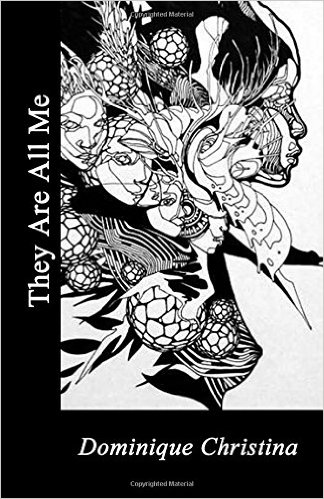
Book Review: They Are All Me by Dominique Christina

They Are All Me by Dominique Christina
Book Review by SaraEve Fermin

They are all me
Dominique Christina is a woman who wears many hats—activist, poet, performer, educator, author. Emblazoned across all of those titles one word sticks out, clearer than the rest: mother. Nowhere is that more of a celebration than in her newest book, They Are All Me. Please, don’t expect a book of sing-song rhymes or lullabies. Christina is here to sharpen her tongue and pen on the rarely explored edges of humanity, dealing with race, genocide, and womanhood.

In the books introduction, Jack Hirschman describes his reaction to first hearing and then reading Christina’s work ‘…I saw PAGE, I saw BOOK—which is not usually the case when it comes to a lot of so-called Slam or spoken word poetry I’ve heard.’ What makes Christina’s work so readable and relatable is the intensity as well as the connection to content. The first poem in the book is aptly titled Summer of Violence, words that ring heavy and true in our time, cutting into the heart of what is killing us–

Your tomorrow has a bullet in it.
Ask Trayvon Martin.
Your tomorrow has a bullet in it.
Ask Jordan Davis.
Your tomorrow has a bullet in it.
Ask Michael Brown.

Christina dares the entire country to look at what it has done, to ask what is happening to all the black and brown bodies disappearing into the open mouths we call graves, guns, cells. No one is off the hook—not the president (A Letter To Obama, Which Means Nothing), not Hollywood (Bad Blood, For Whitney Houston and Her Daughter Bobbi), certainly not White Men (The Sons of Oil Men), even the Country has to answer for it’s inexcusable course in Oh, America:

I went out looking for
what you promised and
found a toothless grin,
an empty pot,
boneyard lullabies,
sweet-less shores,
witches burnt to cinder,
little black girls bombed in churches,

they are all me.

…See how incurably permanent I am.

Many of the poems in this book are dedicated to the mothers or family members of people who have been murdered for simply living. From the Civil Rights Movement to #BlackLivesMatter, Christina refuses to turn a blind eye to the cruel treatment of African Americans, will not swallow the phase ‘post-racial’ no matter what you chase it with. She remains vigilant in the struggle to keep many of these names relevant in today’s clickbait and celebrity status driven world. A mother herself, the rage she feels over these losses as well as the heartache can be felt in every carefully placed word. She examines the devastating violence of the Civil Rights Movement in poems such as Birmingham Sunday and A Poem For Coretta:

They need me to do something about it,
wrestle the past down to a fairy tale and affix
‘And they all lived happily ever after’ at the end.

It has been almost fifty years since the man who said ‘I Have A Dream’ was assassinated for sharing his ideas of tolerance and peace. Still, Christina opens her heart to those who are murdered, to the black and brown boys we are losing, to the mothers grieving. It is here we see the frustration in being so full of language and still so denied the right to speak, here that Christina howls for the mothers who have only tears. In Mothers of Murdered Sons (For Mami Till, Emmet’s Mother; Sabrina Fulton, Trayvon Martin’s Mother; and Leslie McFadden, Mike Brown’s Mother), she splits open each family drama, again drawing on the juxtaposition between violence and faith:

The prayers of mothers with murdered sons
don’t arrive in heaven anymore.
Could be they never did.
And maybe God’s a charlatan pitching pennies
to the sound of black boys
breaking the world with their bleeding.
Maybe he’s busy with more righteous indignation.
Maybe the melody ain’t right.

Intersecting motherhood and poetry is a woman, a powerful woman who can conjure up words that might make you think twice before hitting send. When an unnamed ‘Dude on Twitter’ made an offputting comment about menstruation and sex, attempting to bring shame to womanhood, Christina wrote The Period Poem, blasting all misconceptions people may have about the resilience of being female–

And when you deal in blood,
Over and over like we do,
When it keeps returning to you,
That makes you a warrior and
While all good generals know not to discuss
Battle plans with the enemy
Let me say this to you, dummy on Twitter:
If there’s any balance in the universe at all…
You’ll be blessed with daughters.

DC Bio PicBecause women ARE strong as HELL! Christina has written a testimony to the women who have been holding it together for years, women fighting for their lives, women who have lost children, women who we have lost to violence. Through each poem, no matter how brutal the content shines a core of love, a central subject that is being a woman of color in today’s world. In Improbable Bird (for Elaine Brown), Christina writes about the fight between patriarchal expectations and the need for independence in order to make change–

You were supposed to grow up to
Be one of them,
To imprison you wanderlust,
In favor of a husband and
A job that asked of you high heels
and long skirts, but you
Knew something about the madness

That revolutionaries have to keep.

They Are All Me is a reminder that the past can not remain silent. That we need to keep digging at the damage until we find the source of what is wrong and fix it, that the band-aids are not working. She addresses national crisis the so many others have shied away from. She covers Vietnam, Katrina, 9/11, Ferguson, all from a personal perspective. These poems are powerful in the way they transport you back in time, how they pulse the blood, remind you there is more at stake than just a title or a prize. Christina is writing to save lives. In No Consonants, No Vowels, she writes

Language is slippery
when you don’t use it,
when nobody speaks to you,
when no letters come.
Language is a graveyard
of carrier pigeons.

The book contains many of Christina’s slam poetry favorites that can be viewed on YouTube—Birmingham Sunday, Karma, The Period Poem, and others. It is a collection of heartbreak and of celebration. A telling of this country from the blood that runs through it, through us. Dominique Christina has given you all of her with this book. Take the gift with hungry hands.

Click Here to Order They Are All Me Today!


Book Reviews by SaraEve Fermin:

SaraEve is a performance poet and epilepsy advocate from New Jersey.  A 2015 Best of the Net nominee, she has performed for both local and national events, including the 2013 Women of the World Poetry Slam and for the Greater Los Angeles Epilepsy Foundation 2015 Care and Cure Benefit to End Epilepsy in Children. The Editor in Chief of Wicked Banshee Press, a Contributing Editor for Words Dance Magazine and Book Reviewer for Swimming With Elephants Publications,  her work can be found or is forthcoming in GERM Magazine, Words Dance Magazine, Drunk in a Midnight Choir and the University of Hell Anthology We Can Make Your Life Better: A Guidebook to Modern Living,, among others. Her first full length book, View From The Top of the Ferris Wheel, will be published be Emphat!c Press in 2016. She believes in the power of foxes and self publishing.  Learn more here: http://saraeve41.wix.com/saraevepoet

Book Review: GNARLY

There is beauty in breathing razorblades and exhaling a painted sunset as delicate as it is too much to behold; that’s what Danielle Smith accomplishes in her first publication, GNARLY. And “gnarly” is the perfect description of Smith’s words as she takes you for a rollercoaster through first loves and heartbreaks, all playing out like a soundtrack under the visual madness of a New Mexico skyline. Smith has lit a match that burns just as bright as one of those remarkable sunsets.

And she manages to set the reader on fire, too, turning your heart into the campfire that might light the night as she whispers in your ear bittersweet-everythings; because this is the human experience. It is raw, gritty, soiled, messy, gnarly. From the truth showcased in teenage romance, in poems such as Minerals and Freckles, to the raw and heartfelt honesty of (His) Tie Dye and Making Nothing Out Of Something, Smith manages to take the reader down a new route where so many have tread before. She’s just wearing new shoes and holding a machete, fierce as a bleeding heart, to bushwhack her way through the bramble of her own thinking.

Her book reads like an indie record, but you want everybody to hear this one. Other poems, like Super 8, showcase true artistry, peppering the reader with hidden messages like whisper-kisses, finally ending on the “title track”, Gnarly which is everything and nothing you’d expect upon reaching the end: all madness, all frantic, all knees knocking, lip biting, nail scratching grit.

Overall, both deeply touching as it is a shock that such a young voice could carry so much wisdom and experience.

Her book, as with all Swimming With Elephants Publications, can be found online on Amazon and goodreads, where you can leave a review for this up-and-coming brilliant poeta.


New Review: Heartbreak Ridge (and other Poems): Bill Nevins

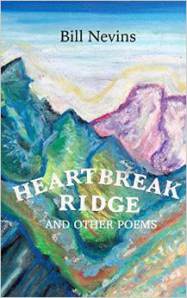
heartbreak-ridge1Heartbreak Ridge (and other Poems): Bill Nevins
Published: by Swimming With Elephants Publications
Edited: by Pia Gallegos
Reviewed: by Seamus Ruttledge

The true nature of poetry is to first give us an insight into the heart and consciousness of the poet, then the collective consciousness of the society that influenced and nurtured that poet.

With his latest collection ‘Heartbreak Ridge (and other Poems)’ Bill Nevins fulfills both of these criteria. His influences stare back from the pages of this collection: the poet’s Catholic upbringing, his Irish roots, his immersion in the popular culture, his sense of justice, and the ideas of his time, inform all that appears between the covers of ‘Heartbreak Ridge(and other Poems)’.

Nevins also draws on the American civil rights and peace movements. When the writers, poets, musicians and artists of the “Times They Are A-Changin” generation opposed wars, domestic and foreign, Nevins was positioned at the vanguard of the excitement: he relished their enthusiasm, idealism and the promise of change.

He leads us gently into where the heart of the poet lies, and for Bill Nevins that heart speaks both from the ancient stones of an ancestral land, and a new cultural landscape, with different mores and values where the public voice of discourse impinges heavily on the consciousness of the individual. ‘Heartbreak Ridge (and other Poems)’ explores how all of these emotions interact, from the deeply personal to the public. Nevins shares with the reader an understanding of how this melting pot moulded him as both person and writer.

Bill NevinsIn ‘New Skibbereen’ Nevins gives us the Ireland of the emigrant heart. He does not spend time in deep longing for a romantic past:

“…so that’s how they sang back in the bad old days, for Erin’s sake.”

While referencing the famous early verse of Patrick Carpenter, that gives us insight into the cruel days of famine and penal taxes, Nevins quickly moves to a very modern notion of Ireland: the homeland of his ancestors, populated by articulate people.

While still engaged in a fight and a deep longing for independence, the Irish manage to emancipate themselves through the most powerful of personal freedoms: that of free expression, expounded through singers and songs, through writers, poets, and other freedom fighters:

“Bobby Sands, the dying soldier-prisoner-poet….”

In the poem ‘New Skibbereen’ we see Nevins’ ancestral home Éire once again finding voice and healing through its spiritual and artistic heritage, as it had done through the late nineteenth, and early twentieth century writers and poets of the Gaelic Literary Revival.

To understand the soul of America, we need to read ‘Heartbreak Ridge (and other Poems)’ where the private citizen comes face to face with the noble ideals of a nation conscious of its role as the defender of freedoms: a role labored on the backs of Americans by the wider world, who lambast and laud it, all in the one breath.

To this ideal Bill Nevins and his family paid the ultimate personal sacrifice, losing their son Liam in combat in Afghanistan:

“Embracing, we kiss thy lips, thy wounds in peace, even in death, even in teeth of your death prayers upon us, we ash-cross your brow.” (Why Are We In Afghanistan?)

Echoing Rudyard Kipling’s call to a son lost in a different war, Bill Nevins and his family now yearn “When do you think he’ll come home?” yet the poet does not display any bitterness for this personal loss. Instead he very ably expresses his absolute dismay, utter confusion and anger about the way successive administrations have misrepresented the true feelings of the American people, at home and abroad, in times of crisis.

In poems like ‘Heartbreak Ridge’, ‘Why Are We In Afghanistan?’, ‘Dover Base’ and ‘Warrior Transition Units’ Bill Nevins repeatedly asks whether war and rage are giving America the answers and the healing that it needs.
It gradually becomes clear that Bill Nevins believes peace is attainable more through peaceful means rather than war, or other ‘security options’ that have been so favored by US administrations in recent times. In ‘Days of Death Letters,’ he throws a cynical glance to the military and its empty post-death rituals. Steeped in military glory and its trappings, these rituals of war and death represent little but the re-affirmation of American military power. They serve only to condemn families to a state of continuous grief:

“I have the folded flags and medals to remind me of that.”(Days of Death Letters)

In ‘Fateful Lightning: The Hoodie and The Republic’ Nevins remembers the injustice of Trayvon Martin’s death, which was to herald a number of similar deaths of African-Americans in racially-related incidents:
“Speak to holy rage in Jesus
To the emptied temple and the empty tomb
To the peace in Trayvon’s soul”

In this collection Bill Nevins points constantly to the ability of our artistic souls to express pain, anger and rage. This is what keeps us from revenge; this is what keeps us from violence; this is what keeps us functioning as human beings:
“…poets make everybody else
taste what they taste.” (No Prisoners).

The residual effects of a Catholic upbringing and religious power are strong and moving forces in Nevins’ writing. When best to take control than at the very first sacrament after baptism, the very first personal encounter between the Church through its priest, and the very impressionable young boy at first confession, who has come to be relieved of the burden of his sins:

“…staring at the cold stone Christ whipped by Romans
when Fenton in his stiff Jansenist cassock found me wanting in dogma
expelled me from first confession” (Transubstantiation)

‘Heartbreak Ridge (and other Poems)’ clearly shows us the sacrifice of American families to the universal values and ideals of a free and democratic world. It takes us on a journey through symbols and symbolism, of ideas and ideals, of the artistic, and the spiritual self, that creates a healing space, but most of all we are on a journey with the poet seeking a personal truth.

Bill Nevins opens for us the conscience of a nation deeply confused about its ideals, its history of a noble purpose, and the role foisted upon it by the world. Through Bill Nevins’ poetry and personal loss, we glimpse the real soul of America. There is the private and the public; both are intertwined in stories of love, peace, death, tragedy and the truly personal biography of a lost child to war.

He questions the idea of war and the whole culture and mythology built around it. As did Springsteen years ago with ‘Born in the USA’ Nevins lets us in on more of the truth about this almost mythical place that means different things to so many. Like Springsteen before him, Bill Nevins gives us a glimpse into the consciousness of the individual, and thereby, into the soul of a nation.

Through Bill Nevins’ poetry the reader pieces together a multi-layered depiction of citizen, and country. His historic, spiritual and cultural references reveal how from tough and harsh realities, the American Dream has sustained its people so well; giving birth to an idealism and a sense of purpose, that is unique to itself in the world.

At his best Nevins brings us face to face with our deepest selves, challenging each reader to look into their own value system: to note how society nurtures or impinges on those values and in turn on our lives and how we are allowed to live them. We are measured in the end by our response to how our society and big government corrupts our personal value system.

While ‘Heartbreak Ridge (and other Poems)’ deals with the loss of a beloved son to a war with uncertain objectives, Nevins never allows his great personal loss to dominate the collection. Rather, this great loss influences every question he asks about the value and the sacredness of life.

“The Spring will come,
joyful births will happen again,
the kids will dance
the gifting dance,
every bit as happily as ever young Jesus danced” (If We Make it Through December)

Reviewed by Seamus Ruttledge (May 2015)

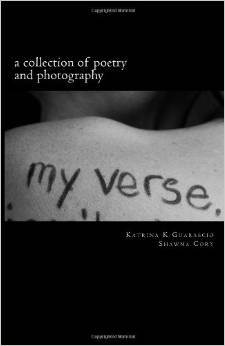
my verse, book review by Bill Nevins

Book Review by Bill Nevins

my verse,

a collection of poetry and photography
poetry by Katrina K Guarascio
photography by Shawna Cory


Swimming With Elephants Publications, 2014
69 pages, paperback
swimmingwithelephants.com

This book cures mental fascism.

Katrina Guarascio, the beloved Ms. G of Rio Rancho Public Schools’ Cleveland High School was let go by that notorious school administration and she made local and now national headlines. The reason: Guarascio encouraged her students to write creatively and freely. After all, she was hired to teach Creative Writing. But the school district decided that when one of the students updated the Biblical tale of The Loaves and Fishes, that was just too much for their Common Core Standardized Testing curriculum to bear.

my-verse-cover
So, the RRPS administration in their wisdom demanded that Guarascio either apologize on behalf of her students and promise never to encourage them to be creative again . . . or leave their employ.

Gurascio split. What else could any self respecting teacher who cares for the free minds of her students do?

She refused to bow to the fascist demand that there are some thoughts which cannot be expressed even in writing class. There are some thoughts which cannot even be thought.

The thought, as expressed by her student, that Jesus might actually have tried to help the poor, seems to have been one of those thoughts banned by the troglodytes of the the Rio Rancho Public Schools Administration.

No, Guarascio preferred to breathe the free air of America and to leave the stifling, choking atmosphere of this Christian Taliban school administation. And she encouraged her students, her charges, to fly free too.

They have been flying free. They have flown on Facebook, on television, in print, and beyond, praising their teacher and castigating the mind-numbing thugs who pretend to be school administrators in the school district that Intel Corp built and bought.

Read this book. It is the free, sexy, mind-liberating voice of Katrina K Guarascio, perhaps New Mexico’s finest mind and sharpest poet. Turn to page 23 (“I am not one/to sit and wait/for tides to change”) and see what I mean.

Word Up. Don’t Shoot. Let Us, and Our Children Breathe.

–Bill Nevins

Find my verse, on Amazon.com, Bookworks Albuquerque, or local Swimming with Elephants Events.

A Review of Periscope Heart by Rich Boucher

A Review of Periscope Heart

by Rich Boucher


Right off the actual bat, I should quasi-recuse myself and say that personally speaking, poems and books of poems that mostly address the notion of love for another generally don’t do anything for me. It’s just a taste thing. So with that context understood, Periscope Heart, Kai Coggin’s first full-length collection of poems (and the twentieth publication from the marvelous Swimming with Elephants Publications, LLC) really had its work cut out for it. No joke; I’m being serious. I have read and heard a lot of poetry that addresses some kind of romance/desire with the big R, and much of that just makes me really tired really fast. Maybe I’m not mature enough – who knows? Hand me another beer, love.


But the thing is this: I just haven’t got tired yet; in fact, the work found in Periscope Heart is at times stimulating, energizing and enervating, surprising even me. I stroll on the paths in this book and frequently some soft tendril of very, very careful neologism and pun-craft loops around my torso, and I can’t move. I think Kai Coggin knows this. At some points in this book I’ve suspected Coggin of witchcraft. Kai made a believer out of me and believe me, something in me resisted. Love just isn’t in my wheelhouse; on any given day I’d be more given to burying myself in poems about fetishizing panties and hails of gunfire. And many of the poems (not all) in this volume carry the love as their banner into battle. And I found myself right beside Coggin and marching along.


I’m going to take the magnifying lens to a small handful of poems in this review, but I want you to get this book and sit with it on either an early Saturday morning or a late Sunday night. And I’m being serious about that, too. Maybe you don’t like being told what to do. I feel for you; I really do, but I’m telling you what to do anyway. And I’m the one holding the riding crop. My eyes got pulled to the title “Alchemy” right away, as this is a kind of pet favourite subject of mine. Coggin here gifts us with powerful turns of phrase (“…my tongue knew of only churches inside you…”) and takes the notions of fusion and dissolution and mutability and cleverly finds their examples in this examination of attraction and desire (“…only a touch of alchemy in my bones remains/because you have loved me to earthen clay in your hands….”). Any book that contains a poem that closes with the standalone line “I have turned into gold” is worth both the price of admission and its own weight in the precious metal.


“Planting Stars” is just one of those quietly glorious poems that founds itself upon an arresting image (“…I buried a handful/of stars deep into the soil…”) but it’s more than just one of those glorious poems, because where another, lesser poet might dally too long, fascinated by their own scintillating creation, Coggin takes only the amount of time necessary to bring to our line of sight what she sees, leaving us to choose how long and how often we’ll gaze upon such a pretty, miraculous concoction. As it turns out, we keep coming back to it over and over again.


Some poems, only the real good ones, can mimic the soul and feel of music, of a song that’s both sad and up in one measure, and “Siren” satisfies this tall, tall order very nicely. I think of lines like this one from “Siren”: “…wanting nothing but homecoming/nothing but a respite on the open shores of someone’s thighs…” and I know without a doubt that where the casual reader will silently gape, the reader who is also a writer will gasp at the easy, unhurried majesty found in Kai Coggin’s poetry.


And not for nothing, but this poet knows how to top off her poems with titles that pull you and tease from the tableau of contents (“That Day I was Jesus Christ (Total Eclipse of the Heart)”, “This is how to eat your past:”, “Willing My Body Parts”), and in a nice reversal of a coup de grâce, Periscope Heart comes to you wrapped up in a very handsome, deep-blue package featuring some captivating cover art by Arkansas artist Joann Saraydarian. There are fifty-four poems in this first volume; think of yourself as truly getting away with it when you buy this book.


Visit Kai’s website to order a book straight from Kai, or pick one up on Amazon today.

First Review of Light as a Feather

First Review of the new anthology Light as a Feather.

Light as a feather cover

After reading the first few pages, I realized what they were writing was exactly what I went through.  I  do not think that people have any idea how many girls are afflicted with this disease.   This book needs to read by every middle school and high school student.  Teens need to know that this disease will affect every aspect of your life, sometimes for the rest of your life!  Thank you so much  for compiling this book.

Order you copy today!

A Review of “Verbrennen”

VerMatthew Brown’s Poetry Book, “Verbrennen” is Angry
a review by Mikel K

The poems in Matthew Brown’s book, “Verbrennen,” which is published by Swimming With Elephant Publications, are direct and have a lot of purpose. They are also angry poems, which given the subject matter of the poems is understandable if you have a heart and a soul. The bio on the back cover of his book states that Matthew’s poems “expose social, racial, and economic inequalities,” and that is exactly what they do, except for the first poem in the book, “Jose,” which starts off being about his grizzly grandfather and then twists into being about the narrator himself and his bad temper, which seems to have been passed down to him from his grandfather. “Jose,” is an intense poem; the twist in its direction adds to the energy of the poem.

The second poem, “Choice,” is about abortion, or more aptly about the two sides taken on the issue of abortion. The poem is addressed to a woman named Tara who we learn in the poem’s introduction is “a campaigner against reproductive rights.”

“It doesn’t matter who won
over the ban on abortion
because you and I won’t stop fighting for what we believe in,”
is how the poem starts.
It ends with,

“The difference is that my mother knows mercy, loss,
and acceptance
Something that you and your church
know nothing about.”
Matt

In this poem, as in all the poems in his book, Matthew has a clear voice. You know where he stands on things. He doesn’t mince words, or beat around the bush.

The third poem in the book, “Feast,” is a searing indictment of the white man’s treatment of the Indians in this great nation of ours. Key lines from the poem are,

“Our relatives will flee from their minivans
like the pilgrims fled from the Mayflower,”
and

“And in the true American tradition
They will take advantage of
other people’s hospitality,”
and

“Use the water from the Trail of tearsto fill our crockpots.”
By now, we all know that the Indians got screwed by the white man, but Matthew is more eloquent than most of us could be in his description of the cruelty and self-justification that the white man exhibited in “founding” the “new” land.

“Enola,” is a poem that deals with the Americans bombing of Hiroshima. It would seem that the death and suffering of such a large, large number of people is ignored by most of us, but Matthew is on target in his observations of the occurrence in this poem.

“It’s interesting that when minorities are poor
we call it a statistic
But when whites can’t afford to pay their mortgage,
we call it a recession,”

are key lines from the poem, “Recession,” which speaks of the discrepancies and unfairness that exist between rich folks and poor people using the recent recession to highlight these differences.

“Cake,” “Valor,” and “Blood Diamond,” are angry outbursts at Paula Dean, American usage of drones, and the diamond industry. Each is a fine poem, thought provoking, and original.

VerbrennenThis book would not be enjoyed by a conservative Republican is my guess. It does not portray the Amerika that was taught to us in school. It tells the truth.

Verbrennen is currently available through Amazon and CreateSpace for $10.95. Check it out today.

Also, check out Verbrennen and other fine poetry books at:

https://swimmingwithelephants.wordpress.com/

Mikel K

http://www.lulu.com/spotlight/mikelkpoet

https://www.facebook.com/mikel.poet

A Review of “To Anyone Who Has Ever Loved a Writer”

WriterPoet Nika Ann has an Amazing Book Out
a review by Mikel K

I think that I discovered the poet Nika Ann on Facebook, though I’m not sure how. Her poetry immediately grabbed me and I followed her to her website nikarasco.wordpress.com. There I found a treasure chest of amazing poetry.

Nika Ann has just come out with a book on Swimming With Elephants Publications called, “To Anyone Who Has Ever Loved a Writer,” and like Nika Ann’s poems on Facebook and her website,
the poems in this book are amazing.

The book starts with a bit of flash fiction wherein the author explains the title of the book:

“It can be lonely to love a writer, especially when the lover does not have a time consuming interest or practice that requires their focus while the writer is lost in their private universe. Even at the high point of a relationship, there is always something calling the writer away, a need, a craving for some necessary solitude to write. Solitude many people cannot understand.”

Loved a WriterThe brutal honesty that this paragraph conveys is evident in every poem in the book. Alienation, loss, suicide are prevalent themes in the book.

The poem, “What you need to know about depression, “starts off with the lines, “you need to know that the sun does not guarantee a good day and the promise of a friend and cold beer will not always be enough to lure me from my self-made cave,” and goes on to eloquently explain what I am to assume are the authors experience with and feelings about depression. It is both confessional and explanatory at the same time and, as are most all the poems in this book, refreshingly honest and insightful.

“Come Back,” is an amazingly moving poem. It speaks of a girl who ruined her hair and gave the narrator of the poem her grandmother’s watch two days before she killed herself.

“Earthquake,” is another one of my favorites from the book. It is the narrator quirky response to someone who asked her to marry them.

“Remembers,” “Bird,” “Shed,” “Fly,” “Prayer,” and “Confession,” are other poems that I found outstanding and that I think you should check out.

I read this book in one sitting and then re-read it in another sitting which is a good thing. In other words, it was a book that I didn’t want to put down until I had finished it. Nika Ann has a bright future as a poet. You should head over to Swimming With Elephants Publications and buy a copy of this fine book.

To learn more about poet and review Mikel K, please visit his Open Salon: http://open.salon.com/blog/mikelkpoet

To Anyone Who Has Ever Loved a Writer is currently available through Amazon and CreateSpace for $10.95. Check it out today.

Poet-Provocateur Jessica Helen Lopez drops C**t.Bomb.

Sharing a review of Jessica Helen Lopez’s Chapbook. I thought this one was especially well written.

Bill Wolfe's avatarREAD HER LIKE AN OPEN BOOK

Cunt.Bomb.  jessica helen lopez

Cunt.Bomb.

A Chapbook by Jessica Helen Lopez

Create Space Indep. Publishing

38 pages, $10.95

You were stunned — perhaps even shocked and appalled — by the title, weren’t you? That is the intention of poet provocateur Jessica Helen Lopez. She seeks to reclaim the word “cunt” from its current position as a palabra non grata, the equivalent of Lord Voldemort in the Harry Potter series (“he-who-must-not-be-named”). Instead, feminist-activist-slam poet Lopez wants to use the word to wield female power in all its guises.

In the ten poems contained in this chapbook, Lopez explores the many roles that make up a woman, as well as the thoughts and feelings that correspond with each. She explores the dualities in a woman’s life; her persona alternates between tender and tough, sentimental and sassy, spiritual and sexual. She is a woman, a wife, a mother, a sister, a lover, a poet, a…

View original post 1,143 more words

Some of it is Muscle: a review by Mark Fischer

Some of it is muscle promo 1Some of it is Muscle
Zachary Kluckman

Reviewed by Mark Fischer

Some of it is Muscle is an exercise in strength and perseverance in the poet’s life. Kluckman carefully excises the tough parts, puts them on display in ways that, sometimes, make you confused by how beautiful the scary bits are, and, in doing so, closes old wounds with the love of family and community. The images in this collection will surprise, challenge, and titillate both brain and heart. It is apparent that the poems in this collection were chosen and placed with precision. The poet takes you on a journey from heartache to heart-heal.

I found myself re-reading certain stanzas like puzzles and being rewarded with magical webs of metaphor like tendon and sinew that capture and coalesce into images that are unique to the mind, heart and voice of Mr. Kluckman. For example in the poem The Lions of Dusk he writes “the slow blue impalas swim like neon tetras through the heat haze, windows full of fever” effectively transforming the sinister into survival.

262710_10200154892465990_1862870133_nKluckman plays well with many traditional forms in this collection too, reminding us he is a puzzle man himself. Kluckman is well known for his devotion to the poetry community. He is an organizer of the 100 Thousand Poets for Change program, the creator of the world’s first Slam Poet Laureate program, and editor of Pedestal. He is also a two-time member of the Albuquerque National Poetry Slam Team and a recipient of the Red Mountain Press National Poetry Prize. This second book of poems by southwest poet Zackary Kluckman is worth picking up. It is a book of challenges met, made beautiful, and mended. Some of it is muscle but the whole of it is love.

September: a review by Mark Fischer

September
poetry by Katrina K Guarascio
photography by Gina Marselle

Review by Mark Fischer

WP_20140218_001

September is a book in three parts, three phases of letting go. The majority of poems in this collection speak to fleeting moments, a restlessness in the character, a yearning for something –  more realized in exquisite experience of the current moment. The words cascade down the pages in short, clean lines making effective use of crisp white space that many poets underutilized. In this effect, I feel a sense of impermanence, like snapshots taken in temporary bivouacs on a road trip through young adulthood. The never-ending summer. The last days of youth.

SeptemberThere is sadness, insight, worry, and relief sprinkled throughout this collection. Ruminating on love amid campfire smoke or the morning breeze on clean sheets, I am able to feel the conflicts and contemplations. In “Impermanence” Guarascio expertly describes internalizing the past and what it means to not let go when she writes “Like a sunburn, I know you will absorb into me and fade into memory. You cut me under the skin.”  September is full of vivid images like this that develop into a cohesive flickering film of transition. The poet is ever seeking sense out of hardships, patterns in roadkill.

The photography that accompanies this collection is superb. Images are well paired with poems. The many super close-ups speak of parts, the shapes of the body, and match the introspection of the poems. Gina Marselle has a great eye for emotion and her work is a well chosen accent to the book. Both Guarascio and Marselle are teachers in New Mexico. It is something to appreciate to discover your children’s lives are being enriched by the likes of strong artists as these women.

September is a strong collection. It’s like a dreamy short film shot on 38MM with a soothing shoegaze soundtrack playing in the background. If you were to make your crush a poetry mix-tape, Guarascio would be on it – twice. Wake me up when September ends.

Guarascio is an active member in the poetry slam scene in Albuquerque. She is responsible for establishing a poetry and spoken word community in Rio Rancho and coaching a youth poetry slam team. She is the founder of Swimming with Elephants Publications which is bringing the talents of many exceptional spoken word poets to print. Order September: traces of letting go from Amazon or Createspace.

Cunt.Bomb. a review by Mark Fischer

Cunt Bomb Cover
Cunt.Bomb.
by Jessica Helen Lopez

Review by Mark Fischer

Cunt. Bomb., the second collection of poems by nationally recognized southwest feminist poet Jessica Helen Lopez, is a small chapbook – coming in at a thin 33 pages. The content however, is anything but. As the title may tell you, this collection of words is explosive. The nine poems are well organized and read front-to-back as a manifesto, a recipe book, a howl across mountains in the night calling all to congregate in the sacred space.

CuntBomb Promo 1Nine facets of womanhood, from the feisty young grade school feminist to the embodiment of the Goddess Diana, this is the jewel at the center through which Lopez explores identity. Understanding the worship, celebration and exaltation of the feminine in every form appears to be the intent. The poet is embracing her sense of self and exploring her duty to teach self-love to women around the globe.

In this endeavor Lopez is quite successful. The images she conjures are strong and timely. In “Diana the Huntress,” she explores the horrifying murders of women in Mexico and the lone vigilante who fights back on long lonely bus rides as she writes, ”I fear no moon, Lady of Wild Creatures, La Cazadora worshiped by the womanly workers of Juarez.” There are no apologies here, no concessions, and that is what speaks most to the fidelity of this collection.

Jessica

Jessica Helen Lopez is a member of the Macondo Foundation created by Sandra Cisneros, as well as a Chicana/o Poetics instructor at the University of New Mexico, a two-time Women of the World Poetry Slam Albuquerque City Champion and member of several city teams representing her home town at the National Poetry Slam. Her voice is singular, both sharp and sweet. Like every good storyteller you walk away from her performances both nurtured and haunted. This dichotomy comes through in this collection. One of the “30 Poets in their 30’s to Watch” according to MUZZLE magazine, Jessica Helen Lopez is well on her way to assuming her place along the front lines with the likes of fellow Chicana poets Cisneros, Ana Castillo, and Demetria Martinez. As far as “little black books” go – this is the one to choose.

Pick up a copy of Cunt.Bomb. on Amazon.com or CreateSpace.

Poetic Seamstress: A Review of September

SeptemberPoetic Seamstress

a review by Sarah Smithson

Title of Book:  September: traces of letting go

Author : Katrina K Guarascio
Photography by: Gina Marselle

Guarascio gently weaves together simply written stories of love and release with consistency of the changing of seasons.  Each poem is a delicate and welcome punch to the senses and as addictive as pomegranate seeds. Every word is full of intent and as precious as a ruby-red jewel. The bittersweet emotion infused into each poem is refreshing to the eyes.

Guarascio stands out among the multitude of verbose poets; simplicity is her tool and she is a master of page craft. These poems are without flaw and each piece reflects the assurance that through love and loss, life will blossom. This collection is for anyone who wishes to see the softer side of letting go, coping with loss, and moving on.

Katrina K Guarascio is an active member of the poetry community as a writer and a teacher. Guarascio also sponsors the Rio Rancho Youth Poetry Community and coach two youth slam teams. Her collection, September: traces of letting go, is a lovely compilation of photography and poetry. Find your copy at Amazon or CreateSpace.

On the Surgeon’s Table: A Review of Some of it is Muscle

Some of it is muscle promo 1On the Surgeon’s Table

A review by Sarah Smithson

Title of Book: Some of it is Muscle

Author: Zachary Kluckman

                Kluckman portrays his life experiences with a ringing theme of home, family, loss, and endurance presented in each diverse and carefully constructed poem. He offers love and survival as the antidote for all obstacles, evoking emotion and tenderly stitching wounds up with the delicacy of a one performing open heart surgery.

The imagery chosen for each poem is open, dry, and honest, reflecting the desert setting presented in a majority of the poems. Although a second or third read may be necessary to grasp the deeper nuances of each piece, it is hardly a burden since a cover-to-cover read is enjoyable and enlightening.

Kluckman’s poems are sun-ripened peaches; flavorful, rich, and filling. Once you’ve been spoiled on them, poetry will never read the same way again. Kluckman, like many performance poets, uses the combination of experience and emotion to craft powerful pieces; a method successfully employed throughout the book.  

262710_10200154892465990_1862870133_nThe poem entitled, “Training Day,” recognizes these themes, stating, “This is how we acknowledge the heart.” As strength. As work. As Muscle. The only blemish in this masterful collection is the use of some rather abstract metaphors, which may require deep thinking and multiple readings to reveal. These poems were intended to offer hope to the quiet, downtrodden, and lost, and they do this well. This would a recommended read for anyone who craves beauty, hope, or guidance.

Zachary Kluckman is a performance poet, a two-time member of the Albuquerque National Slam Team, and an accomplished spoken word artist. He is featured in numerous publications, as well as radio broadcasts and organizes many events in the local Albuquerque area. His recent publication, Some of it is Muscle, is now available from Swimming with Elephants publications. Find your copy on Amazon, Createspace, or a Local Book Seller in the Albuquerque area.