Now Available: Belly-Up Rosehip: A Tongue Blue with Mud Songs

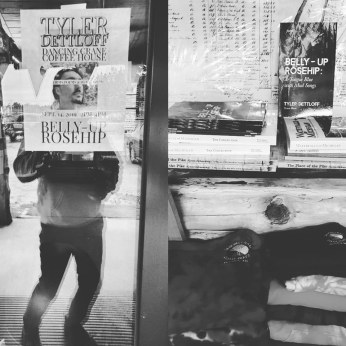
Swimming with Elephants Publications is proud to announce the release of Belly-Up Rosehip: A Tongue Blue with Mud Songs by Tyler Dettloff (with illustrations by Claire Moore). Belly-Up Rosehip is the final publication chosen from our 2019 Open Call for Submissions, leaving with it much promise and enchantment before we open our virtual door again for this upcoming open call. 70224287_423656881612214_1457545139567198208_n

Deep-rooted in radiant pride for his Native culture, with a jazzy bluesy-feel woven with lyrical quality, this collection is more superb to finally behold in its fully-fleshed form; and though reading it alone was an awakening, to see it in print with illustrations to partner the poetry has made it all the more wondrous and indeed a publication that we, at SWEP, are happy to home.

Here’s what’s being said about Tyler Dettloff’s work:

This evocative collection invites a gathering of the lost and the found beneath  a sheltering shingwak. Peopled with trout and tamarack, Tyler Detloff’s words taste of iron, of spruce gum and honey.
— Robin Wall Kimmerer

69907995_2336701843234668_179766289965776896_n“I want my mouth to bloom,” writes Tyler Dettloff. How this mature first collection fulfills that wish! Influenced by jazz and blues, agriculture and fly-fishing, animals and birds, and his Anishinaabe Metis roots, family and culture, Detloff’s poems speak and sing at the same time. His words are mouth-pleasing, like his lines about spruce sap kneading gums, and teeth brushed with maple blossoms and hawk feathers. Tragic political injustices are confronted, but the poems triumph in their celebratory vigour. Even the titles—“Honey High and Nectar Prone,” “Surefooted Spring-fed Salt Lick,” “Thousands of Frogs Croaking Purple”—suggest the sensuous glories and vibrant voices of this book.
— Brian Bartlett

Has there ever been a lovelier word for medicine—indeed, a lovelier medicine—than rosehip? That’s what I thought as I read and was riveted by Tyler Dettloff’s Belly-up Rosehip, a book that loves thorns as much as bloom and sings of stink as beautifully as sweetgrass. When he writes of licking a fishing lure’s hook, or asking the pine needles “to have mercy on my tongue,” Dettloff describes caring for a place so much that you want your mouth where its mouths are, your tongue against its sharpest leaves. No wonder the wilderness in these poems is delirious. Sensual and serious and sometimes necessarily sad, this book charts an intimacy with a Northern Michigan landscape peopled by namegos (lake trout), migizi (bald eagle), and “whips of red willow buds” as well as human mothers, fathers, and lovers. “This is the place I was telling you,” the poet says, inviting us to listen to what the place tells him as he becomes the man the place makes him.
— Dr. Cecily Parks
Assistant Professor
Department of English & MFA Program in Creative Writing


Welcome to the parade, Tyler!

* You can support Tyler by buying Belly-Up Rosehip: A Tongue Blue with Mud Songs on Amazon. And as with all of SWEP’s titles, please review on Amazon and/or Goodreads!

Spotlight on Sarita Sol Gonzalez

saritasolmemeWhen I first met Sarita Sol Gonzalez (she must have been ten years old at the time), I remember being wrapped up in silent awe at the strength and earthquaking power such a young girl could exude. I, quite honestly, envied her, in that “I want to be Sarita when I grow up” kind of way; y’know the kind of envy that isn’t all green monster, all consuming? It was simply the “this girl is amazing and I’m going to step aside, but maybe hold her hand, lift it up, and shout her name from Sandia mountaintops just so everybody knows how amazing she is, too.”

Not that she needed much help in that. Her voice is one that carries without assistance, and her hands are held high enough on their own, with all the character of a young girl, now turned into a young lady, who speaks without shame or hesitation. Sarita Sol is my every wish for the future of performance poetry come true, not only because she performs with such character, but because she speaks with so. much. truth.

Perhaps this is because she doesn’t adhere herself to “slam trends”; instead, there is a constant flow of themes like ancestral and cultural pride, identity, evolution and change, and more, in Sarita’s writing. She speaks her truth, with a beautiful mix of metaphor and imagery, but as a youth writer, she isn’t just representing herself, or her community, but an entire slew of youth poets to come. Of course, you hear “raw talent” and “prodigy” thrown around a lot when it comes to youth poets, and this certainly isn’t a discredit to any who wear those words pressed to their hearts or allow them to escape their lips, but when it comes to Sarita, I wholeheartedly believe those words entirely apply. She has a whole list of accolades that support that, including being Swimming With Elephants Publications’ youngest author! 41sO02dIKJL._SX311_BO1,204,203,200_

Perhaps the most amazing thing about Sarita is that she began writing when she was seven years old — I, myself, have an eight year old who loves writing the most imaginative and silly illustrated stories, so I can only imagine the world through a seven-year-old-Sarita’s eyes. Now, at thirteen, she is still one of the youngest active members of the Albuquerque poetry community and, needless to say, she continues to absolutely slay, not only in her writing, but what she uses her writing and her voice for: community outreach, female empowerment, and, really, just utter divinity.

Some call her an old soul, but I call her a walking goddess of dreams come true. And for this, I still want to be Sarita Sol Gonzalez when I grow up; but I guess (considering I am what most consider to be grown already) I’ll settle on watching her grow up, and supporting her every effort to make her own dreams come true. And (here’s the selling point), you can, too! So won’t you consider donating to her education?

Or better, still, buy her book, so you can support her and dive deeply into the magical world of her writing. Trust me, you won’t regret it.


A Writer’s Guide To Revision — Elan Mudrow

I peek out from the analog…paper skin, bone and water…hue, saturation…body tweaked with vibrance, a layering of edits, revision…revised with dark lines, shades on skin, adjustments…adhered, affixed. Fixed. My face, my story, a template, structure of desire, rouge of action…series of alignments…light and color, words to squeeze into a promising book with the softest palms […]

via A Writer’s Guide To Revision — Elan Mudrow

New and Upcoming Publications from Kat Heatherington

Kat Heatherington, author of the bones of this land, and Swimming With Elephants Publications’ 2017 chapbook competition winner, has been busy!

Three of Kat’s poems have been accepted to the forthcoming Manzano Mountain Review winter issue, but to keep you warm and waiting, you can check out the Sky Island Journal, another New Mexico-based creative writing journal; they will publish a piece by Kat in their upcoming issue on October 20th.

And available to read right now, four of Kat’s poems have been published in a small collection entitled Erotix: Literary Journal of Somatics. What looks to be a promising and awakening collection, it is described as a journal that “explores the poetry and prose of the erotic experience in many different forms.” Included in a baker’s dozen of writers, 51wjF6pvWjL._SX311_BO1,204,203,200_Kat helps to “explore the idea of what it is to be adventuring in a body: what is it to connect with others? What is it to experience intense sensation? What is it to transform? What is it to live in this particular body that we have?” Further, it uses “erotic touch, somatics, BDSM, love, and more,” and surely holds the promise of shedding light on one’s most intimate thoughts and mindset. I, personally, can’t wait to get my hands on a copy; won’t you help support Kat and buy a copy, too?


Kat Heatherington is a queer ecofeminist poet, sometime artist, pagan, and organic gardener. She has been living in Albuquerque since 1998, when she moved here to earn a Master’s in English at UNM.15871565_10210320273297158_5000576831974740644_n

In 2007 she collaborated with a group of three other unrelated adults to buy land in the Rio Grande Valley and form Sunflower River intentional community, sunflowerriver.org.  Ten years and many life lessons later, Sunflower River is still going strong, and still providing plenty of material to write poems about.

Kat’s work primarily addresses the interstices of human relationships and the natural world.  She has several self-published chapbooks, available from the author at yarrow@sunflowerriver.org.  Her work can be read at https://sometimesaparticle.org.

Happy fourth SWEP-aversary, Kai!

Today marks FOUR YEARS since PERISCOPE HEART, Kai Coggin‘s debut collection with Swimming With Elephants Publications, was released! PH Postcard 4x6We want to take this time to congratulate Kai on her many and continued efforts in pursuing change in the world through writing.

More recently, she was published in HER Magazine, in an article that showcased her work in poetry and the ties to her culture therein. We are SO proud of our parade in everything they do. Congratulations, Kai! And happy publication anniversary, from all of SWEP family, to you!


Kai Coggin was born in Bangkok, Thailand, but is currently a happy blip in the 3-million-acre Ouachita National Forest in Hot Springs National Park, Arkansas. Author of PERISCOPE HEART, published by Swimming With Elephants in 2014, and Wingspanpublished by Golden Dragonfly Press on Earth Day 2016, Kai was a 9th/10th grade English teacher I wish I’d had, before she transitioned fully to a career in writing. She has more accolades than could fit on a page, and basically continues to slay in the writing world. Please be sure to check out her website, kaicoggin.com (where you can get a full list of all those accolades!) and continue to support her in all of her efforts.

Bassam on Wax Poetic

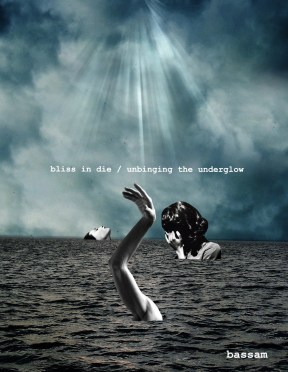
Swimming with Elephants Publications’ own Bassam was interviewed by Wax Poetic, a Canadian based poetry podcast that you can listen to for FREE! (and as poets, we sure love free things, don’t we?) They talk about their SWEP release, bliss in die/unbinging the underglow and more…

bliss in die

You can check out the podcast here!

And don’t forget to like Bassam on Facebook and support them further by buying their book on Amazon; while you’re there, don’t forget to check out their new release from Gen Z Publishing!

——————————————————————

Bassam Bassam(they/them or xe/xim) is a spoken word poet, proud auntie, and settler residing on the traditional territory of the Dish with One Spoon Wampum Belt Covenant (Anishinaabe, Haudenosaunee, Huron-Wendatt, and Mississaugas of the New Credit). they are a member of the League of Canadian Poets, an executive board member with Spoken Word Canada, and has toured Turtle Island performing spoken word. Bassam earned title of national poetry slam champion at the Canadian Festival of Spoken Word (CFSW) in 2016 with the Guelph Poetry Slam team, and Canadian Individual Poetry Slam (CIPS) finalist in 2017. they were editor-in-chief for ‘these pills don’t come in my skin tone’, a poetry collection exclusively by Black, Indigenous, and People of Colour (BIPOC) on the topic of mental health and illness, released in fall 2017. a (gender)queer, Jewish person of Middle-Eastern descent and a long-time sufferer of body dysmorphia, bipolar and eating disorders, bassam believes in radical kindness as resistance to colonization, that there is no peace without justice, and that intersectionality is vital in the struggle against kyriarchy.


Book Review: Rock Paper Scissors

i need poemspoemspoemspoems
a universe of nothing but–
just to keep the light on
just to keep my head
in a world gone madmadmad

The ending stanza of Mary Oishi’s first poem in Rock Paper Scissors showcases exactly how I needed this book, at this point in my life especially. Co-written with her daughter, Aja Oishi, Rock Paper Scissors is divided into two parts: part one being Mary’s, a mother’s poetry of strength and survival. And it radiates and embodies those two qualities so well, but it gMaryO (1)oes beyond the theme of motherhood alone — though it was this theme that I clung to desperately, now raising two daughters of my own, and an old friend of much survival and some strength.

Mary’s part in the book starts with a subtle strength, though; short poems pack brief blows of heartbreak and speak a story of resilience, touching on abandonment (when i asked how my mother could give me away), growing up biracial (at least I had siblings, you said), the impact of racism, and politics (in numerous poems, though most notably in Thoughts on the Execution of Troy Davis).

Heaven help us,” Mary writes, “We are ALL Troy Davis.” But in the same stride that she seeks to remind readers of our unified human-ness with this and other works, her poem prior, Ghosts of Penn’s Woods, packs a reminder of the brutality of colonization. Her heavy concentration on politics does not cease here: broken frame left a lump in my throat, womb-heart aching not only because I am both mother and woman, but because I have faced the choice of abortion.

this poem is a graphic picture on a sign
in front of every senator, every candidate
who calls for escalation, for “tough measures”
this is a pro-life poem.
THIS. is a PRO-LIFE poem.

She begins with this brave declaration, placing the reader briefly in the shoes of a war-ridden woman; for every politician who screams PRO-LIFE, we are left with the echoing question, “What about the children in Syria, Palestine, Iraq, Afghanistan?” The list could go on, loud as bombs.

But then, there is perhaps a message more easily related to.

she wonders if her pro-choice sisters,” she writes, “will stand with her now,” speaking of a doubt that has flooded the minds of too many women more concerned with the thoughts of others than the impact of making their own choice may have on their futures. With unwavering finality, we are left with the firm belief of the author:

this poem demands all women’s right to choose,
ALL women, to really have choice, choices, opportunity
this is a pro-choice poem.

THIS. is a PRO-CHOICE poem.

This is a pro-life/pro-choice poem
looking for a new frame.

Never before had I read something that so wonderfully/horribly resonated with my own thoughts on the constant debate of choice, and for that, I cannot offer enough praise to Mary Oishi.

Her daughter, Aja Oishi, proves to be just as radiant in writing as her mother, though certainly with her own unique voice in the second part, a daughter’s poetry of chance and fate. Visually enlightening, Aja’s poetry awoke something visceral within me. Immediately, I felt as though I was being taken on aajaauthorphoto  spiritual journey; but perhaps there was no surprise in such spirituality resonating in Aja’s writing with titles such as Creation Story and Of the three Fates, I choose scissors. Other poems, like Beast vibrated with simplistic form, and still strongly echoed that deep and complex spiritual feel.

Get down

Dig dig dig because you are small
and the small will survive.

Stay alive

Touch your hands to the earth
and do what it tells you.

Remember what you came for

Love and joy, and love and joy,
and love and joy.

She goes on to write about defending the sacred, reiterating that it is we who are sacred things; assuredly, each of her pieces are equally as beautiful and enlightening, offering a semblance of inner peace. But there is a bittersweetness, too, in poems like Fireflies that seek to remind us of our dying earth, of what we once thought of as eternal and how it’s now fading. In a political landscape strife with debate of climate change and global warming (and the list goes on from there, of course), I feel like Aja’s voice is necessary for my generation — we are the ones who witnessed little miracles like fireflies, and constantly buzzing bees, and our children will, perhaps, be the last to see such things as they fade only to be revisited in memories.

And perhaps this is why earth itself (or maybe it’s more apt to say herself) is such a beautifully repeating theme in Aja’s work. In don’t be afraid of the beautiful and high mountains, she again succeeds with offering a very visual piece, the message of which is simple and still so very important: don’t give up.

Don’t give up
for unbearable sorrow.
Don’t give up
for the terrible anger.
Every day
suffering piles up
on yesterday’s suffering
be we have work to do.

Even at night a miracle happens
with every in breath.
Somewhere
frogs emerge singing

and precious strawberries
are red
in the mouth.

Written like a letter to a woman named Carol, it begins with the declaration, “Your very name is a praise song.” I was so utterly struck by this statement, and the lasting sentiment, “We need you here to sing the welcome song.”

Like her mother, Aja also speaks of heritage, of being a woman in this wild world, of the choices that we face. With My Body Between acts as a witness, from the perspective of patient escort, to every woman who has walked into an abortion clinic.

She’s worn every label you can think up
from good girl to fuck up.
She keeps her chin up.
She’s come in a rusty blue Mustang
and her brother’s pickup truck.
She saved to come out from Texas
—cause it’s much worse in Texas—
and her boyfriend’s come with her
on the bus from uptown.
They thought she wouldn’t get here,
cause she just finished
fifth grade.
She thought she wouldn’t get here
cause in her forty-five years
she’d never been.

This entire piece chipped off pieces off my heart, not only because I have been there for reasons numerous, but because it made me feel seen. It made me ache and cry, it made me feel as though I were a part of a unified front, even with the recognition that this choice isn’t made lightly, and without hurt. And I think that was the most important thing: Aja’s words don’t seek to act as though this isn’t a painful choice, but certainly reiterates the fact that it is a CHOICE; a choice that women in all walks of life have had to make.

I could go on to wax poetic about each of Aja’s poems that follow, written from various personal experiences (though written in such a way that they are not impersonal, and allow the reader to insert themselves into the words and images and places), but maybe that would be too redundant. Instead, I leave you with the simple insistence that you buy this book. I speak as a mother, but believe this is a worthwhile collection to add to anyone’s library.


Mary Oishi has two poetic voices: one stark and simple like that
of her Japanese ancestors, and one that echoes the rhythms of
preachers from her upbringing by her American father’s
fundamentalist relatives. Both voices sing her songs of truth
and social justice. She is the author of Spirit Birds They Told Me
(2011) and is one of twelve U.S. poets in 12 Poetas: Antologia De
Nuevos Poetas Estadounidenses (2017), a project of the Mexican
Ministry of Culture. Her poems have appeared in Mas Tequila
Review, Malpais Review, Harwood Anthology, Sinister Wisdom, and
other print and digital publications. Oishi is a public radio
personality since 1996, most at KUNM-FM Albuquerque,
where she hosts The Blues Show.

Aja Oishi lives in northern New Mexico. Her writing draws
from ecology, anthropology, and the years she spent in Spain,
Japan, and New Zealand. She revels in the uncaged world and
makes a living (and a life) by fighting for prisoners as an
appellate public defender. This is her first collection of poetry.

Featured SwEP author: Jennifer E. Hudgens

Swimming With Elephants Publications would like to reintroduce you to Jennifer E. Hudgens, author of Girls Who Fell in Love with War. Jennifer was born and raised in Oklahoma City. She has always danced to the beat of her own drummer, just ask her mom. Using poetry as a means of expression and survival, Jennifer lives poetry. She watches the sky the way most people watch television. Jennifer is terrified of clowns, horses, and animatronic toys. That damned Snuggle bear is secretly trying to steal souls.

Girls Who Fell in Love with War is Jennifer’s first full collection of poems. She has plans to release a couple poetry chapbooks and her first novel in 2016. Jennifer promises the novel is quite murdery. She is also working to bring more diversity and light to the amazingly talented poets in the Oklahoma Poetry Community.

Jennifer is currently pursuing her Bachelor’s degree in English and Creative Writing at the University of Central Oklahoma with plans to teach high school students after graduation. She teaches creative writing classes for the Oklahoma City Arts Council and is a pretty rad substitute teacher.

Jen genuinely hopes you like her poems. If you don’t, that’s okay too.

Recently, she released a collection, Paloma, with Blood Pudding Press. So it goes…

You were the only one who believed me when I said what he did hurt

You were the only one who knew I was burying myself in too much fat and flux

Paloma kickstarts with 1996, a punk rock war-cry of nostalgia and a final lingering note of sadness. This, like many others in the collection, is a poem that resounds with everything oh-so-90s; but make no mistake, this is meant in the best possible way. A mixed tape soundtrack that plays like growing up, it sets the tone to whom this collection is dedicated– as much funeral dirge as it is love song for a sister and friend. The final line of the first poem rings melancholic: “Who’s gonna take care of us strays now?”

It is this echoing theme of finality, of trying to grasp the concept of loss, that carries on through the entire collection, questions of mortality and suffering scattered like the ashes of the departed, asking the question specifically in Lauren Kate is Dead: “Where the hell is this better place people are always talking about” and present in lines like:

How is it life if we aren’t suffering
Pain keeps us still {here} latched to gravity

With each poem thereafter comes a chapter of both closure and reawakening old memories; Paloma is remarkably bittersweet in the tug-of-war of saying goodbye to somebody who can no longer hear you, and Hudgens’ voice is so clear and combative against adhering to traditional standards. If nothing else, it is clear that Hudgens proves to be anything but a traditional poet; she rocks the reader’s thoughts, with gruesome details suggesting unkempt murder, encouraging one to further unravel the mayhem behind a sudden loss. Nonetheless, this proves to be a beautiful read, a true work of dedication and memory even with scattered wishes to be unseen, like that found in Bizarre Love Triangle:

You always saw me
Now
I’m trying not to be seen

And isn’t that so like loss, and how we process it? Loud as bombs, but in the quiet, in solitude, trying to process in peace, even if the death was anything but peaceful. But with this thought, I wonder at the intention of the book title: Paloma– a name that means peace, it is perhaps, with this offering, the dearly departed (because judging by Hudgens’ words, Lauren Kate was, indeed, so very dear) may be at peace, too.

Overall, as with all of our SwEP family, I can only offer heartfelt recommendations to reach out and read more of Jennifer Hudgens’ work. You can purchase her full-length title, Girls Who Fell in Love with War, published with Swimming with Elephants, on Amazon, and keep an eye on her wordpress for more news directly from the author.

Available Now: I Bloomed a Resistance from my Mouth by Mercedez Holtry

Book ended artfully by two poems (“Dear Donald Trump” and “For Latinos Who Voted for Trump”) that bring much needed attention to the political climate and how the Trump presidency affects her and her people, Mercedez Holtry’s newest publication from Swimming with Elephants Publications is everything you could imagine from the renowned poeta. It, as the title proclaims, is a resistance of performance, blooming like sunflowers stretching to an Albuquerque sunset sky.

Mercedez goes further in speaking not only about the national political climate but also local change and gentrification of her beloved hometown — Albuquerque, New Mexico — in poems like “La Central gets a Makeover” in which she calls out by name former Mayor Berry and the many failings of the Albuquerque Rapid Transit (ART) and its continued construction. Woven with a deep woe for being the final generation that might cruise Central Avenue, she takes you on a journey of the Albuquerque she knows and loves.

But there is a softness to this resistance, too. In “You Bring Out the Burqueña in Me,” dedicated to her beloved, she journeys through all the makings of herself and her culture, her love and her home, painting an image that echoes the vulnerability in the poem prior, “The Heat of Summer.” Both veer away from the political undertone of this publication and yet, there is still a softly flowering rebellion in her words. A rebellion of self, of love, of light.

But as with nature, there is darkness behind the light. A persona poem, entitled “La Llorona Speaks,” takes the reader on a shadowed journey into muddy waters of loss, exploring the legend of La Llorona, or The Wailing Woman. Another stunning exploration of her own culture, this particular poem was a hauntingly beautiful read.

As ever, Mercedez does not fail to enlighten and educate with her second collection from Swimming with Elephants, bringing an artfully entwined variety of work.

You can purchase I Bloomed a Resistance from my Mouth on Amazon, along with her first publication, My Blood is Beautiful. And don’t forget to like Mercedez’s artist page on Facebook, and keep a lookout as she heads out for the Blooming Resistance Tour this May (and for inquiries about booking her for a feature, please contact our partners at sugarbookingentertainment@gmail.com).

Now Available: Nail Gun and a Love Letter by Beau Williams. 

Heralding from Portland, Maine, Beau Williams describes himself as a “fairly optimistic” poet, and what better way to describe his newest collection of poetry from Swimming with Elephants Publications than as “fairly optimistic.” Bittersweet journeys to bar floors and the bottoms of bottles, Nail Gun and a Love Letter is reminiscent of beat poetry days and the pilgrimages we must take to find ourselves.

Whether these pilgrimages occur literally or otherwise, Beau has managed to make an astonishing and beautiful book; these are love letters soaked in liquor, poking nails through your heart only to fill the holes with the sort of honesty that only being three sheets to the wind can bring. This book is better described as a cure for hangovers, best enjoyed with a hot cup of tea (or maybe a hot toddy for those frigid winter nights). Beau is undeniably honest in his descriptions, and there’s something chilly in his work, reminiscent of winter along the Northeast coast, but he always manages to wrap the reader up in warm words. From micropoems like “Sacred Vows” to full length bar hymns like “Looking for Brooklyn in a Shit Bar in Portland,” it’s clear that Beau has an inspired affinity for storytelling based heavily in symbols and setting. This book is a journey.

I first met Beau when he was on his own journey with GUYSLIKEYOU, a poetry collective with Wil Gibson and Ryan McLellan. It was his soft demeanour that caught my attention, allowing a contrast to his occasionally sharp edged poetry. Again, this brings to mind poets like Allen Ginsberg; there is a subtlety in these pages, a sharp as a nail, unforgiving as alcohol sort of sensation. And yet, reading this collection was like having a drink with an old friend. Like coming out of the Maine cold to warmth, at long last. And maybe he’ll burn a bit of you, but he will always wrap you up again with a love letter.

Nail Gun and a Love Letter will be released soon. Meanwhile, don’t forget to like Beau’s Facebook page to show him some support and for book release updates.

Coming Soon: “from below/denied the light” by Paulie Lipman

Welcome, Paulie Lipman, to the Swimming with Elephants Publications family!

Out of Denvthumbnail_BW Promo Picer, Colorado, Paulie comes “from below” and rises to join our parade of writers.

A two time National Poetry Slam finalist, Paulie Lipman is a loud Jewish Queer poet, performer, and writer. His work has appeared in the anthology ‘We Will Be Shelter’ (Write Bloody Publishing) as well as The Emerson Review, Drunk In A Midnight Choir, Voicemail Poems, pressure gauge, and Prisma (Zeitblatt Fur Text & Sprache).

A magical individual, I’ve had the chance to share at least one meal with Paulie in a group setting during the 2015 Denver 40 oz. regional slam; from there, I can recollect Paulie’s genuine kindness, their welcoming spirit, their talent in writing and performing, their endless inspirations and ideas, and their sort of soft loudness that allows others to be heard while their voice lifts in passionate intervals. At the time, I was a “newbie” to competitive slam, but it was with that interaction that Paulie, a veteran to slam to my eyes, made me feel heard throughout the group conversation, going so far as to ask me questions personally so I might be involved in the busy-ness that often overwhelms when you’re sat at a table full of poets.

Their upcoming title with SwEP, “from below/denied the light,” is a deep exploration o317P2HxRehL._SX311_BO1,204,203,200_f addiction, sobriety, spirituality, and identity. With micro-poem interludes, Paulie captivates with self-recognized flaws from the beginning, sharing with readers:

I am a snob when I have no right to be

I judge people who don’t read

Even though I’m a recovering junkie, I have
little tolerance for current ones

I love and help those who deserve it, don’t
ask me how I determine that

Nevertheless, he shines as an example in this brutal self-recognition of knowing he may be “horrible to love”; and still, his work is so easy to fall into as he touches on subjects of his queer identity and how it conflicts with his Jewish blood, and his path into recovery as he addresses past self-destruction.

Of course, with all this to consider, as the title may suggest, Paulie’s book is not a “light” read. Combatting demons throughout, Paulie has managed to create a subtle journey into sobriety and spirituality without overwhelming in its occasional anger and the quiet sadness of providing his own funeral dirge (in a poem aptly named Dirge). And even then, there is a tenderness on the final, lamentful line (but I’ll leave that to mystery).

Beautifully worded and artfully ordered, “from below/denied the light” is available for pre-order on Paulie’s site.

You can also follow them on Facebook or catch them on Instagram.


Wil Gibson just can’t quit…

…being phenomenal.

Of course, such a grand sweeping word as phenomenal fails to do Wil Gibson’s work, in his most recent published collection, any justice whatsoever. It’s my belief that a simpler word might better suffice, if only for the phenomenal simplicity of what Wil’s words make you feel. An oxymoronic statement, maybe, but it’s just that — the beautiful simplicity — which Wil brings to both written and performance poetry.

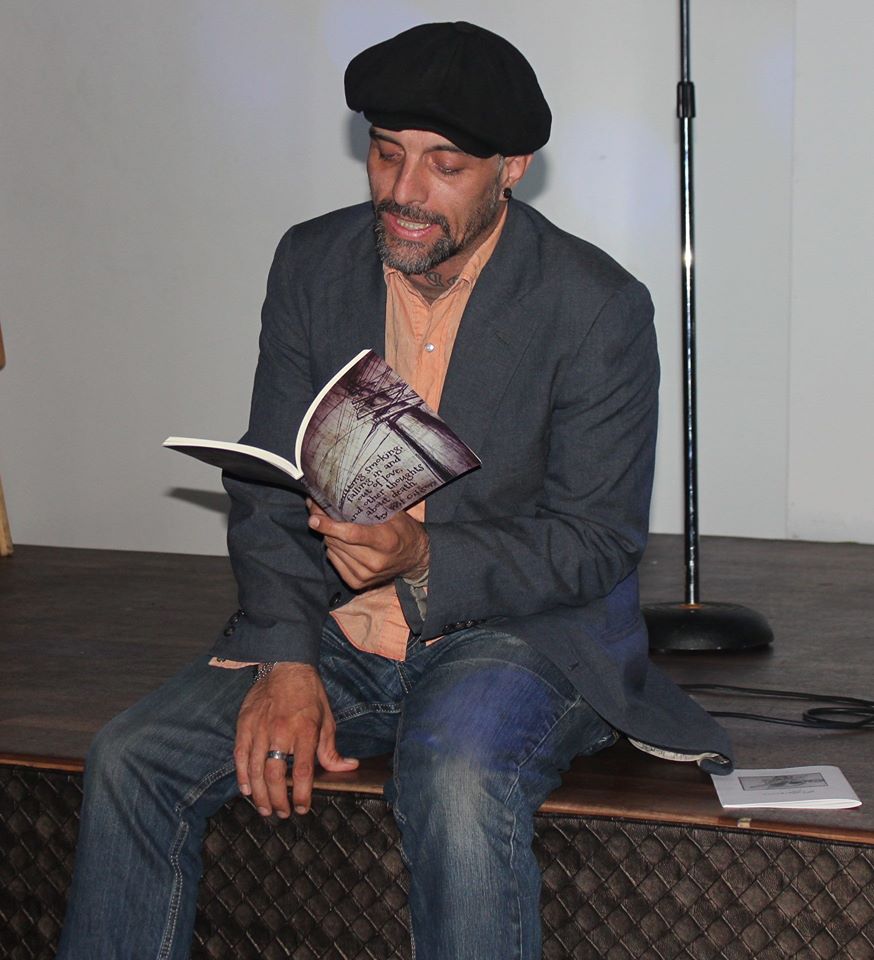
It’s his most recent publication with Swimming With Elephants Publications, Quitting smoking falling in and out of love, and other thoughts about death that draws close that beautiful simplicity. As life-changing as an arrival to a safe haven, or a departure from the only place you’ve ever known, reading this book was like coming home, wherever home may be. With a broad array of landscapes and cities throughout the United States mentioned, I felt a strong sense of connection to place in reading. It was, undoubtedly, a journey; more than that, it was a pilgrimage.

For that reason, this book needs to be savoured (like a cigarette, if you will, or five after you’ve quit for the umpteenth time). Not to say I didn’t have the urge to rush through each part and eat it all up, but I found it most enjoyed as a slow read, taking the time to dog-ear pages and underline phrases that struck me (and as I say to many writers: sorrynotsorry for dog-earring books, for lack of post-its to use as markholders, and for marking up your books — this, to me, is a testament of love for the work put in, as I find connection to it).

The contrast and connection between each section was so well-constructed, from a writing and editing standpoint, I could certainly see the love that was put into this book, too. From the numbered poems and the slow stream of falling in love over and over again in the first part, The part where I fall in love and a bunch of people I love die to the numbered days in the second part, The part where I quit smoking and more people I love die that are almost comical at times in their display (days 16-18, especially; any smoker or former smoke can certainly relate to the feeling of fuck you that Wil puts so adequately on the page), a conversational tone carries throughout.

Thinking back to when I first heard Wil perform, it’s that conversational tone that holds him as one of my most highly recommended poets for anybody first entering the slam/performance poetry scene; I believe there’s something unique in drawing your audience in without the grandeur of the typical “slam voice.” Instead, Wil’s poetry has always offered this drift back to something reminiscent of the “original” spoken word artists of the Beatnik movement. But there’s that modern touch of artistry in his work, too.

It’s in The part where I fall out of love and more people I love die where Wil’s artistry as a written poet really shines. With unexpected construct like the poem titled simply as Purple, to the constant self-recognition of using cliches to his best ability (and the simple notion of the necessity of cliches), there’s a heartwrenchingly beautiful notion presented in the level of vulnerability that Wil provides in the third and closing part of his collection. Here is vulnerability as a lover, as a smoker, as a writer, as a human. And isn’t that what writing really needs to be? Vulnerable conversations, the shared recognition that we’re all cliches, we’re all just quitting something to start again, that we’re all falling in and out of love with ourselves constantly; Wil’s poetry reminded me that we’re all on a phenomenal pilgrimage through life, and we’ll get there whenever we damn well please (and maybe quit smoking, eventually).

In parting, I would tell anybody skeptical not to be swayed by the ominous title of Wil’s most recent book; instead, let it be an offering that allows you to feel absolutely, phenomenally, simply… human.

You can find Wil’s book on Amazon and Goodreads, along with other books in the Swimming With Elephants Publications family. And don’t forget to keep up with him on his website and Instagram as he continues to tour and scatter his words across the country.

All Things Grow… even in the crisp autumn cold.

Lately I find myself in a transition phase of recognizing where my own trauma and anxieties end and I begin. This poem, “All Things Grow” by Lydia Havens, performed with Kate Noel, at this summer’s National Poetry Slam in Denver, paid tribute to that transitional phase; and while I didn’t get a chance to see the poem performed in person, I read reactions to it left and right and, upon reading it (and seeing the video), felt a growth inside of myself.

I believe that’s the true meaning of poetry: feeling yourself grow and flourish in the moment, alongside another person, because of another person’s experience and words. I think there’s something especially enchanting about poems like that, and furthermore something enchanting about Lydia — they have this remarkable talent of being explicit and raw and shaping it into something beautiful, something that… grows, far beyond the usual expectations of what one thinks of when they walk into a poetry slam. And that might be one of my very favourite things about Lydia Havens as a writer, too: they are so far beyond the typical slam artist. Instead, they are the true definition of a poet. In a few brief words, they are walking, talking, magical, lizard-y poetry themselves.

“All Things Grow” by Lydia Havens, performed with Kate Noel

bless every poem about trauma,
& struggle, & loss i have written
thus far, for getting me this far.
bless all the space they needed to take up. bless them for knowing
when to step away.

bless all the songs i cannot
listen to anymore because
nostalgia & association will be
the death of me. bless the fact
that i am not dead yet. bless
the fact that i don’t know
where my abuser is anymore,
and i am okay with that.

it doesn’t mean i’ve forgiven him,
but it does mean i’ve forgiven myself.

bless my mother for believing me.
bless my mother for driving me
to all the psych wards, then picking me
back up after discharge. bless
my mother for believing in me.

bless my friends for carrying me home.
bless my friends for making me a home.
bless the city of Boise. bless all the light
it gives us, even at night. bless all
the rivers, even when they want
to overflow. bless the scars on my arms
that faded, and the ones on my face
that didn’t. bless all the ways i spill
like metal secrets against the floor.

bless the glitter always on my hands,
and the becoming. bless the way
my hair is growing out. bless the meds
that worked until they didn’t. bless the way
i never stopped working.

bless the fact that once, i thought
i didn’t know how to write a happy poem.
so bless all the cliches i am learning to love
because i like being a happy person
more than i like being a good writer.
bless vulnerability. bless bravery.
bless whatever it is i’m doing right now,

because everyone that’s ever hurt me
has tried to make me quiet—drown me
in the frantic water i just learned how
to endure. this is not a survival song.
this is the song I sing because I’ve survived.
the opportunity for the joy i have always deserved,
because i have always deserved to take up space.

that’s all. that’s all.

(text posted with permission)
You can visit Lydia’s website, here, and further support them by buying their book, “Survive Like the Water” and, of course, watch the video performance of “All Things Grow” again and again.
Don’t forget to follow them on instagram for magical selfies, and on twitter for more updates about poetry and their life in Boise.


Book Review: GNARLY

There is beauty in breathing razorblades and exhaling a painted sunset as delicate as it is too much to behold; that’s what Danielle Smith accomplishes in her first publication, GNARLY. And “gnarly” is the perfect description of Smith’s words as she takes you for a rollercoaster through first loves and heartbreaks, all playing out like a soundtrack under the visual madness of a New Mexico skyline. Smith has lit a match that burns just as bright as one of those remarkable sunsets.

And she manages to set the reader on fire, too, turning your heart into the campfire that might light the night as she whispers in your ear bittersweet-everythings; because this is the human experience. It is raw, gritty, soiled, messy, gnarly. From the truth showcased in teenage romance, in poems such as Minerals and Freckles, to the raw and heartfelt honesty of (His) Tie Dye and Making Nothing Out Of Something, Smith manages to take the reader down a new route where so many have tread before. She’s just wearing new shoes and holding a machete, fierce as a bleeding heart, to bushwhack her way through the bramble of her own thinking.

Her book reads like an indie record, but you want everybody to hear this one. Other poems, like Super 8, showcase true artistry, peppering the reader with hidden messages like whisper-kisses, finally ending on the “title track”, Gnarly which is everything and nothing you’d expect upon reaching the end: all madness, all frantic, all knees knocking, lip biting, nail scratching grit.

Overall, both deeply touching as it is a shock that such a young voice could carry so much wisdom and experience.

Her book, as with all Swimming With Elephants Publications, can be found online on Amazon and goodreads, where you can leave a review for this up-and-coming brilliant poeta.